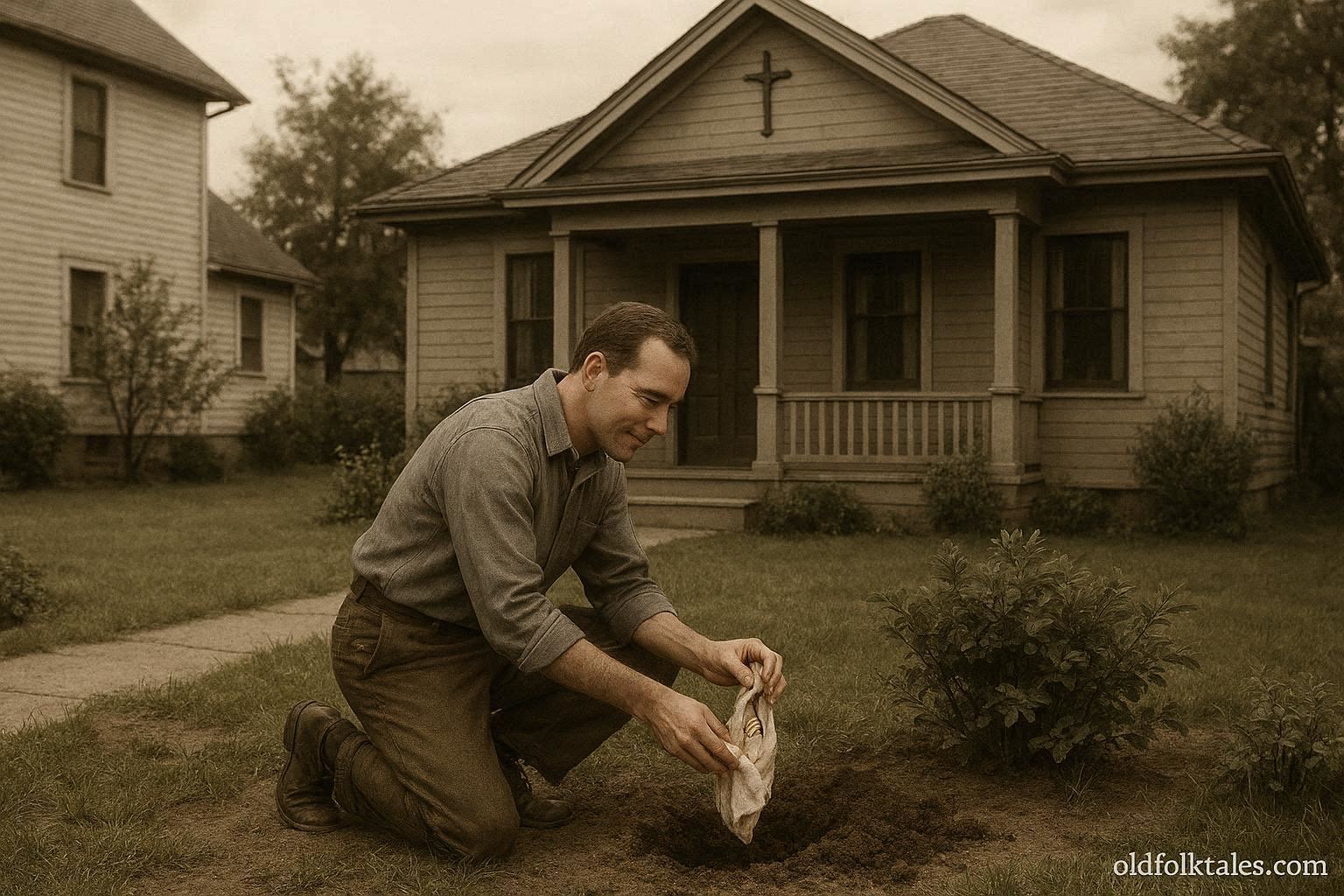
In many American neighborhoods, selling a home has never been only about price, location, or timing. Long before online listings and real estate agents dominated the process, families relied on customs, prayers, and quiet rituals to guide the future of their homes. Among Catholic influenced American communities, one practice stood out for its simplicity and persistence. A small religious statue was buried in the yard to encourage a house to sell quickly.
The tradition gained popularity in the early twentieth century but drew from older European folk practices carried by immigrants. Families believed that homes held memory and intention. When a family prepared to leave, they felt the need to spiritually prepare the house as well. Burying the statue was seen as an act of faith and transition rather than magic. It symbolized asking for guidance and cooperation from forces beyond human control.
The statue most often used was associated with protection and guardianship. It was carefully wrapped in cloth and placed in the ground near the property. The location mattered. Some buried it near the front of the house to face outward. Others chose the backyard to keep the ritual private. The act was usually done quietly without announcement. It was believed that speaking too much about the ritual weakened its effect.
Explore the heart of America’s storytelling — from tall tales and tricksters to fireside family legends.
Homeowners described the act as comforting. Selling a house was stressful and uncertain. Families worried about finances, timing, and future stability. The ritual gave them something tangible to do while waiting. It offered a sense of agency in a process largely controlled by chance.
The belief spread through word of mouth. A neighbor sold her home quickly after burying a statue. A relative tried the same method and succeeded. Over time, stories accumulated. The ritual became normalized within certain communities. It was passed down through family advice rather than formal teaching.
Some believed the statue acted as a spiritual advocate. Others believed it symbolized humility and trust. The ritual did not guarantee a sale, but it reassured homeowners that they had done everything possible. Faith and hope merged into action.
Interestingly, the ritual was not meant to permanently trap the statue. Once the house sold, the new owners or the departing family were expected to retrieve it. Leaving it buried was believed to bring imbalance. The ritual required completion. The statue was cleaned and thanked before being placed indoors again.
In some cases, forgetting to retrieve the statue became part of the folklore. People blamed lingering bad luck or discomfort on an unfinished ritual. Whether coincidence or belief, the story reinforced the importance of respect and closure.
Real estate professionals sometimes encountered the practice quietly. Some ignored it. Others respected it without judgment. In many neighborhoods, the ritual existed alongside modern practices without conflict. Faith and practicality coexisted.
Psychologists later explained the practice as a coping mechanism. Rituals reduce anxiety by creating structure. Yet this explanation does not diminish the cultural meaning. For families, the act was not about control but cooperation. It acknowledged uncertainty and invited assistance.
The ritual also reflected a deep relationship between people and place. Homes were not commodities. They were lived spaces filled with memory. Asking for help in letting go was seen as respectful rather than desperate.
Today, the superstition persists in modified form. Some bury symbolic objects. Others place statues indoors. Even people who claim no religious belief sometimes perform the ritual out of tradition. The act has become cultural rather than doctrinal.
What endures is the belief that intention matters. That care shown to a home affects its future. That hope expressed through ritual can shape how people experience uncertainty.
Whether or not the statue influences the sale, it undeniably influences the people involved. It gives them patience. It gives them comfort. It gives them a sense of participation in their own transition.
Step into America’s cultural roots — from folk healing and weather lore to seasonal celebrations.
Moral Lesson
Faith and intention can provide calm and clarity during uncertain transitions, even when outcomes remain beyond control.
Knowledge Check
- Why did homeowners bury statues when selling a house?
To express faith and encourage a smooth and quick sale. - Which communities most commonly practiced this ritual?
Catholic influenced American communities. - Why was the statue buried quietly?
It was believed secrecy preserved the ritual’s effectiveness. - Why was retrieving the statue important?
Completion of the ritual restored balance and respect. - What emotional role did the ritual serve?
It reduced stress and provided comfort during uncertainty. - Why does the superstition still exist today?
Because it continues as a tradition passed through families.
Source
Adapted from University of Notre Dame American religious folk practice archives
Cultural Origin
Catholic influenced American communities