Long before electric lighting filled bedrooms and mirrors became decorative fixtures, reflective surfaces were treated with caution in American households. Mirrors were not neutral objects. They were understood as tools that carried power, awareness, and memory. Among Western and Southwestern communities, a strong belief developed around how mirrors should be positioned in relation to sleep.
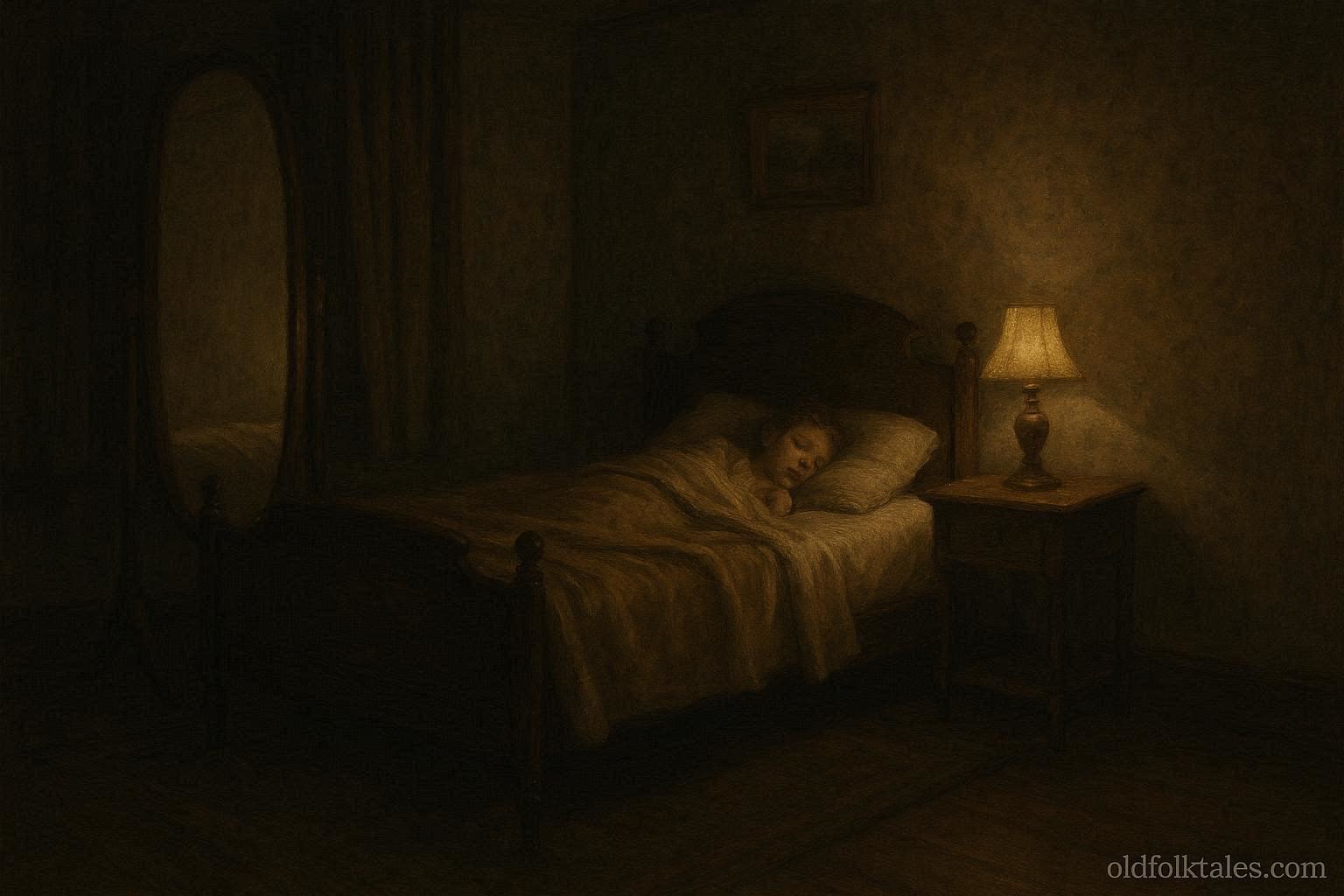
To sleep facing a mirror was believed to weaken personal protection.
This belief was taught quietly. Parents adjusted furniture without explanation. Grandparents covered mirrors at night or turned them toward walls before resting. Children learned by watching rather than being told. The behavior was habitual, not dramatic, yet it was taken seriously.
The concern centered on vulnerability. Sleep was understood as a state where the body rested but the spirit wandered lightly. Dreams were not dismissed as imagination. They were treated as movement between inner and outer worlds. During this time, the sleeper was believed to be open, less guarded, and more susceptible to influence.
Explore the heart of America’s storytelling — from tall tales and tricksters to fireside family legends.
Mirrors were thought to complicate this state.
A mirror facing the bed was believed to reflect more than a physical image. It was said to echo energy, thoughts, and presence. Some believed it doubled what passed before it. Others believed it held impressions from the room. Either way, allowing a mirror to observe a sleeper was considered dangerous.
Stories explained that mirrors could drain vitality. A person might wake feeling exhausted for no clear reason. Nightmares could increase. Restlessness became common. These signs were interpreted as energy being pulled away during sleep.
In some households, the mirror was described as a doorway. Not a physical one, but a reflective threshold. While awake, a person could maintain control. While asleep, control softened. Facing the mirror during this time invited unwanted influence.
The belief did not require a specific threat. It was the openness itself that was risky. Reflection without intention was considered unsafe.
In Southwestern regions influenced by desert environments, mirrors were especially respected. Light behaved differently in those landscapes. Reflection could blind, disorient, or mislead. This reinforced the idea that mirrors held power and should not be positioned carelessly.
Western frontier homes often used mirrors sparingly. When they were present, they served practical purposes. Grooming, preparation, and self recognition. They were not meant to dominate living spaces, especially bedrooms.
As homes modernized, mirrors became more common. Dressers included them by default. Closets featured them for convenience. This shift created tension between tradition and habit.
Older generations continued to reposition mirrors before sleep. Younger members questioned the reason but often complied out of respect. The superstition survived through repetition rather than fear.
Some variations of the belief focused on dreams. It was said that dreams could become trapped or reflected back, creating confusion. Others believed that mirrors could allow dreams to escape, leaving the sleeper unrested.
There were also warnings about seeing movement in the mirror while half asleep. A reflection caught unexpectedly could cause panic or confusion, especially in low light. This experience reinforced the belief that mirrors and sleep did not belong together.
Psychologically, the superstition addressed safety. Bedrooms were meant to be places of rest, not stimulation. A mirror reflecting movement or moonlight could disrupt calm. Turning it away reduced disturbance.
Spiritually, the superstition reinforced boundaries. Sleep required protection. Reflection required awareness. Combining the two weakened both.
The belief extended beyond mirrors themselves. Reflective surfaces like polished metal or glass were sometimes covered as well. Anything that held an image was treated with care at night.
Even today, people report discomfort sleeping across from mirrors. Some describe unease without knowing why. Others feel watched, distracted, or restless. The old belief persists quietly beneath modern explanation.
The superstition does not demand fear. It encourages intention. Positioning objects thoughtfully. Respecting the vulnerability of rest.
Sleeping was never meant to be observed. Reflection was never meant to watch the unconscious.
Click to read all American Traditions & Beliefs — the living folklore of daily life, customs, and superstitions.
Moral Lesson
Protection begins with awareness of how space and objects affect rest and vulnerability.
Knowledge Check
- Why was sleeping considered a vulnerable state?
Because the spirit was believed to be less guarded during rest. - What role did mirrors play in this superstition?
They were believed to reflect or drain energy during sleep. - Which regions strongly practiced this belief?
Western and Southwestern communities. - How did mirrors affect dreams according to tradition?
They were believed to disrupt or trap dream energy. - Why were mirrors covered or turned away at night?
To prevent unwanted influence during sleep. - Why does the belief still exist today?
Because many still experience discomfort sleeping facing mirrors.
Source
Adapted from University of California belief and household folklore research
Cultural Origin
Western and Southwestern communities