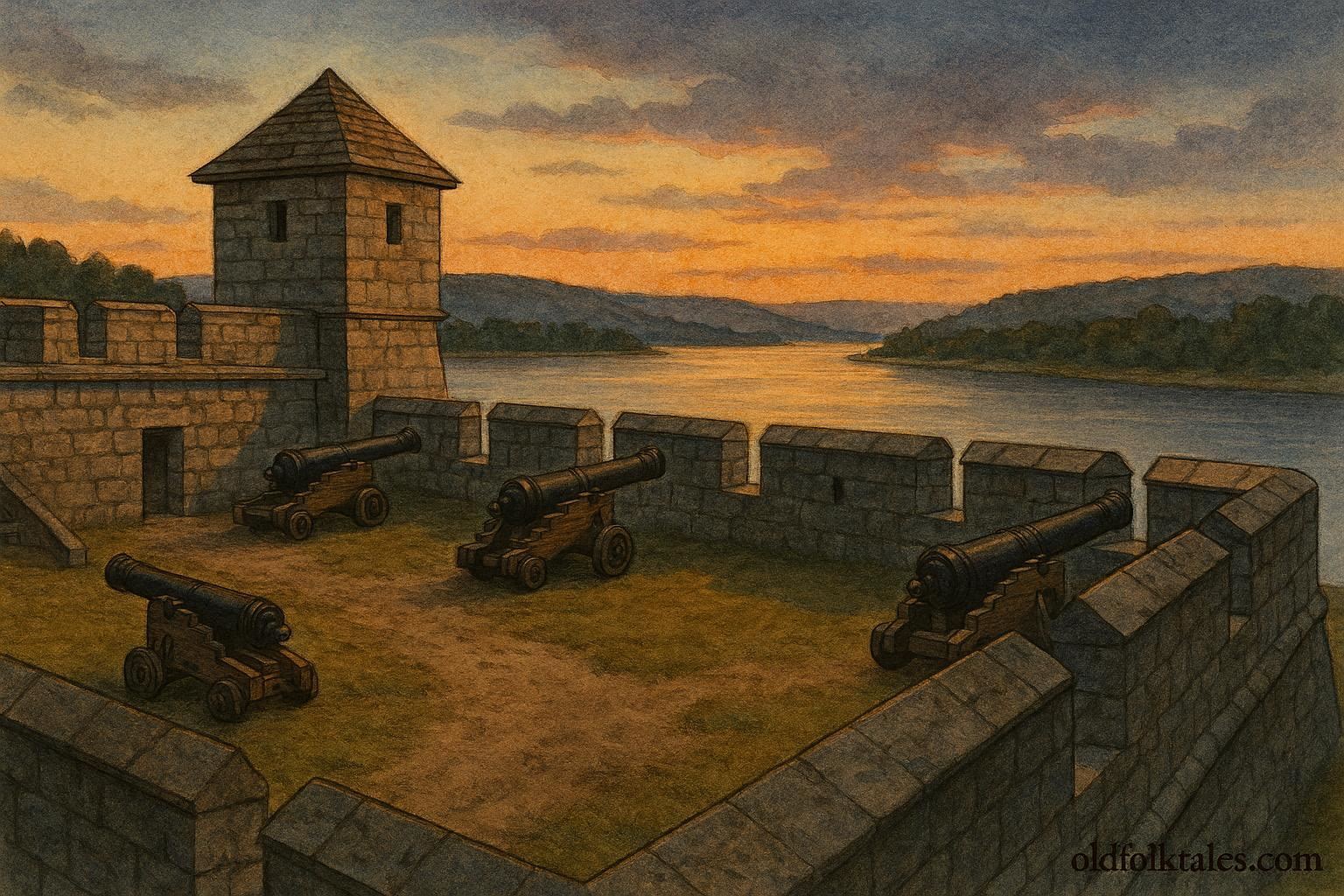
Cannons once thundered across the Delaware River where Fort Mifflin now stands. Smoke filled the air, and soldiers braced themselves behind earthen walls as British warships advanced. Today, the battlefield is quiet, but visitors to the fort sometimes say the silence feels heavy, as if it carries unfinished echoes from the eighteenth century.
Located near present-day Philadelphia, Fort Mifflin played a significant role during the American Revolutionary War. In 1777, American forces defended the fort against repeated British assaults. The bombardment was relentless. Artillery fire reduced large sections of the fort to rubble, yet the defenders held their ground longer than expected. Their resistance delayed British control of the river and became a symbol of sacrifice.
The fort was rebuilt after the war and later served various military purposes, including housing prisoners during the Civil War. Over time, layers of history accumulated within its walls. From revolutionary defenders to imprisoned soldiers, Fort Mifflin became a site deeply tied to national identity and conflict. With so much intense history concentrated in one place, folklore gradually emerged.
Explore the heart of America’s storytelling — from tall tales and tricksters to fireside family legends.
One of the most frequently told stories involves a figure known as the “Screaming Woman.” According to legend, a woman accused of espionage was imprisoned at the fort during the Revolutionary War. Visitors claim to hear faint cries near the casemates, particularly after sunset. While historians debate the factual basis of this account, the story persists as part of the fort’s haunted reputation.
Another commonly reported presence is the “Faceless Man.” Guests have described seeing a shadowy soldier figure in period uniform, standing silently near the barracks before disappearing. The image aligns with the fort’s wartime past, reinforcing the idea that soldiers who once defended the structure remain symbolically stationed there.
Environmental factors contribute to these experiences. The fort’s thick stone walls trap moisture, creating sudden temperature shifts. Wooden beams creak under pressure changes. The wind sweeping off the Delaware River whistles through narrow passageways. In dim lighting, shadows stretch unnaturally along corridors. Such conditions easily give rise to ghostly interpretations.
Fort Mifflin’s role during the Revolutionary War remains central to its legend. The 1777 siege lasted six weeks, during which American soldiers endured intense bombardment. Many were wounded or killed. Supplies ran low, and morale was tested. The bravery displayed there became part of patriotic memory, but the suffering endured by individuals is equally significant.
Folklorists note that haunted military sites often reflect unresolved emotional energy tied to sacrifice and loss. Rather than focusing solely on fear, such legends emphasize remembrance. At Fort Mifflin, stories of spectral soldiers can be understood as narrative expressions of gratitude and national reflection.
Visitors have reported hearing the sound of drums late at night, even when the grounds are empty. Others claim to detect the faint smell of gunpowder near the artillery platforms. While no physical source is identified, these sensory experiences reinforce the atmosphere of lingering battle echoes.
The fort’s casemates arched brick chambers once used for storage and shelter are among the most reported haunted areas. Some describe seeing lantern-like lights moving through the darkness. Historically, soldiers relied heavily on lanterns for navigation at night. In folklore, these lights are interpreted as spirits continuing their duties centuries later.
Fort Mifflin also housed prisoners during the Civil War, adding another chapter to its complex past. Accounts of harsh conditions and confinement further enriched the site’s narrative depth. Ghost stories associated with prisoners echo themes of isolation and hardship, broadening the fort’s haunted identity beyond a single conflict.
Educational tours today emphasize the fort’s historical importance. Guides recount the siege, the reconstruction, and the fort’s military evolution. Yet many tours also acknowledge the ghost stories, recognizing their role in sustaining public interest. Paranormal investigations have been conducted on site, though definitive evidence remains elusive.
Scholars studying early American military folklore observe that such sites often serve as symbolic anchors. They embody foundational moments in national history. Haunted legends become a way of personalizing those moments, transforming large-scale events into intimate experiences. A faceless soldier in a corridor makes history feel immediate rather than distant.
Unlike abandoned ruins, Fort Mifflin is preserved as a historic landmark. Reenactments, educational programs, and public events take place regularly. The living presence of visitors contrasts with tales of spectral inhabitants, creating a layered environment where past and present intersect.
Many who visit describe an overwhelming sense of gravity rather than fear. The fort’s earthen walls and cannon placements stand as reminders of a fragile young nation defending its independence. Whether or not spirits linger, the emotional imprint of sacrifice remains palpable.
In the quiet hours after sunset, when wind brushes across the river and footsteps echo against stone, it is easy to understand how legends arise. History, especially one shaped by war, rarely fades entirely. At Fort Mifflin, the stories endure because they honor resilience and loss in equal measure.
Ultimately, the haunted legend of Fort Mifflin is intertwined with America’s formative struggles. The spectral figures described by visitors symbolize defenders who refused to surrender. Their presence in folklore reinforces themes of courage, sacrifice, and identity. Even if the echoes are only wind and imagination, they continue to remind visitors of the cost of independence.
Step into shadowy legends of restless spirits and ghostly travelers in American Ghost Stories.
Moral Lesson
Sacrifice for a greater cause should be remembered with respect. Honoring history helps preserve national identity and gratitude for past bravery.
Knowledge Check
- During which war did Fort Mifflin play a key role?
The American Revolutionary War - What river is the fort located near?
The Delaware River - What is the “Screaming Woman” legend about?
A woman accused of espionage whose cries are said to be heard - Why are military sites often associated with ghost stories?
They reflect sacrifice, loss, and emotional memory - What later conflict also involved the fort?
The American Civil War - What themes define Fort Mifflin’s legend?
War memory, sacrifice, national identity
Source
Adapted from Library of Congress Revolutionary War collections; Temple University Urban Archives
Cultural Origin
Early American military folklore