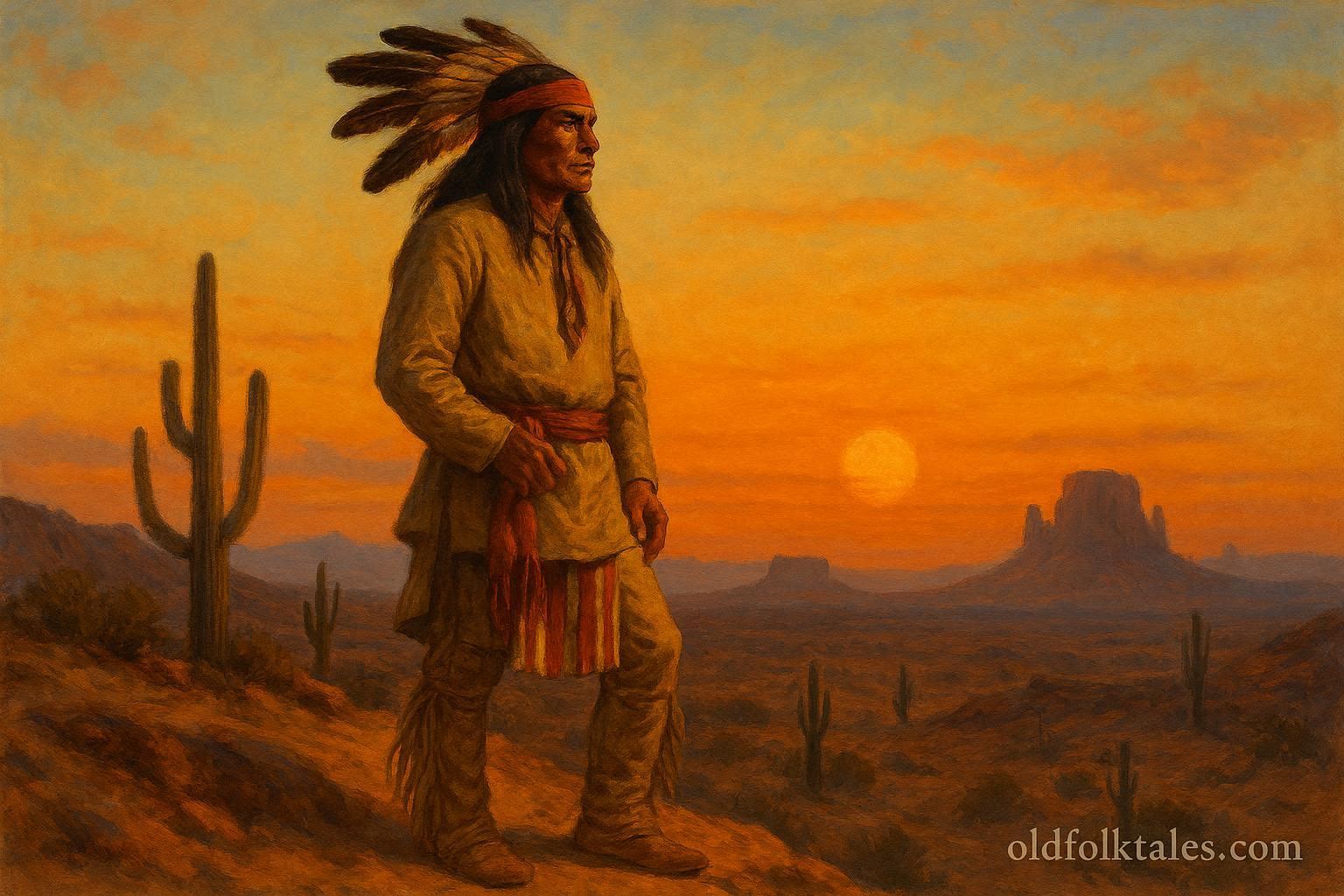
Geronimo, born Goyaałé in 1829, emerged as one of the most celebrated figures in Native American history. He became a symbol of courage, resistance, and the unyielding fight to protect his people. His life was shaped by the harsh landscapes of the Southwestern United States, where survival demanded intelligence, skill, and bravery. From a young age, Geronimo showed remarkable abilities in tracking, hunting, and understanding the terrain, which would later help him evade enemies and protect his community.
The Apache Nation, to which Geronimo belonged, inhabited areas of present-day Arizona, New Mexico, and northern Mexico. These lands were both beautiful and treacherous, requiring intimate knowledge to navigate successfully. Geronimo grew up in a culture that valued honor, loyalty, and communal responsibility. Tragedy struck early in his life when Mexican soldiers attacked his village, killing several family members. This personal loss fueled his determination to resist oppression and defend his people at any cost.
As a young warrior, Geronimo quickly gained a reputation for his courage and strategic brilliance. He participated in raids against enemy forces and often led small groups in defensive actions to protect Apache lands. Unlike many leaders, he relied not on sheer force but on clever tactics, using the desert, mountains, and canyons to his advantage. His ability to anticipate enemy movements and outmaneuver larger forces became legendary, cementing his status as a master of guerrilla warfare.
Discover chilling ghost tales and haunted places that echo through America’s towns and countryside.
The folklore surrounding Geronimo emphasizes his many daring escapes. Despite relentless pursuit by U.S. and Mexican soldiers, he repeatedly eluded capture. Stories describe him moving silently through rugged terrain, disappearing into narrow canyons, and crossing deserts without leaving a trace. These tales highlight not only his physical skill but also his mental acuity and patience. For communities who told these stories, Geronimo became a symbol of hope, cunning, and resilience against overwhelming odds.
Geronimo’s leadership extended beyond battle. He was deeply committed to the welfare of his people, making decisions that prioritized communal safety and survival. Oral histories recount how he inspired young warriors, advised elders, and carefully balanced aggression with prudence. He embodied the values of the Apache: courage tempered with wisdom, loyalty to family and community, and respect for the land. His example showed that leadership requires both action and careful judgment.
The arrival of European settlers and the U.S. military brought increasing pressure on the Apache Nation. Forced relocation and encroachment on traditional lands created constant conflict. Geronimo resisted surrender, valuing freedom and autonomy above all else. He led raids to defend villages and supply his people, earning fear and respect from both allies and adversaries. Folklore preserves these acts, portraying him as fearless, resourceful, and morally guided in his actions.
Throughout his life, Geronimo became the subject of countless stories, both oral and written. Newspapers, pamphlets, and folklore collections recounted his daring exploits and miraculous escapes. Tales of his bravery spread beyond Apache communities, capturing the imagination of people across the United States. These stories often emphasized themes of resistance, cleverness, and survival, turning Geronimo into a folk hero whose life lessons extended beyond the battlefield.
Even after his surrender in 1886, Geronimo’s legend continued to grow. Although he was held as a prisoner of war, he remained a figure of admiration for his unwavering commitment to his people. His story was told and retold, blending historical fact with folklore. Generations learned of his courage and strategic skill, as well as the moral lessons his life imparted about loyalty, resilience, and leadership.
The tales of Geronimo also highlight the moral and ethical dimensions of resistance. He fought not for personal gain, but to protect his community and preserve the Apache way of life. His life teaches that courage is meaningful only when combined with responsibility and moral purpose. The folklore surrounding him often includes lessons about standing up against injustice, protecting loved ones, and using intelligence alongside bravery.
Geronimo’s story has remained relevant for modern audiences because it resonates with universal human experiences: the struggle for freedom, the defense of one’s home, and the perseverance in the face of overwhelming challenges. His legend serves as a bridge between history and folklore, demonstrating how cultural memory preserves both facts and values. For Native American communities, he remains a symbol of pride, resilience, and leadership.
Through his strategic mind, physical skill, and moral courage, Geronimo exemplifies the qualities of a folk hero. He shows that leadership requires a combination of bravery, intelligence, and selflessness. His story reminds us that heroism is not solely about winning battles, but about standing for what is right, protecting one’s community, and refusing to surrender to oppression. Even today, the legend of Geronimo inspires reflection on courage, perseverance, and the ethical responsibilities of leadership.
Explore how American legends shaped the nation — from frontier heroes to Revolutionary War tales.
Moral Lesson
True leadership and heroism involve courage, selflessness, and commitment to one’s community. Standing for justice and survival in the face of oppression demonstrates integrity and resilience.
Knowledge Check
1 Who was Geronimo?
A fearless Apache leader and warrior who resisted U.S. and Mexican forces
2 What motivated Geronimo’s resistance?
The defense of his people, land, and cultural autonomy
3 What tactics did he use to evade capture?
Guerrilla warfare, knowledge of terrain, strategic deception, and mobility
4 Where did the Apache primarily live?
Southwestern United States, including Arizona and New Mexico, and northern Mexico
5 What does Geronimo symbolize in folklore?
Courage, resistance, survival, and leadership in the face of oppression
6 How has his story been preserved?
Through oral histories, folklore, newspapers, history books, and educational materials
Source
Adapted from Arizona Historical Society archives
Cultural Origin
Apache Nation, Southwestern United States