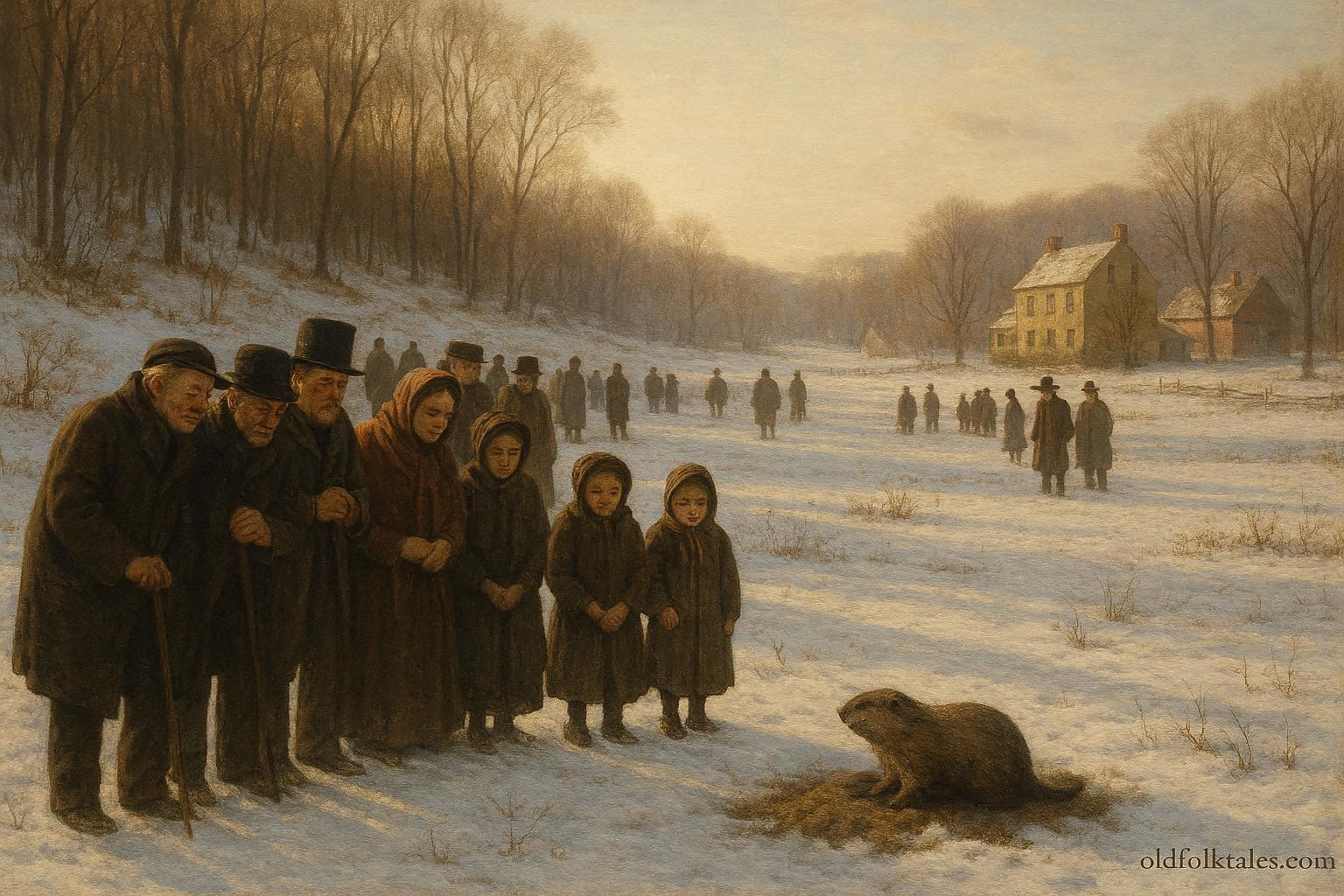
Long before weather apps and televised forecasts, seasonal change was measured through observation. In Pennsylvania Dutch communities, one small hibernating animal became a symbol of winter’s endurance. Each year in early February, families watched for the groundhog’s emergence from its burrow. What happened in those first few moments above ground was believed to predict how long winter would last.
According to tradition, if the groundhog saw its shadow on a clear, sunny day and quickly retreated into its den, winter would continue for several more weeks. If the sky was cloudy and no shadow appeared, the animal would remain outside, signaling that spring would arrive sooner. The belief blended close environmental observation with symbolic meaning, turning an ordinary animal into a seasonal messenger.
This practice traces back to Pennsylvania Dutch settlers of German origin. In Europe, Candlemas Day customs involved observing animals like hedgehogs or badgers to forecast winter’s length. When immigrants settled in Pennsylvania during the eighteenth century, they adapted the belief to local wildlife. The groundhog, common and visible, became the new forecaster.
Encounter the strange and the unseen — from Bigfoot to regional monsters hiding in America’s forests.
Groundhogs are true hibernators, entering deep winter sleep and emerging briefly as daylight increases. Farmers noticed that their behavior often aligned with subtle seasonal changes. While the animal itself does not consciously predict weather, its emergence coincides with shifting daylight patterns and temperature trends. Over time, this natural rhythm was shaped into folklore.
In rural communities, Groundhog Day became more than observation; it became gathering. Neighbors assembled near fields or wooded edges, sharing food and stories while waiting for the animal to appear. The event blended practical concern with communal celebration. For agricultural families, knowing whether winter would linger mattered deeply. A longer winter meant conserving feed, delaying planting, and preparing for continued frost.
Symbolically, the shadow itself held meaning. A shadow requires sunlight, and sunlight in early February often comes with high-pressure systems associated with cold, clear air. Cloudy days, on the other hand, sometimes accompany milder weather. Though not scientifically reliable as a forecast, the belief reflected generations of pattern recognition.
As towns grew, the tradition evolved into organized ceremonies. Punxsutawney, Pennsylvania, became nationally recognized for its annual Groundhog Day event. Crowds gather before dawn as a designated groundhog is presented to predict the season. What began as rural folklore transformed into a cultural festival, blending humor, identity, and continuity.
Beyond entertainment, the story reveals how communities once depended on animals for seasonal awareness. Before modern meteorology, close observation of wildlife was essential. Birds, insects, livestock, and burrowing mammals all offered clues about changing conditions. The groundhog became the most famous of these seasonal indicators.
Today, the tradition continues as both folklore and celebration. Even in an age of advanced forecasting models, people still wait for the groundhog’s verdict each February. The ritual connects present generations with historical agricultural rhythms. It preserves a moment when communities read nature as carefully as printed almanacs.
Though the groundhog’s shadow does not truly control the length of winter, the belief reflects human desire for reassurance during uncertain seasons. Midwinter can feel long and isolating. A symbolic sign, even a playful one, offers structure and hope. The story reminds us that traditions often endure not because they are scientifically precise, but because they bring people together.
Click to read all American Traditions & Beliefs — the living folklore of daily life, customs, and superstitions.
Moral Lesson
Observation of nature strengthens understanding, but tradition strengthens community. Even symbolic rituals can provide hope and continuity during uncertain times.
Knowledge Check
- Which animal is central to this seasonal tradition?
The groundhog. - What does it mean if the groundhog sees its shadow?
It means winter is expected to continue for several more weeks. - From which European custom did this belief originate?
It originated from German Candlemas animal-forecasting traditions. - Why was the prediction important for farmers?
It helped them plan planting, conserve supplies, and prepare for extended cold weather. - On what date is the groundhog traditionally observed?
February 2. - Which Pennsylvania town is most famous for the Groundhog Day celebration?
Punxsutawney, Pennsylvania.
Source
Adapted from Pennsylvania German folklore archives
Cultural Origin
Pennsylvania Dutch communities