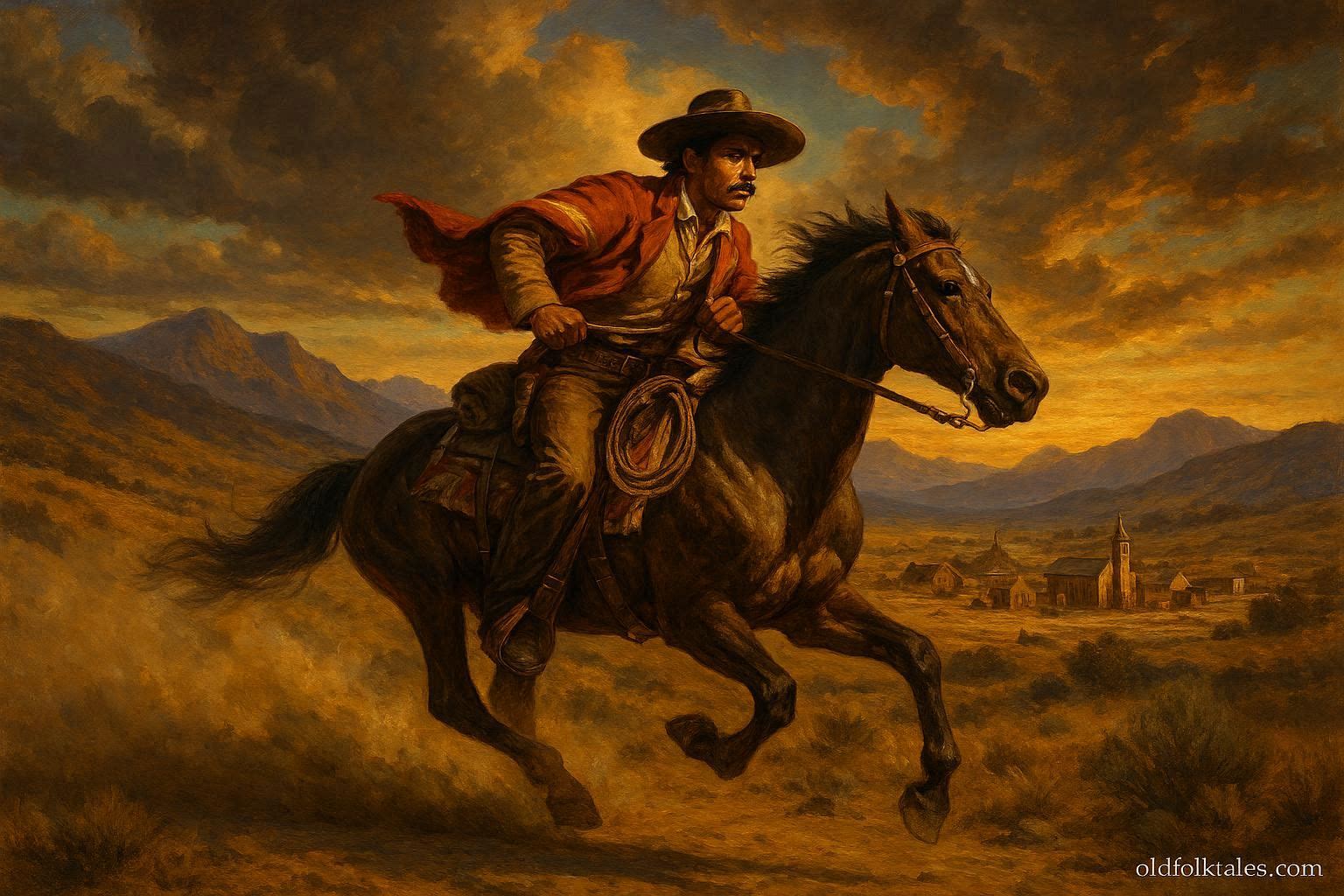
During the mid-19th century, California shimmered with gold fever. Prospectors from around the world flooded the rivers and valleys, dreaming of instant wealth. Yet amid this frenzy, many Mexican American communities faced discrimination, land seizures, and lawlessness disguised as justice. Out of this turmoil arose Joaquín Murrieta, a man whose deeds, real and imagined, would ripple through folklore for generations.
Murrieta’s life, whether fully historical or partly myth, began as a story of hardship. Young, skilled, and courageous, he witnessed the injustices his people endured. Gold-rich hills promised fortune for some, but for Mexican Americans, unfair laws and vigilante actions often meant dispossession and violence. Murrieta was said to have suffered personal losses at the hands of those claiming authority. Whether losing family, property, or friends, these events forged a resolve in him to resist oppression.
The stories depict him as a master horseman, able to outrun sheriffs and navigate treacherous terrain. Some tales tell of him eluding capture by galloping along riverbeds, disappearing into mountains, or blending seamlessly with the landscape. His skill with horses and pistols became legendary, not because of reckless violence, but because he embodied a kind of justice his community rarely saw. He targeted those exploiting Mexican Americans, redistributing some of their ill-gotten gains to victims.
Explore the heart of America’s storytelling — from tall tales and tricksters to fireside family legends.
Murrieta’s actions quickly made him a figure of fascination. Anglo miners and authorities labeled him an outlaw, a “Mexican Robin Hood,” while Mexican American communities whispered his name in admiration. Songs and ballads began circulating, recounting his feats with poetic exaggeration. One ballad spoke of him rescuing settlers from corrupt lawmen; another claimed he escaped ambush by leaping over a canyon on horseback. These tales emphasized courage, cleverness, and moral purpose rather than mere criminality.
His reputation was both a shield and a lure. Authorities sought him relentlessly, and bounty hunters tracked him through the foothills. Yet Murrieta’s skill and the loyalty of those who supported him made capture difficult. Stories say he would disappear for months, only to reappear where injustice seemed unchecked. In doing so, he became more than a man—he became a symbol. Every daring act, every narrow escape reinforced the narrative of resistance and the hope that oppressed communities could fight back, even against overwhelming odds.
Even today, debates swirl over Murrieta’s life. Some historians suggest much of his legend was embellished, a cultural response to a time of upheaval. Yet legends, as anthropologists note, are not lies. They are vessels of memory, values, and communal identity. Murrieta’s story preserves lessons about courage in the face of injustice, the necessity of skill and strategy, and the enduring importance of standing up for one’s community.
Stories of Murrieta were not solely about confrontation. Many recount his respect for those who lived ethically, his careful avoidance of unnecessary violence, and his sense of honor among allies. In an era when laws were often unjust, and danger was constant, he became a moral guide through myth. He demonstrated that heroism sometimes requires bending rules for a greater good, and that courage coupled with intelligence can inspire others long after the individual has vanished.
In taverns and homes across California, parents told their children of the horseman who could not be caught. Miners, ranchers, and settlers used his example to discuss the meaning of justice, loyalty, and resilience. Folklorists recorded these stories during the late 19th and early 20th centuries, preserving them as testimony to a period when law, power, and survival intersected violently. Even today, Murrieta’s name appears in books, songs, and local celebrations, his legend immortalized as a reminder that the line between outlaw and hero is often drawn by moral purpose, not by authority.
Click now to read all American Legends — heroic tales where truth and imagination meet, defining the American spirit.
Moral Lesson
True heroism lies not in personal gain or fame but in standing against injustice, defending community, and using one’s skill responsibly.
Knowledge Check
1 Why did Joaquín Murrieta become a legendary figure?
Answer: Because he resisted injustice and protected Mexican American communities during the Gold Rush
2 What skills made him renowned in folklore?
Answer: Exceptional horsemanship, cleverness, and the ability to evade capture
3 How did Mexican American communities view Murrieta?
Answer: As a symbol of resistance and a moral hero, often called the “Mexican Robin Hood”
4 Why do historians debate the facts of Murrieta’s life?
Answer: Because much of his story was passed orally and may have been embellished
5 What role did songs and ballads play in his legend?
Answer: They preserved his deeds and spread his reputation across communities
6 What lasting lesson does Murrieta’s story teach about heroism?
Answer: That heroism combines skill, courage, and moral purpose, not merely defiance or fame
Source
Adapted from University of California folklore and Gold Rush narrative archives
Cultural Origin
Mexican American communities, California