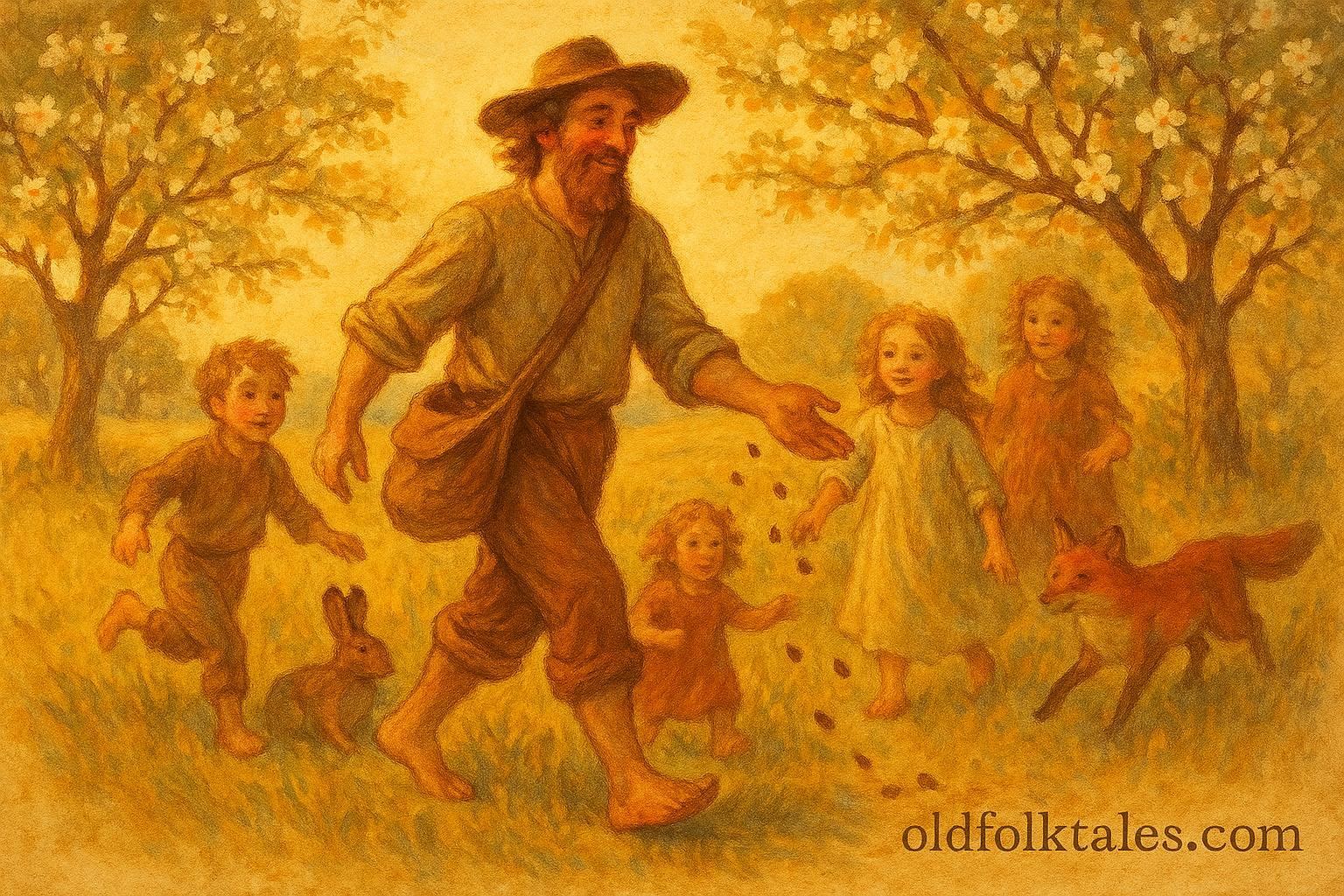
In the days when America was young and the frontier rolled westward into wild forests and open prairie, there walked a man whose mission was not conquest or adventure, but kindness. His name was Johnny Appleseed, though the world first knew him as John Chapman. Where others saw wilderness to tame, Johnny saw soil to nurture, trees to plant, and a future to grow.
A Wanderer with a Bag of Seeds
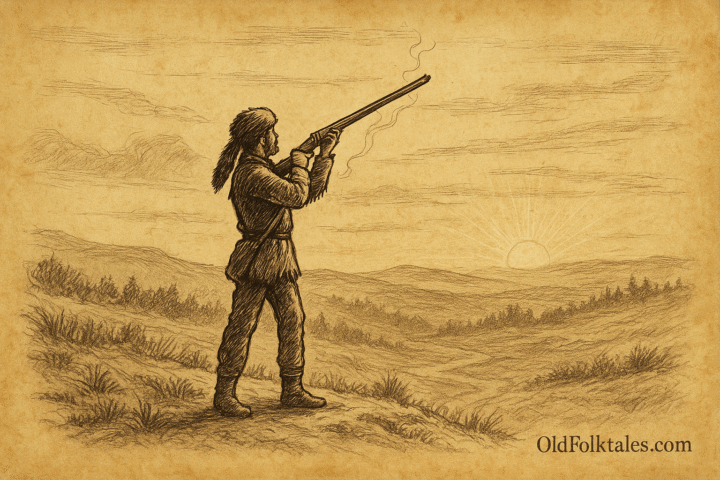
Born in Massachusetts in 1774, John Chapman grew up during a time of exploration and change. As a young man, he set out on foot across the frontier, through Ohio, Indiana, and Illinois, carrying only a leather satchel of apple seeds, a Bible, and a tin pot he wore as a hat. Wherever he traveled, he planted apple trees, believing that every orchard was a gift to those who would come after.
He walked barefoot through snow and mud, slept under the stars, and often shared what little food he had. Settlers came to recognize the sight of the gentle man with bright eyes and a calm smile, a man who spoke softly of peace and faith. In exchange for bread or old clothes, he offered saplings from his bag, a promise of future harvests.
A Friend to All Living Things
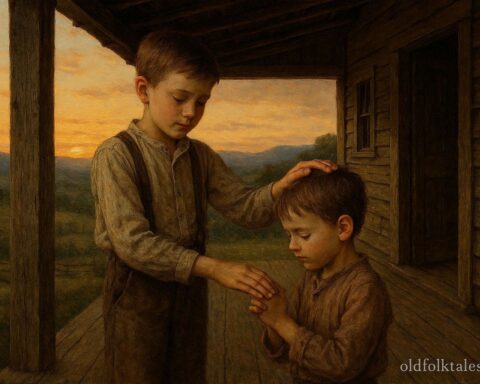
Johnny Appleseed was more than a planter of trees; he was a friend to the land and its creatures. He refused to harm even the smallest insect, once said to have rescued a bee from drowning in his drinking water. When winter bit hard, he built small fires to warm lost animals and shared his food with deer and raccoons that gathered near.
Children loved his visits, listening wide-eyed as he told Bible stories or spoke of nature’s beauty. They said the wild animals followed him like disciples, foxes, birds, and even wolves, trusting his kind spirit. To Johnny, every seed was sacred, and every creature deserved respect.
A Legacy That Took Root
Johnny’s dream was not for riches or fame but for a blooming America, filled with orchards that fed families and shaded the land. He believed that apple trees could bring peace and plenty wherever they grew, “a fruit for every home, a tree for every heart.” By the time he passed away around 1845, his trees dotted the valleys and riverbanks of the Midwest.
His apples nourished pioneers who had little else to eat, and his orchards became symbols of hope, renewal, and gratitude. Even long after his death, his story continued to spread, half history, half legend, as the tale of a man who lived gently and gave generously.
The Spirit of Johnny Appleseed
Today, Johnny Appleseed remains one of America’s most beloved folk heroes, representing a side of the frontier often forgotten, not its battles or its bravado, but its compassion. His legend reminds us that greatness can come quietly, with every seed of kindness sown into the world.
Explore how American legends shaped the nation — from frontier heroes to Revolutionary War tales.
Moral Lessons
Kindness, humility, and harmony with nature create a legacy that endures far beyond one’s lifetime, even the smallest good deed can blossom into lasting abundance.
Knowledge Check
-
Who was Johnny Appleseed in real life?
He was John Chapman (1774–1845), an American pioneer who planted apple orchards across the Midwest. -
What was his mission?
To spread apple trees and encourage harmony between people and nature. -
Why was he called Johnny Appleseed?
Because of his lifelong habit of carrying apple seeds and planting them wherever he went. -
How did Johnny show kindness to animals?
He protected and fed wild creatures, refusing to harm even the smallest insect. -
What did his orchards symbolize?
Hope, generosity, and the belief that doing good for others creates lasting abundance.
Sources:
Adapted from Harper’s New Monthly Magazine (1871) and The Life of John Chapman (Johnny Appleseed) by W.D. Haley, 1871 — public domain American frontier folklore from the 19th century Midwest.
Cultural Origin: Midwestern United States (Ohio, Indiana, Illinois), early 19th-century frontier folklore.