Molly Pitcher is remembered as one of the most enduring folk heroines of the American Revolutionary War, a symbol of courage, resilience, and determination. Though the historical record leaves some ambiguity about her exact identity, with Mary Ludwig Hays often cited as an inspiration, the legend has been passed down through oral storytelling, historical accounts, and educational materials. Her story reflects the extraordinary contributions of women during a time when their efforts were rarely recognized and celebrates the enduring human qualities of bravery and selflessness.
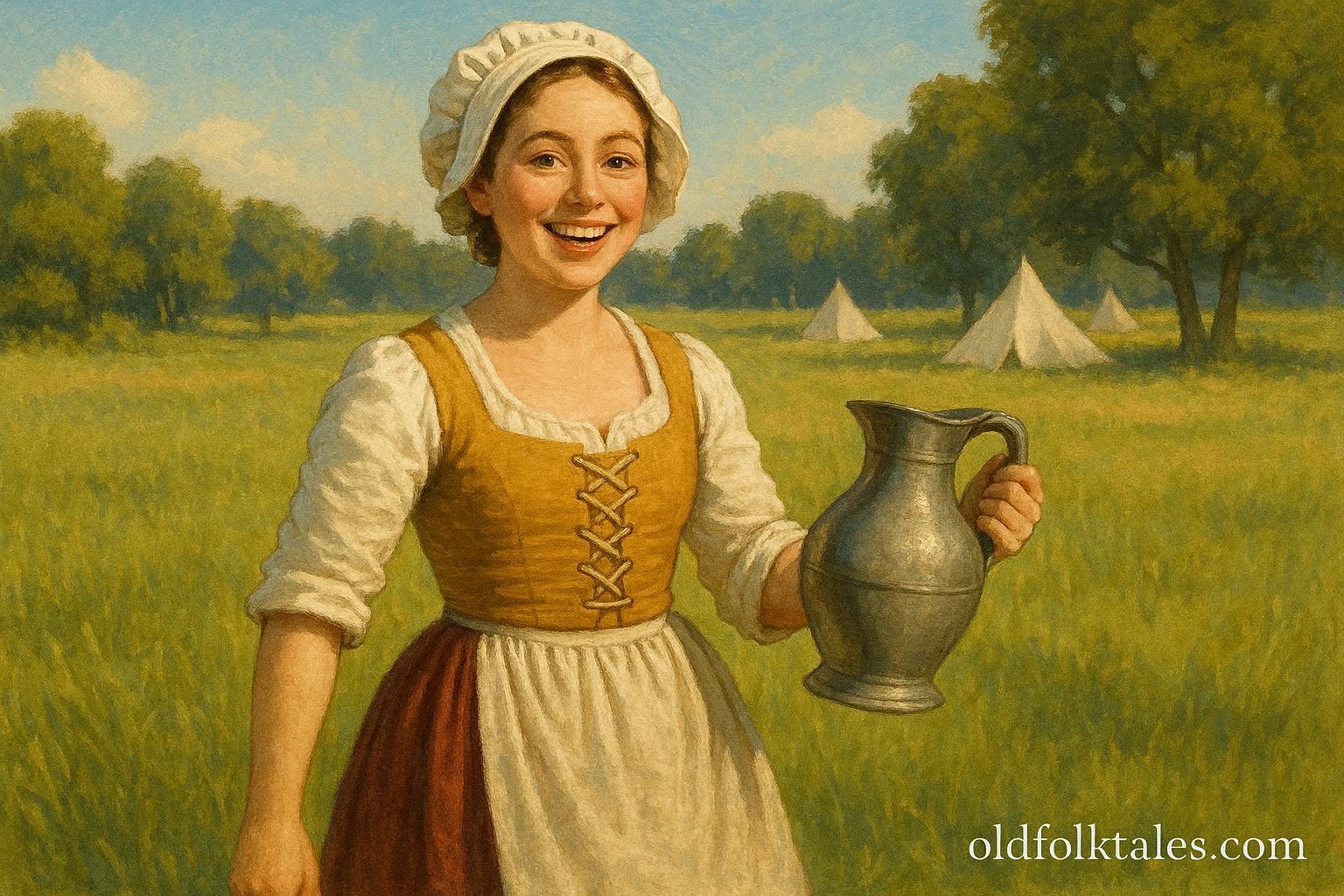
The Battle of Monmouth, fought in New Jersey in 1778, was one of the longest and most grueling encounters of the Revolutionary War. Soldiers faced intense heat, exhaustion, and the chaos of battle, with musket fire and cannon fire creating both fear and confusion. Amid these conditions, women often accompanied the troops to provide essential support. They cooked meals, treated the wounded, and carried water to soldiers struggling under the heat and strain. Among these women, Molly Pitcher became a legendary figure. She is said to have moved tirelessly across the battlefield, carrying pitchers of water to keep soldiers hydrated, ensuring they had the strength to continue their duties. Her dedication and perseverance offered both physical relief and moral encouragement, demonstrating the vital role women played in sustaining the Continental Army.
The most celebrated moment of her story comes when her husband, who operated a cannon during the battle, was wounded. Instead of retreating, Molly stepped forward and took his place at the artillery piece. She loaded and fired the cannon herself, facing danger directly and performing a task traditionally reserved for men. While some historians debate whether this exact event happened, the story captures the essence of courage, resourcefulness, and initiative. Her actions symbolize the often-overlooked heroism of women in wartime, emphasizing that bravery is not limited by gender or societal expectations.
Explore the heart of America’s storytelling — from tall tales and tricksters to fireside family legends.
Molly Pitcher’s legend also provides insight into the broader experiences of women during the Revolutionary era. While men engaged in combat, women maintained camps, prepared meals, and cared for the wounded. They shared the hardships of soldiers, living in tents and enduring the same environmental challenges, such as extreme heat, rain, and disease. Molly Pitcher’s act of stepping into a combat role represents the countless other women whose contributions were critical but rarely documented. Her story underscores the value of unsung heroism and the importance of recognizing the roles women played in shaping history.
Over time, the story of Molly Pitcher spread widely through letters, newspaper accounts, and oral storytelling. Songs, poems, and educational texts celebrated her courage, ensuring that her tale became part of the American cultural imagination. She became a folk hero not simply for taking over a cannon but for what she represented: courage, resilience, and selfless service in a time of need. Her story has been retold in classrooms, commemorated in monuments, and included in historical studies, serving as an enduring example of heroism that transcends formal recognition or rank.
Molly Pitcher’s narrative also highlights the intersection between history and folklore. While it is difficult to separate fact from legend, the story has persisted because it embodies the values Americans have long celebrated: bravery, dedication, and the willingness to act for the greater good. The tale demonstrates how folklore can preserve cultural ideals and moral lessons, even when specific historical details are uncertain.
In addition to her courage on the battlefield, Molly Pitcher exemplifies resilience and determination in the face of adversity. She embodies the idea that ordinary individuals can perform extraordinary deeds when circumstances demand it. Her legend has inspired countless educational initiatives, teaching young people about the roles women played in history and encouraging reflection on the qualities that define heroism. Molly Pitcher’s story reminds us that contributions to society and acts of bravery are not always publicly recognized, but their impact is nonetheless profound and lasting.
The legacy of Molly Pitcher extends beyond the Revolutionary War. Her story is a symbol of empowerment, illustrating how women can step forward to meet challenges that society may not expect them to face. The tale continues to resonate today, offering lessons about courage, responsibility, and the significance of individual action. Her legend serves as a bridge between history and folklore, blending documented events with symbolic meaning to create a story that inspires moral reflection and admiration across generations.
Through her actions, Molly Pitcher teaches that heroism can emerge from ordinary circumstances, that one person’s determination can influence the lives of many, and that courage often involves putting others’ needs before one’s own. The story encourages readers to recognize the contributions of those who may not appear in history books as prominently as generals or political leaders, reminding us that bravery, initiative, and selflessness come in many forms.
Click now to read all American Legends — heroic tales where truth and imagination meet, defining the American spirit.
Moral Lesson
Heroism is not limited by gender or societal expectations. Courage, selflessness, and a willingness to step forward in times of need define true bravery. Ordinary actions performed with determination can have extraordinary impact.
Knowledge Check
1 Who did Molly Pitcher assist during the Battle of Monmouth?
Soldiers and her husband
2 What heroic action made her famous?
She took her husband’s place at the cannon after he was injured
3 Why is her identity debated?
Historians believe multiple women may have inspired the story; Mary Ludwig Hays is often cited
4 Which war is she associated with?
The American Revolutionary War
5 What lesson does her story teach about heroism?
Heroism comes from courage, selflessness, and the willingness to act, regardless of gender
6 How has her story been preserved?
Through oral tradition, folklore, educational materials, and commemorations
Source
Adapted from Mount Vernon educational archives
Cultural Origin
Early American colonial communities during the Revolutionary War