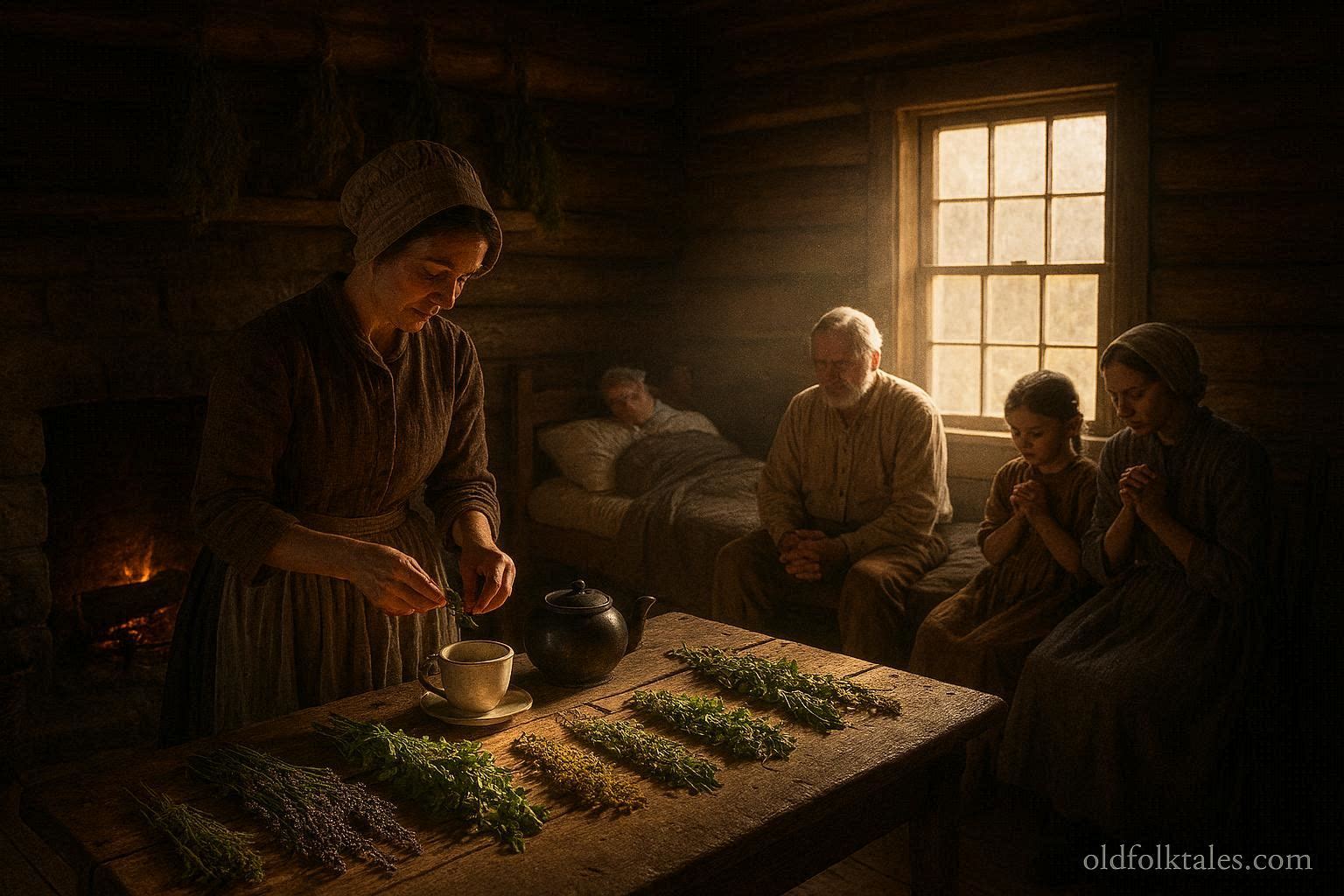
The sun rose slowly over the wide plains and rugged valleys of the Utah Territory. Early Mormon pioneer families stirred in their cabins, preparing for a day filled with labor, travel, and care for the sick. The desert air was sharp and dry, and resources were scarce. Illness often spread quickly, and professional medical care was rare. In these conditions, faith and traditional knowledge became essential tools for survival.
Among the pioneers, many families relied on the careful collection and use of local herbs. Wild sage, mint, yarrow, and chamomile grew in abundance across the mesas and foothills. Mothers, fathers, and healers learned to identify each plant by sight, touch, and smell. Each herb had a story, a use, and a ritual tied to it. Some were brewed into teas for fever or digestive troubles, while others were applied externally as poultices or infused oils. Knowledge was passed orally, often from parent to child, forming a lineage of practical medicine and spiritual care.
Faith played a central role in the healing process. Church leaders taught that God’s blessing could work through simple remedies. Families prayed over the sick, combining their belief in divine protection with the natural properties of herbs. A child suffering from a lingering cough might be bathed in a warm herbal infusion while elders sang softly and recited scriptures. The combination of tactile comfort, scent, warmth, and prayer was believed to draw the body and spirit back into balance.
Discover chilling ghost tales and haunted places that echo through America’s towns and countryside.
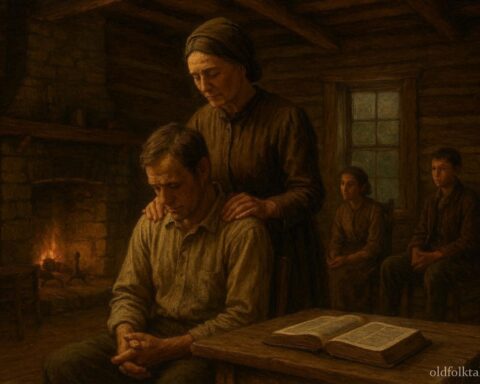
One pioneer woman, Hannah, had recently settled near a small creek outside Salt Lake Valley. Her husband, Amos, had returned from a long day of tending cattle with chills and a fever. The family gathered herbs along the creek banks. They crushed leaves and roots, carefully measuring doses according to memory and practice. Hannah then heated water over a small fire and steeped the mixture, filling the cabin with an earthy, fragrant aroma. She guided Amos to sip slowly, encouraging deep breaths and calm reflection.
As the tea warmed his body, Hannah and her children recited hymns and offered prayers for healing. She explained to her children that herbs alone were not enough; divine guidance and faith strengthened the body’s natural ability to recover. Every gesture, from stirring the tea to covering Amos with a blanket, was infused with care, intention, and spiritual focus. The act of healing was holistic, encompassing mind, body, and spirit.
The community often gathered in these rituals. Neighbors brought their own herbal knowledge, exchanging remedies, and sharing successes and failures. Healing circles became spaces of communal learning. Children watched, memorized, and sometimes assisted in simple ways, tying the next generation to a legacy of care and resilience. Elders reminded everyone that the desert was both harsh and generous, and survival required attentiveness to nature, faith, and mutual support.
In some cases, blessing rituals accompanied herbal treatments. A local elder might sprinkle water infused with herbs while reciting scripture, inviting divine protection over the sick person and the household. Special occasions called for group prayers, often in the small church or gathering hall, with families joining hands and voices. These ceremonies strengthened the community, provided emotional comfort, and reinforced shared spiritual values.
Through these traditions, the pioneers endured not only physical illness but also the emotional strain of life on the frontier. Each recovery reinforced the belief that humans and nature were intertwined and that divine assistance could manifest through simple, earthly means. The practices of herbal preparation, attentive care, and prayer fostered hope and cohesion, ensuring that even the smallest cabin could become a center of healing.
Over time, some of these remedies and rituals became codified in journals, letters, and oral histories preserved by descendants. Church History Library archives and Utah State historical collections document detailed accounts of herbs, their uses, and accompanying ceremonies. These records illustrate the resilience of early Mormon pioneers and their ability to adapt faith and traditional knowledge to the challenges of the American West.
By combining observation of local plants, prayerful intention, and communal participation, pioneers maintained their health and spiritual balance. Each healed body was not only a personal victory but also a reinforcement of community trust, family strength, and faith in God’s guidance. Even decades later, descendants honor these practices as a testament to courage, ingenuity, and devotion.
Step into America’s cultural roots — from folk healing and weather lore to seasonal celebrations.
Moral Lesson
True healing combines knowledge, care, and faith, emphasizing the connection between body, mind, spirit, and community.
Knowledge Check
- What methods did Mormon pioneers use to heal the sick?
They used local herbs, faith-based prayers, and blessing rituals - Why was prayer important in the healing process?
Prayer was believed to guide divine power through natural remedies and strengthen the spirit - How were children involved in the healing traditions?
Children observed, assisted, and memorized remedies and rituals for future generations - What role did the community play during sickness?
Community members shared herbal knowledge, provided support, and joined in group prayers - Why were herbs considered important on the frontier?
Medical professionals were scarce, and herbs offered practical and accessible healing - How were these traditions preserved over time?
Through oral transmission, journals, letters, and historical archives such as the Church History Library
Source
Adapted from Church History Library (Salt Lake City); Utah State historical archives
Cultural Origin
Utah Territory (American West)