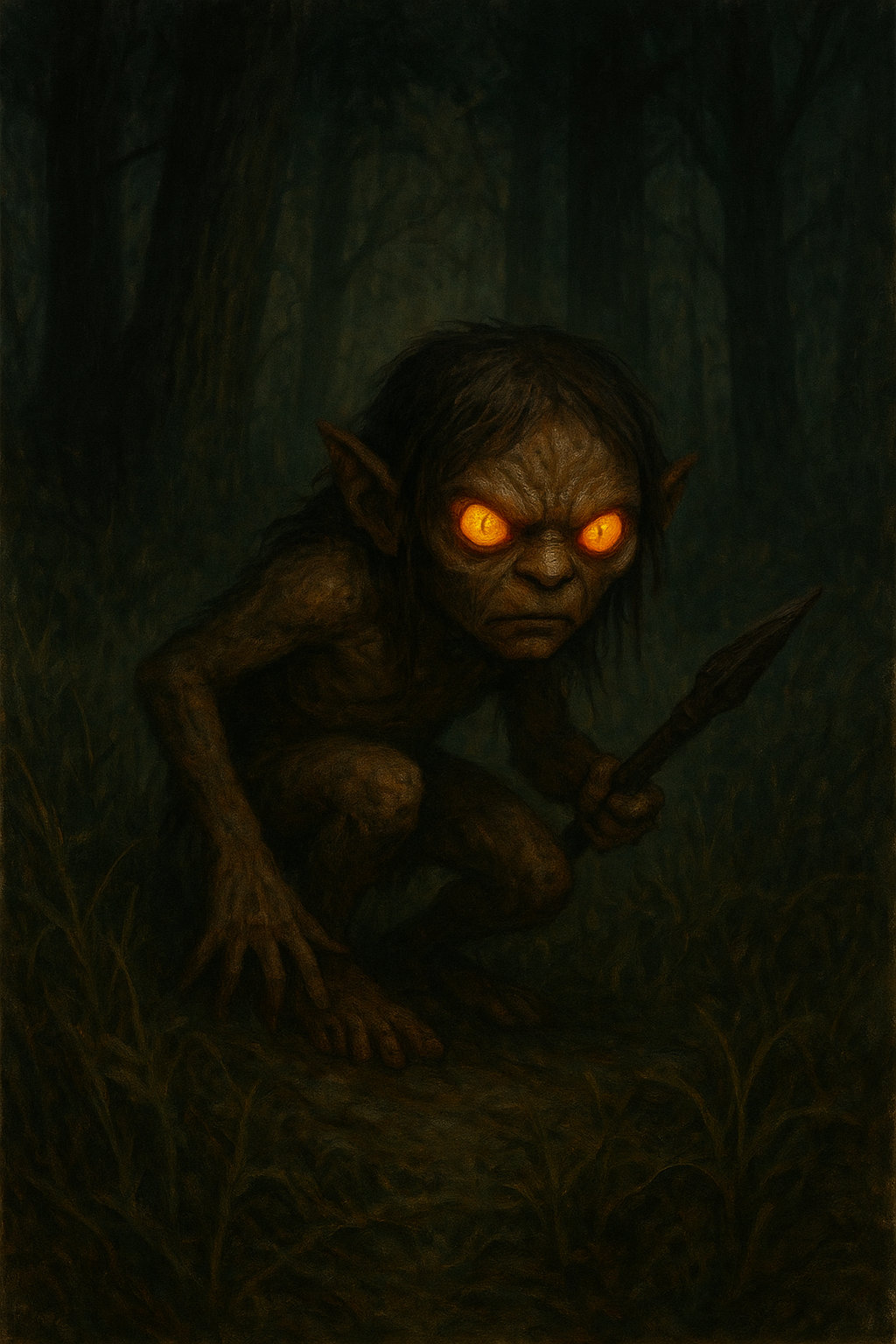
Long ago, when the plains of Wyoming and the rugged mountains of Colorado were wild and untamed, before the wagon trails scarred the earth and the smoke of settlements rose into the sky, the land was not empty. It teemed with life both seen and unseen, with spirits that walked alongside flesh and bone. Hidden among the tall grasses that rippled like green water in the wind, and deep within the shadowed canyons where sunlight barely reached, lived the Teihiihan the “strong ones” and high in the rocky peaks near the Wind River, the Nimerigar, whose name whispered through the tribes meant “people eaters.
They were small, these ancient beings, no taller than children of six or seven summers. But do not mistake their size for weakness or innocence. Their eyes burned with an inner fire, glowing amber in the darkness like the eyes of predators. Their strength was fierce and unnatural, their movements quick as striking snakes, and their hearts were cruel beyond measure. They felt no kinship with the human tribes, no mercy for the weak, no compassion for suffering.
Click to read all American Cryptids & Monsters — creatures of mystery and fear said to inhabit America’s wild landscapes.
The Nimerigar were cunning hunters of both man and beast. They knew the secret paths through the mountains, the hidden trails that wound through stone and forest where no human foot had trod. They would creep into villages at night when the fires had burned low and the guards had grown weary, moving like whispers through the darkness. Children would be snatched from their beds, their small voices silenced before they could cry out, leaving only sorrow and empty cradle boards behind. Mothers would wake to find cold spaces where their babies had slept, and the village would fill with keening that echoed across the plains.
Livestock vanished without a trace horses, dogs, even the bison calves that grazed near the camps. Brave warriors who ventured into the mountains seeking revenge or answers often returned broken in body and spirit, speaking in hushed, trembling voices of shadows that moved with inhuman speed and arrows the size of thorns that flew with deadly accuracy. Some never returned at all, and their families would burn their belongings and sing the death songs, knowing in their hearts what fate had befallen them.
Even among themselves, the little people were merciless. The tribes spoke in whispers of how the Nimerigar treated their own kind when one grew old, sick, or injured beyond usefulness, another would strike a swift, fatal blow with a stone club or tiny arrow. There was no ceremony, no honor in their passing. Weakness was not tolerated. Survival was everything, and sentiment was a luxury they could not afford.
Yet the Native people were not powerless. The tribes of the plains and mountains the Shoshone, the Arapaho, the Crow, and others though scattered across vast territories and often wary of one another, were wise and determined. They watched. They listened. They learned.
The elders studied the ways of the little people, noting their secret paths through the forest, the patterns of their raids, the sounds of their sharp, chittering laughter carried on the wind. They discovered which plants repelled them, which songs offered protection, which offerings might grant safe passage through dangerous territories. The medicine people prayed and fasted, seeking visions that would reveal the weaknesses of their enemies.
Slowly, deliberately, the tribes began to push back. One by one, the Teihiihan were hunted and driven from their territories in the plains. The tall grasses no longer hid them. The open spaces offered no sanctuary. They fled westward, deeper into the mountains, joining their cousins the Nimerigar in the high country.
But the Nimerigar were clever and relentless. They adapted, learning from the fate of the Teihiihan. They hid in caves so deep and narrow that grown warriors could not follow. They moved silently under the moon, their small bodies casting shadows no bigger than rabbits. They watched the humans with keen, calculating eyes, waiting for moments of weakness, striking when least expected.
It was said among the people that only children and medicine people could sometimes glimpse them clearly darting like shadows through the pines, their small forms blending with the undergrowth, their eyes glinting briefly before vanishing into the forest. Adults who tried to look directly at them found their vision blurring, as if the little people existed slightly outside the normal world.
The raids continued. The losses mounted. The grief of the tribes grew heavy as stone.
Then came a great council, unprecedented in its scope and purpose. Messengers were sent across the plains and into the mountains, carrying sacred pipes and speaking words of unity. The tribes gathered old rivals setting aside ancient grievances, warriors from different nations sharing fire and food, medicine people pooling their knowledge and spiritual power. They came together not as separate peoples, but as one human family facing a common threat.
They carried with them fire torches that would smoke out the caves and illuminate the darkness where the little people hid. They brought spears and clubs, arrows and stone knives. But more importantly, they brought cunning traps learned from generations of hunting, strategies devised by the wisest warriors, and courage born from collective sorrow for all the children lost, all the families broken.
Together, the united tribes moved into the Wind River mountains as the snow began to fall. For many nights, the battle raged across the peaks and through the valleys. The Nimerigar fought like storms fast and deadly, appearing and vanishing like lightning, their tiny arrows flying from impossible angles. But the tribes were united now, their hearts burning with determination and righteous anger. They fought not for territory or honor, but for the survival of their children, for the safety of future generations.
By dawn on the seventh day, when the first light touched the mountain peaks and painted them gold, the little people were no more. Their sharp laughter vanished from the wind. Their homes among the rocks fell silent, the small caves empty of life. The mountains seemed emptier than before, as if something ancient and wild had been erased from the world forever.
The tribes returned to their lands, carrying their dead with honor and singing songs of victory tinged with sadness. For though the threat was ended, they had also witnessed the extinction of an entire people, however dangerous and cruel they had been.
Even so, some say the spirit of the Nimerigar lingers still. Old people claim that on certain nights, the wind through the Pedro Mountains carries a faint, eerie echo not quite laughter, not quite weeping, but something in between. Some children still speak of shadows darting between the trees at dusk, moving too quickly and too deliberately to be animals. And in 1932, when miners unearthed a tiny mummy from the hills of Wyoming no taller than a child’s doll yet aged and weathered like an ancient warrior, its features strange and compressed it seemed that the stories of the little people were not merely tales told to frighten children. The Nimerigar had once walked the land, fierce, cunning, and unforgettable.
So remember, when you wander the plains where the grass whispers secrets, or climb the red rocks of Wyoming where eagles soar, tread carefully and speak with respect. For the little people, though vanished from sight, may still watch from the shadows of another world, waiting for the unwary, remembering the time when they ruled the mountains and the valleys below.
Explore Native American beings, swamp creatures, and modern cryptid sightings across the country.
The Moral of the Story
This story teaches that unity and cooperation can overcome even the most fearsome threats. When the tribes set aside their differences and worked together, they accomplished what none could achieve alone. It also serves as a reminder that cruelty and mercilessness even the Nimerigar’s treatment of their own kind ultimately leads to destruction. The tale warns against underestimating threats based on size or appearance, and emphasizes that wisdom, courage, and collective action are humanity’s greatest strengths when facing dangers both natural and supernatural.
Knowledge Check
Q1: Who were the Nimerigar and Teihiihan in Native American legend?
A: The Nimerigar (“people eaters”) and Teihiihan (“strong ones”) were legendary small beings in Shoshone, Arapaho, and Crow traditions of Wyoming and Colorado. Despite being child-sized, they possessed supernatural strength, cunning, and cruelty, preying on humans and livestock. The Teihiihan inhabited the plains while the Nimerigar lived in the Wind River mountains.
Q2: What made the Nimerigar particularly dangerous despite their small size?
A: The Nimerigar were dangerous due to their supernatural strength, incredible speed, cunning intelligence, and intimate knowledge of mountain terrain. They could move silently, strike without warning, shoot deadly accurate miniature arrows, and had the ability to remain nearly invisible to adult humans. Their complete lack of mercy and their practice of killing their own weak members demonstrated their ruthless nature.
Q3: Why could only children and medicine people see the Nimerigar clearly?
A: In many Indigenous traditions, children and medicine people possess spiritual sight that allows them to perceive beings that exist partially in the spirit world. The Nimerigar were said to exist “slightly outside the normal world,” making them difficult for ordinary adults to see directly their vision would blur when trying to look at the little people, while children and spiritually gifted individuals could perceive them more clearly.
Q4: What led to the defeat of the Nimerigar?
A: The Nimerigar were defeated when the tribes held a great council and united against the common threat. Previously scattered and sometimes rival tribes including the Shoshone, Arapaho, and Crow set aside their differences and combined their warriors, knowledge, and spiritual power. This unprecedented unity, along with their determination to protect their children, allowed them to overcome the little people’s advantages in a seven-day battle.
Q5: What is the significance of the 1932 mummy discovery mentioned in the story?
A: In 1932, a small mummified body was indeed discovered in the Pedro Mountains of Wyoming, measuring only about 14 inches tall but appearing to be an adult based on its features and development. This discovery gave credence to the ancient legends of the little people, suggesting that the Nimerigar stories might have been based on actual beings rather than pure mythology, bridging the gap between folklore and archaeological reality.
Q6: What cultural lesson does the Nimerigar’s treatment of their own kind teach?
A: The Nimerigar’s practice of killing their own weak, sick, or injured members demonstrates the self-destructive nature of societies without compassion or care for the vulnerable. This stands in contrast to the human tribes’ values of protecting children and honoring elders. The story suggests that cruelty and mercilessness even toward one’s own people ultimately leads to isolation and destruction, while compassion strengthens communities.
Cultural Origin: This story draws from the oral traditions of the Shoshone, Arapaho, and Crow peoples of Wyoming, Colorado, and the surrounding Rocky Mountain and Great Plains regions. The legends of the Nimerigar and Teihiihan are genuine elements of these tribes’ folklore, serving as cautionary tales and explanations for unexplained disappearances and dangers in the wilderness. The Wind River and Pedro Mountains mentioned in the story are actual locations in Wyoming where these legends were centered, and the 1932 mummy discovery is a documented archaeological find that continues to intrigue researchers.