In the years following the American Revolutionary War, the towns of Massachusetts slowly returned to a quieter rhythm. Roads that once carried urgent messages became paths for daily travel again, and nights that had once been filled with tension settled into stillness.
But not every sound disappeared with time.
In certain areas, especially along the old routes once used by riders, people began to speak of something unusual. On quiet nights, when the air was still and the land seemed to rest, a faint but steady sound could sometimes be heard.
Hoofbeats.
At first, the stories were dismissed. A farmer returning late one evening mentioned hearing a horse approaching from behind, moving at a quick and purposeful pace. He stepped aside, expecting a rider to pass, but no one appeared. The sound continued past him, as though the horse had moved ahead, yet the road remained empty.
He told others the next day.
Some assumed it was imagination, the result of fatigue or the way sound could travel at night. But within weeks, similar accounts began to surface. A woman near one of the old roads described hearing the same rhythmic pounding, steady and urgent, as though carrying a message that could not wait.
She, too, saw nothing.
The sound came, passed, and faded into silence.
Discover chilling ghost tales and haunted places that echo through America’s towns and countryside.
As more people shared their experiences, a pattern began to form. The hoofbeats were not random. They were heard along specific paths, routes known to have been used during the war, especially those tied to urgent rides and warnings.
One name began to appear in conversation.
Paul Revere.
His midnight ride had long been remembered as a moment of warning, a race against time to alert others of approaching danger. The idea that such a ride might echo beyond its moment did not seem impossible to those who had heard the unexplained sounds.
The stories grew.
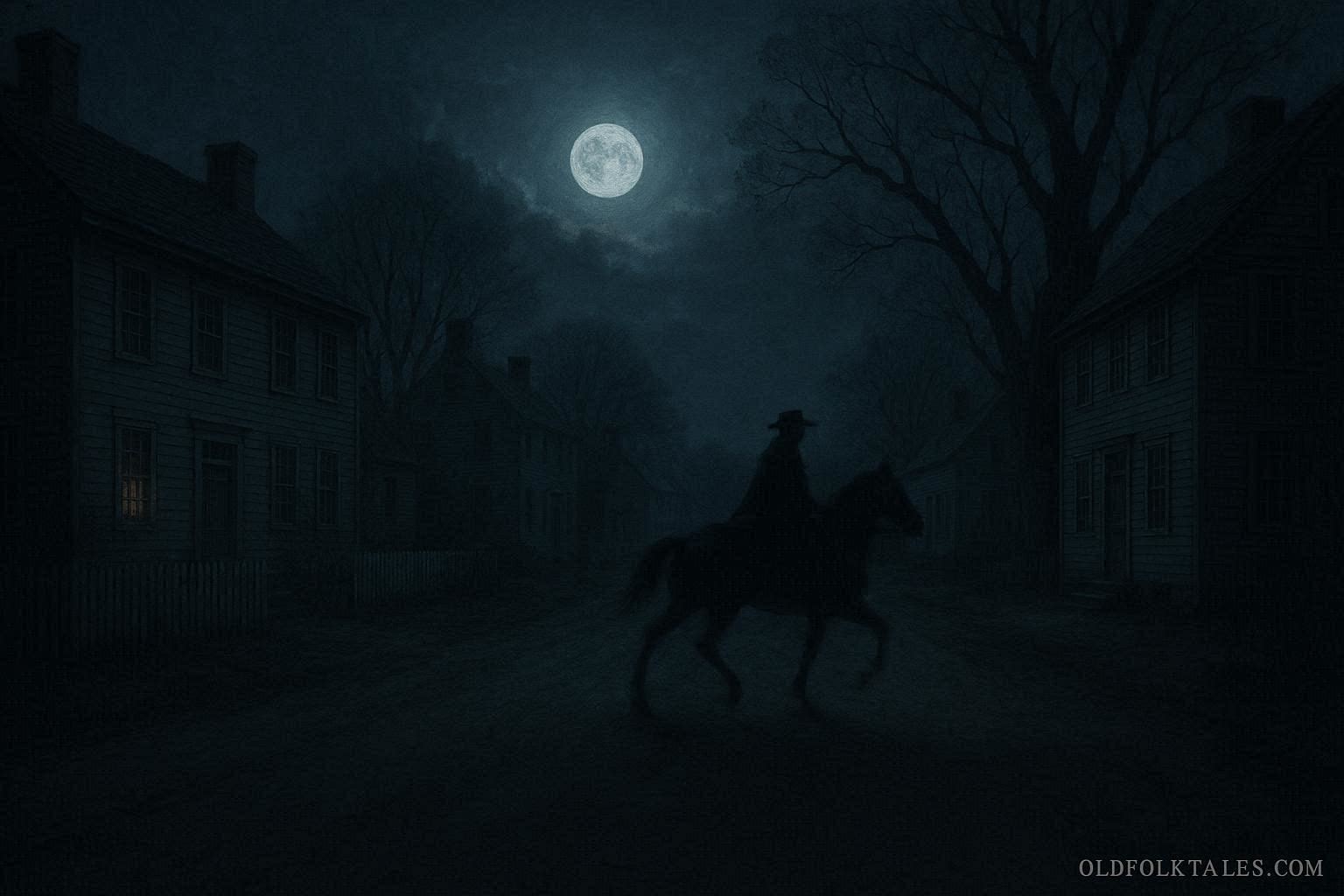
Some claimed not only to hear the horse, but to sense movement in the air, a shift as though something had passed quickly through the space around them. Others described a fleeting shadow, visible only for a second, shaped like a rider leaning forward, focused and determined.
Yet no clear figure was ever seen.
The experience was always partial.
Sound without sight.
Movement without form.
This made the stories difficult to confirm, but also difficult to dismiss.
Those who heard the hoofbeats often described the same feeling. Not fear, but urgency. The rhythm of the sound carried purpose, as though it was not wandering, but heading somewhere specific, repeating a journey that had once mattered greatly.
Some began to wonder if the sound was more than an echo.
If it was a memory carried by the land itself.
Old roads held history in ways that were not always visible. They had been shaped by footsteps, wheels, and hooves during moments of importance. It was not hard to imagine that such moments might leave something behind.
A few people attempted to follow the sound.
When the hoofbeats began, they would step onto the road and walk in the direction it seemed to move. But no matter how far they went, the distance never closed. The sound remained just ahead, steady and clear, until it faded.
Never closer.
Never gone completely.
Just beyond reach.
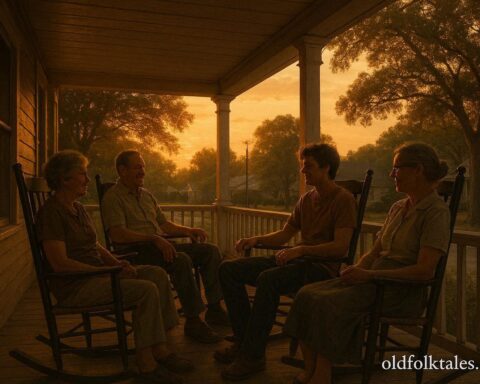
Over time, the stories became part of local tradition. They were told during quiet evenings, especially in places where the old roads still remained unchanged. Children listened with curiosity, imagining the rider moving through the night, while adults spoke more carefully, aware that the accounts came from people they trusted.
Not everyone believed.
Some insisted there must be a natural explanation. Sound could travel in strange ways, especially at night. A distant horse, a shifting echo, or even the mind filling in what it expected to hear.
But those who had experienced it often disagreed.
They spoke of the clarity of the sound, the consistency of the rhythm, and the unmistakable sense that it was not random. It felt deliberate, as though tied to something that had once happened and continued in some form.
Years passed, and the world changed.
Roads were widened, new paths were built, and the pace of life grew faster. Yet in certain places, especially where the old routes remained, the stories did not fade.
Even in more modern times, there were occasional reports.
A late-night traveler pausing as a familiar sound approached.
A moment of stillness broken by the steady rhythm of hooves.
A road that seemed empty, yet not entirely silent.
Each account added to the story, not changing it, but reinforcing its presence.
The meaning of the phantom ride was never fully agreed upon.
Some saw it as a reminder of vigilance, an echo of a time when warning came in the form of a single rider moving through the night. Others believed it was simply history repeating itself in a way that could not be explained.
Whatever the truth, the story endured.
Not because it was proven, but because it was experienced.
A sound carried through time.
A ride that never fully ended.
And a reminder that some moments in history leave marks that go beyond what can be seen, continuing quietly in the spaces where past and present meet.
Click now to read all American Legends — heroic tales where truth and imagination meet, defining the American spirit.
Moral Lesson
Important actions can leave lasting impacts, and some moments in history continue to echo beyond their time.
Knowledge Check
- Which historical figure is connected to the story?
Paul Revere. - What unusual sound did people report hearing?
They heard the sound of horse hoofbeats on empty roads. - Where were the sounds usually heard?
Along old roads connected to Revolutionary War routes. - Did witnesses see a rider clearly?
No, they mostly heard the sound without seeing anyone. - What feeling did the hoofbeats give to listeners?
A sense of urgency and purpose. - What is the main idea of the story?
That history can leave lasting echoes that people continue to experience.
Source
Adapted from materials preserved by Massachusetts Historical Society
Cultural Origin
Revolutionary folklore