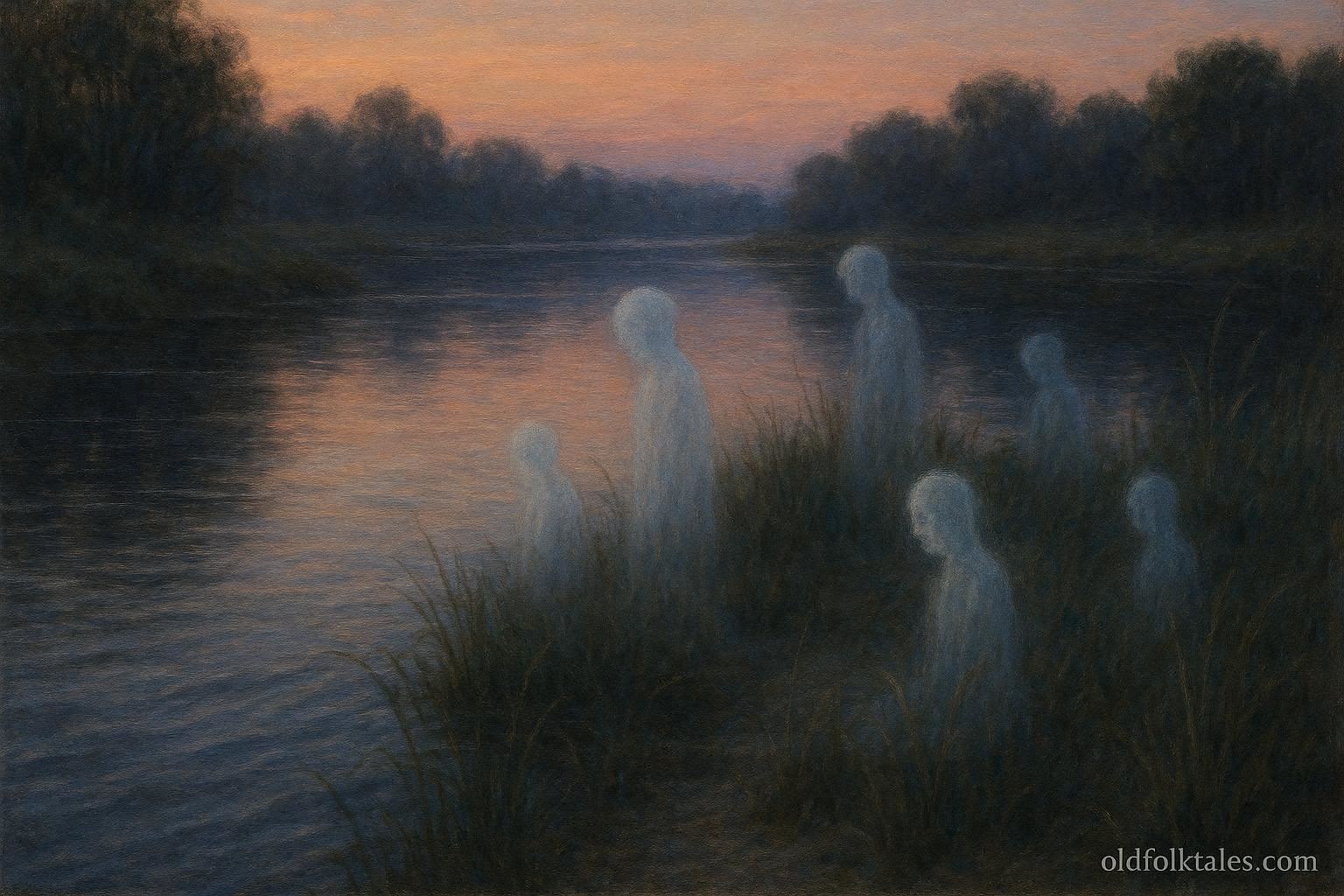
As evening settles and daylight begins to soften, rivers across the Upper Midwest take on a quiet presence. The surface of the water reflects the dimming sky, and the steady movement of the current slows the rhythm of the surrounding land. It is during this moment between day and night that people have long reported seeing figures rise gently along the riverbanks. These figures are not shadows cast by trees or reflections on the water. They appear as human shaped forms, faint yet distinct, standing where the river meets the shore.
Communities living near these rivers tell stories that stretch back generations. The riverbanks were once places of settlement, ceremony, and burial. Families gathered there to fish, trade, and travel, and the water carried both life and memory. When people passed away, they were often laid to rest near the river, believing the water would guide the spirit onward. Over time, the land absorbed these practices, holding memory in the soil and along the water’s edge.
Witnesses describe the spirits as calm and unhurried. They rise slowly from the riverbank or appear just beyond the reeds, standing silently before fading back into the evening light. They do not approach or speak. Their presence feels observant, as if they are watching the river continue its endless movement. Those who see them often feel a sense of stillness rather than fear, as though the moment invites reflection.
Step into America’s cultural roots — from folk healing and weather lore to seasonal celebrations.
Children are often the first to notice the figures. While walking near the river at dusk, they point toward shapes that adults initially dismiss. Children describe people standing near the water who seem to glow faintly. When asked what the figures are doing, children often say they are waiting or watching the river flow. Elders explain that children may be more open to sensing the presence of memory embedded in the land.
Adults describe a different experience. Many feel the air change as dusk approaches. Sounds soften, and the river seems to grow louder in contrast to the quiet land. When the spirits appear, adults report a feeling of respect, as if stepping into a space that should be acknowledged rather than disturbed. Some people instinctively lower their voices or pause their movement, sensing the significance of the moment.
The spirits are believed to appear most often at places where the river bends or widens. These locations were historically important gathering points and travel routes. The movement of the water at these spots creates a natural pause, mirroring the transitional nature of dusk. Elders explain that these moments reflect the balance between movement and stillness, life and memory.
According to oral tradition, the spirits are not bound to sorrow or unrest. They are not trapped or seeking attention. Instead, they exist as reminders of continuity. The river carries stories forward, just as the spirits carry memory forward. Their appearance at dusk represents the transition between worlds, a moment when the boundary between the living and the remembered becomes thin.
Animals are said to sense the spirits as well. Birds grow quiet, and animals pause near the water’s edge. Fish movement slows briefly, and insects hover low. These subtle changes reinforce the belief that the spirits influence the environment gently, without disruption. The land responds to their presence as part of a natural cycle rather than an intrusion.
Some families perform small acts of acknowledgment when passing riverbanks at dusk. They might pause, place a stone near the water, or offer a brief moment of silence. These gestures are not meant to summon the spirits but to recognize the history held by the river. Elders teach that respect ensures balance, allowing the river and its memory to continue without disturbance.
The spirits are also associated with guidance. Travelers moving along the river at twilight sometimes report feeling watched over, as if the figures ensure safe passage. This belief connects to the idea that ancestors continue to care for the living, offering protection through presence rather than action.
Stories describe the spirits as appearing in groups or alone, depending on the location. Some riverbanks show several figures standing quietly together, while others reveal a single presence. The variation reflects the history of the place, whether it was once a village site, a burial ground, or a frequently traveled crossing.
As modern development changed river landscapes, sightings became less frequent in altered areas. However, in places where the river remains undisturbed, the stories persist. The spirits continue to appear where water flows freely and the land retains its memory. This connection reinforces the importance of preservation, not only for the environment but for cultural memory.
The legend of riverbank spirits teaches that water is more than a physical resource. It is a carrier of history, emotion, and connection. The spirits serve as living reminders that the past flows alongside the present, shaping identity and responsibility. By observing respectfully, communities maintain harmony between memory and daily life.
Even today, those who walk near rivers at dusk may catch a glimpse of a faint figure standing quietly by the water. The moment passes quickly, leaving behind reflection rather than fear. These encounters remind observers that remembrance does not require words, only awareness and respect.
Discover chilling ghost tales and haunted places that echo through America’s towns and countryside.
Moral Lesson
Honoring memory and respecting transitional spaces allows the past and present to exist in balance.
Knowledge Check
- When do the riverbank spirits most often appear?
They appear at dusk during the transition from day to night. - Where are these spirits usually seen?
Along riverbanks near settlement or burial sites. - Who often notices the spirits first?
Children. - Are the spirits described as harmful or frightening?
No, they are calm and observant. - Why are rivers important in these legends?
Rivers carry memory, life, and connection between generations. - What do small acts of acknowledgment near the river represent?
Respect for history and balance between past and present.
Source
Adapted from University of Minnesota Indigenous river spirit documentation
Cultural Origin
Upper Midwest Indigenous communities