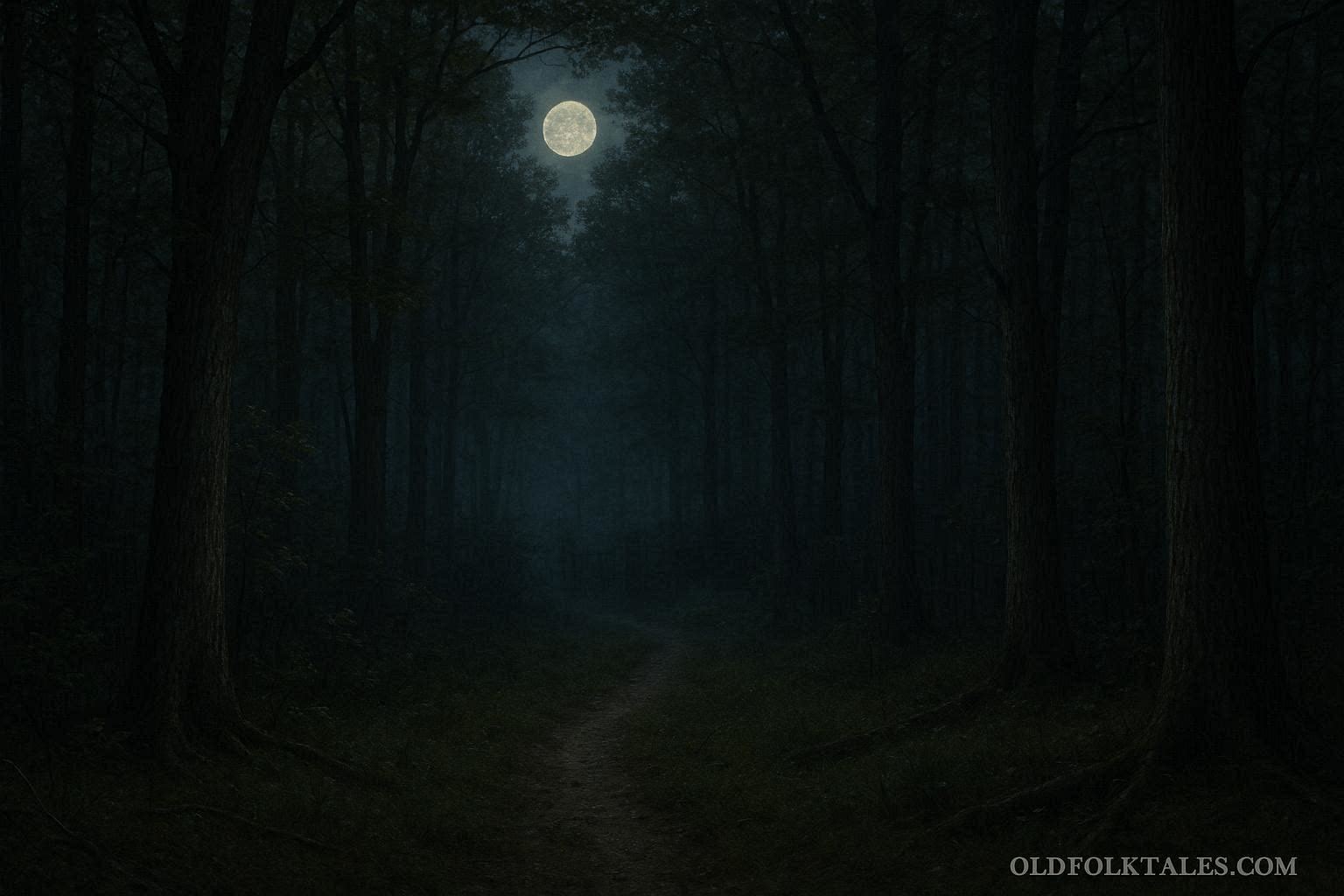
The woods did not look dangerous in daylight. That was the first thing locals always said, and the reason so many people ignored the warnings.
From the road, the trees appeared ordinary, dense but unremarkable, folding into the Pennsylvania landscape the way forests always had. There were no fences. No official signs. No markers that suggested anything sacred, cursed, or forbidden. And yet, for generations, families living near the wooded stretch outside York County had passed down the same instruction, spoken quietly and without explanation.
Do not go there at night.
Do not follow anyone who claims to know the way.
Do not count the gates.
The stories rarely began with supernatural language. Parents did not speak of demons or monsters. They spoke of disappearances, of young people who entered the woods laughing and returned silent, or did not return at all. Grandparents framed the place as a test, a boundary where curiosity outweighed wisdom. Older siblings used it as a warning. Teenagers treated it as a challenge.
Explore the heart of America’s storytelling — from tall tales and tricksters to fireside family legends.
The name came later, passed mouth to mouth until it hardened into something almost official. Seven Gates of Hell.
No one agreed on who named it. Some said it was teens in the 1970s. Others insisted the phrase had circulated much earlier, whispered by farm families who remembered different kinds of gatherings in the woods, gatherings that had nothing to do with adolescent bravado.
What everyone agreed on was this: the gates were not literal at first.
The first gate, according to local tradition, was the decision to enter.
The dirt road that led toward the forest narrowed gradually, as if discouraging travel without openly refusing it. Houses became sparse. Streetlights disappeared. The air changed in ways people struggled to explain later, not colder or warmer, but heavier. Sound seemed to travel poorly there. Conversations faded faster than expected. Engines sounded muted.
Those who turned back early described relief, even embarrassment at having been afraid of nothing. Those who continued described something else entirely.
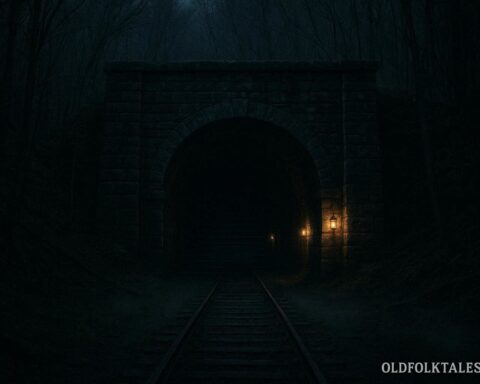
Inside the woods, paths forked without warning. Trails that appeared well-worn would dissolve into undergrowth after a few steps. Trees leaned inward, creating the sensation of being watched rather than blocked. People reported seeing structures that were not there on subsequent visits: broken gates, rusted iron frames, wooden posts arranged too deliberately to be natural.
This was where the second gate was said to exist, the point at which orientation failed.
Stories from the mid-twentieth century told of groups who entered together and emerged separately, hours apart, unable to agree on what they had seen. Some insisted they had passed through multiple gates, each one marked by a physical threshold. Others said the gates were felt rather than seen, moments when fear sharpened into certainty that turning back was no longer simple.
The third gate carried the most warnings.
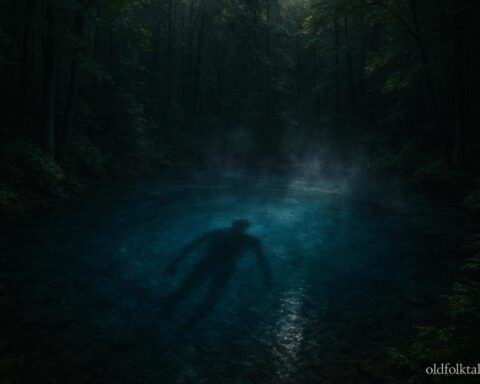
It was here, elders said, that sound changed. Laughter became inappropriate. Voices carried oddly, sometimes repeating words seconds after they were spoken, sometimes cutting off mid-sentence. Teenagers who treated the place as a test of bravery often reached this point and fell silent, later unable to explain why. One York County family recalled a son who returned home before dawn, shoes soaked, unable to remember how he had left the woods or why his friends were not with him.
They were found days later on the opposite side of the forest, dehydrated but alive, claiming they had never seen him turn away.
Ritual stories grew around this gate, though no one could confirm their origin. Some said groups once gathered there to test loyalty or courage. Others believed outsiders had used the forest for ceremonies that local families did not name aloud. What mattered more than accuracy was repetition. The warnings remained consistent even when details changed.
Do not stay once you stop hearing yourself think.
The fourth gate was associated with light.
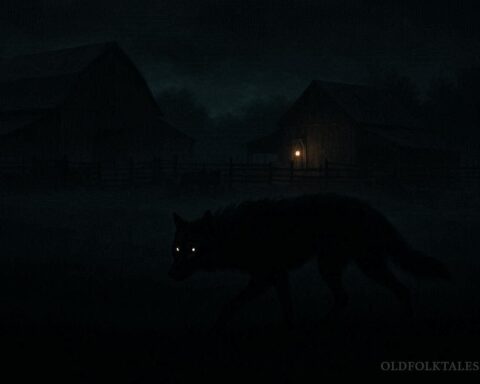
People described lanterns or fires glimpsed between trees, never approached successfully. No matter how long one walked toward the glow, it remained distant. Some claimed the light moved. Others said it vanished when acknowledged. A few insisted the light reacted to names spoken aloud, flaring briefly before extinguishing itself.
This was where disappearances clustered in the stories.
Not vanishings in the dramatic sense, but absences that lingered uncomfortably. A person failed to come home. A search turned up nothing definitive. Eventually life resumed, but something remained unsettled. Families avoided the woods. Children were warned without explanation. The forest absorbed the narrative without offering closure.
By the fifth gate, legends said, the woods no longer felt like woods.
Trees repeated. Paths looped. Landmarks contradicted memory. Some described the sensation of being observed not by something hostile, but by something evaluating. This was the gate associated with adolescence, the age when curiosity collided with consequence. Many stories involved teens daring one another to reach this point, only to retreat shaken, friendships strained by what could not be articulated.
Adults rarely spoke of passing beyond this gate. When asked, they deflected or changed the subject.
The sixth gate was rarely described at all.
In some versions, it did not exist physically. In others, it was a structure hidden deep in the forest, accessible only after passing the earlier thresholds in order. What united these accounts was restraint. Storytellers emphasized that knowledge beyond this point was not meant to be shared. Not because it was secret, but because it was damaging.
The seventh gate was never reached in the stories.
Not truly.
It existed as an idea, a boundary placed far enough away to prevent exploration while close enough to provoke imagination. Hell, in this context, was not fire or punishment. It was consequence. A place where rules applied without mercy. A reminder that some spaces were not designed for casual entry.
Over time, the Seven Gates of Hell became less about the woods themselves and more about behavior. Families used the story to teach limits. Schools whispered about it. Teenagers tested it. Local law enforcement treated nighttime calls near the area seriously, not because of belief, but because experience had taught them that people panicked there more easily.
The woods remained.
No official records confirmed rituals. No documented proof established gates. Yet the stories persisted, shaped by repetition rather than evidence. That persistence was the point. The legend survived because it served a function, warning against reckless curiosity, reminding listeners that not every challenge deserved acceptance.
Even now, residents of York County lower their voices when the subject arises. They speak of the forest with respect rather than fear. They warn newcomers without dramatics. And when pressed for details, they return to the same advice passed down for generations.
You do not need to see the gates for them to work.
Click now to read all American Legends — heroic tales where truth and imagination meet, defining the American spirit.
Moral Lesson
Some boundaries exist not to provoke courage but to preserve safety. Wisdom lies in recognizing when curiosity should yield to restraint.
Knowledge Check
- Why did the Seven Gates of Hell legend persist across generations?
Answer: It functioned as a communal warning system rather than a single event story. - What was considered the first gate?
Answer: The decision to enter the woods despite warnings. - How did sound reportedly change within the forest?
Answer: Voices echoed unpredictably or fell unnaturally silent. - Why was the fourth gate associated with light?
Answer: People reported distant lights that could not be reached or explained. - What age group most often appears in the legends?
Answer: Adolescents testing boundaries and bravery. - What does “hell” symbolize in the legend?
Answer: Consequence rather than a literal place of punishment.
Source
Adapted from Pennsylvania State University regional folklore archives
Cultural Origin
York County, Pennsylvania