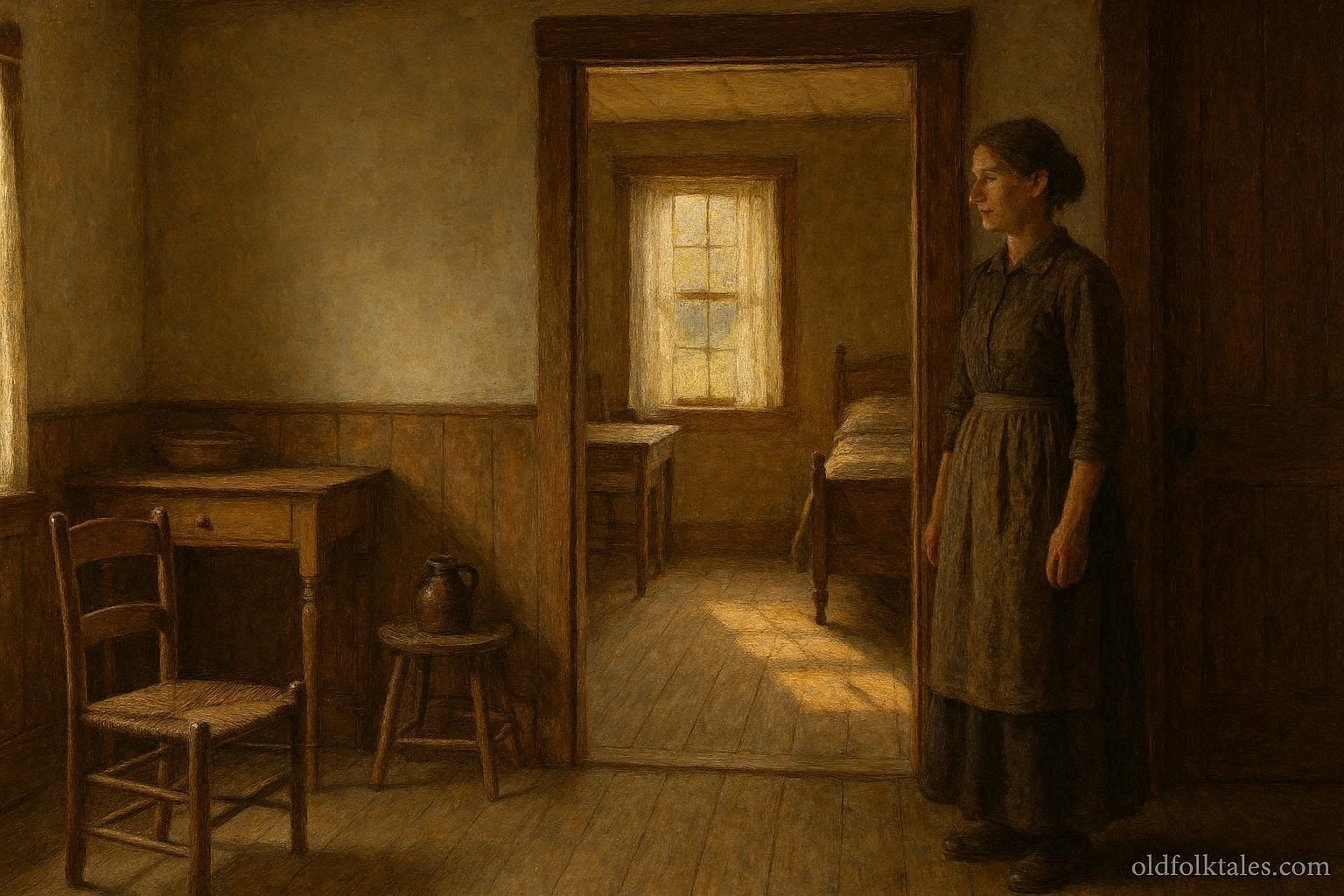
In many American homes, the doorway was never treated as just a structural feature. It marked a point of transition, a line between inside and outside, safety and uncertainty, rest and movement. Because of this, elders in Southern and rural communities taught a simple rule that was rarely questioned. Never sit in a doorway.
The belief was not delivered as a suggestion. It was a warning. Sitting in a doorway was said to block opportunity, delay progress, and invite stagnation into a person’s life. Children heard it early, often accompanied by a sharp command to move aside. Adults absorbed it quietly, sometimes without ever being told the reason.
In older rural homes, doorways were narrow and functional. They allowed airflow during hot summers and light during the day. People passed through them constantly while working, carrying tools, food, or water. To stop in that space disrupted the rhythm of the household. What began as a practical concern slowly developed into a symbolic one.
Encounter the strange and the unseen — from Bigfoot to regional monsters hiding in America’s forests.
The doorway came to represent motion itself. Life was meant to move forward. Sitting still in a place meant for passage was believed to interfere with that movement. Elders said opportunity flowed like air. When someone sat in a doorway, that flow was blocked.
Stories reinforced the belief. A young woman who lingered in doorways was said to struggle to marry. A man who rested in thresholds was thought to lose momentum in work. A child who played there was warned that they would grow indecisive or unlucky. Whether coincidence or caution, these stories shaped behavior.
In Southern households, the doorway carried additional meaning. It was a place where guests entered, where news arrived, and where departures were witnessed. Sitting there was seen as disrespectful to what was coming and going. It suggested hesitation. It suggested being stuck between choices.
Some families believed the doorway confused spiritual forces. Blessings, luck, and protection were thought to pass through entrances. Blocking that space interrupted their path. Others believed doorways were watched by unseen presences who disliked obstruction. Sitting there invited discomfort rather than harm, a slow dulling of progress rather than sudden misfortune.
The superstition also reflected deeper cultural values. Rural life demanded decisiveness. Work waited for no one. Hesitation could cost a harvest, a wage, or safety. The doorway became a metaphor for delay. To sit there was to refuse commitment to either side.
Parents enforced the rule strictly. Children were told to stand or move fully inside or outside. Guests were guided away from thresholds and offered chairs. Even elders avoided lingering there. Over time, the action itself felt wrong. People stood instinctively when they found themselves in a doorway.
As communities modernized, the belief traveled with them. Even in apartments and city homes, people felt uneasy blocking doorways. Offices discouraged sitting in entrances. Stores kept aisles clear. The idea that progress required open passage remained intact.
Language preserved the superstition. Phrases like blocking your own way or stuck in the doorway echoed the belief without naming it. Opportunity was imagined as something that arrived, not something chased. If the path was blocked, it simply moved on.
In some families, the doorway also symbolized life transitions. Births, deaths, marriages, and departures all passed through that frame. Sitting there was seen as disrespectful to those moments. It suggested lingering in the past or fearing the future.
Today, many people still correct others instinctively. Move out of the doorway. Do not block the entrance. Even when no superstition is mentioned, the discomfort remains. The threshold is not a resting place.
The belief endures because it reflects a quiet truth. Progress requires movement. Opportunities pass quickly. Hesitation at critical moments can close doors before we realize they were open.
Sitting in a doorway was never just about furniture placement. It was a lesson in readiness. Choose a direction. Step forward or step back. But do not stop where movement is meant to happen.
Click to read all American Traditions & Beliefs — the living folklore of daily life, customs, and superstitions.
Moral Lesson
Opportunities require decisiveness and openness. Remaining stuck between choices can prevent progress and growth.
Knowledge Check
- What action was believed to block opportunity?
Answer Sitting in doorways - What did doorways symbolize in these communities?
Answer Transition and movement - Why were children often corrected immediately?
Answer Doorways were not meant for stillness - What practical habit helped shape the superstition?
Answer Keeping paths clear for daily work and movement - How did the belief connect to life progress?
Answer Hesitation was believed to cause stagnation - How does the superstition survive today?
Answer People instinctively avoid blocking entrances
Source
Adapted from Smithsonian American doorway belief documentation
Cultural Origin
Southern and rural American communities