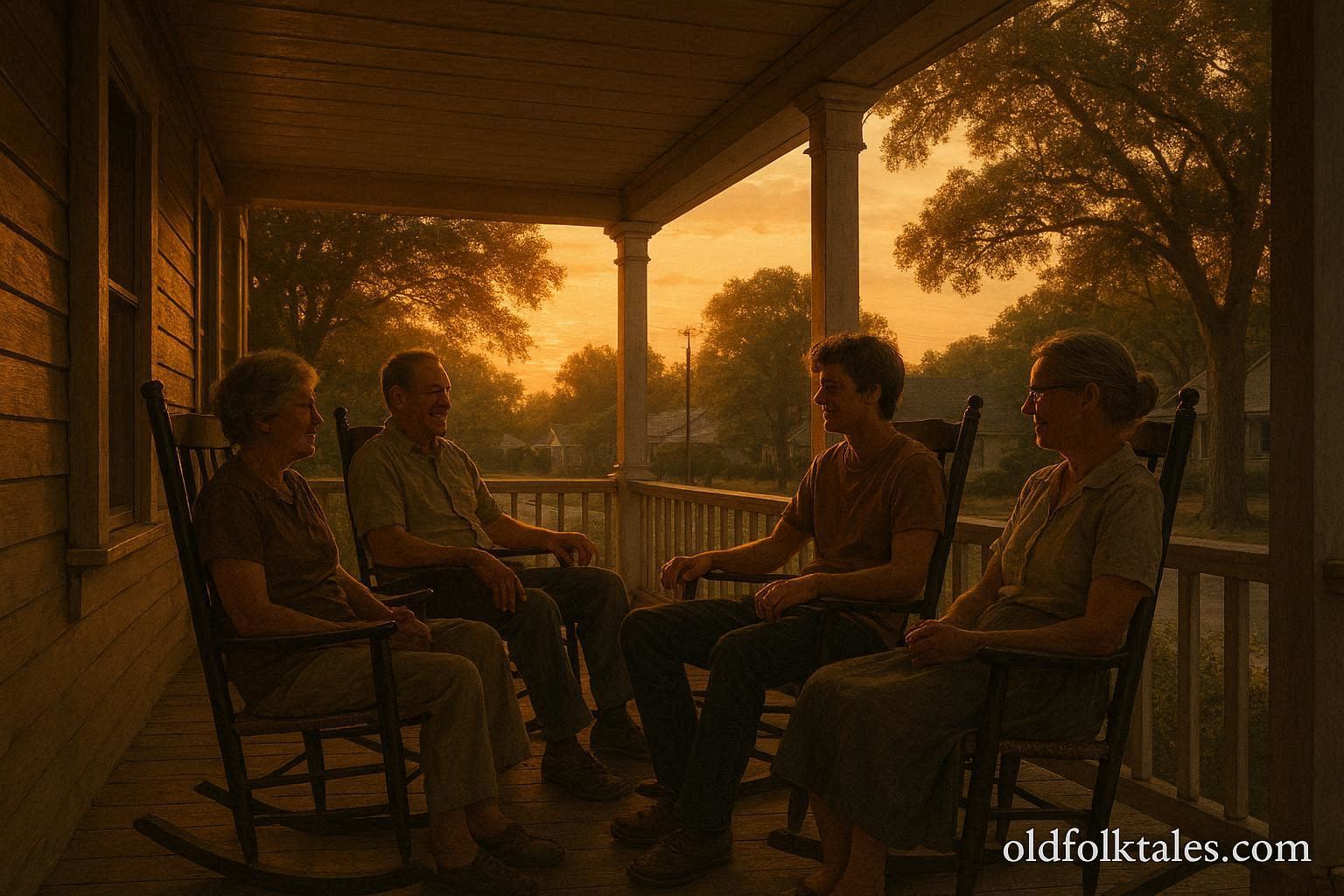
In the height of summer, when the days stretch long and the heat settles deeply into the afternoon, there comes a time each evening when the air begins to change. The sun lowers, the brightness softens, and the warmth slowly gives way to a more comfortable calm. In many parts of the Southern United States, this moment marks the beginning of a familiar and meaningful tradition known as porch sitting.
Porches, often built at the front of homes, serve as a space between indoors and outdoors. They are neither fully inside nor completely outside, but a place where both worlds meet. During the day, the heat may keep people indoors, but as evening approaches, the porch becomes a gathering place. Chairs are brought out, doors are left open, and the rhythm of the day begins to slow.
The transition from day to evening is gradual. The sounds of daytime activity begin to fade, replaced by softer, more natural sounds. Birds settle, insects begin their steady hum, and a light breeze moves through the air. The porch offers a place to experience these changes without the intensity of the day’s heat.
Explore Native American beings, swamp creatures, and modern cryptid sightingsacross the country.
As people step outside, the act of sitting becomes intentional. It is not done in a hurry or with a specific goal. Instead, it is a way of being present in the moment. Family members gather, neighbors join in, and the space becomes one of shared experience. Conversations begin easily, often without a clear starting point, and continue without the need for structure.
The topics of these conversations vary. Some speak about the events of the day, while others share stories from the past. Laughter may rise and fall, pauses may occur, and silence is often comfortable. The porch creates an environment where communication feels natural, shaped by the relaxed pace of the evening.
In traditions connected to Southern American culture, porch sitting is more than a habit. It reflects a way of life that values connection, simplicity, and time spent together. The pace is slower, allowing space for interaction that might not happen during the busier parts of the day.
The environment plays an important role in shaping the experience. The fading light creates long shadows, and the sky shifts through soft colors as the sun sets. The temperature becomes more comfortable, making it easier to remain outdoors for longer periods. The porch provides a place to observe these changes, to watch the day come to an end in a gradual and peaceful way.
Food and drink are sometimes part of the gathering, but they are not the focus. A cool drink, a simple snack, or a shared treat may be present, adding to the comfort of the moment. The emphasis remains on the experience itself, rather than on any particular activity.
The tradition also allows for connection beyond the immediate household. Neighbors may pass by and stop to talk, or voices may carry from one porch to another. The openness of the space encourages interaction, creating a sense of community that extends beyond individual homes.
The importance of such everyday cultural practices is recognized in archives like those at University of North Carolina, where traditions of daily life are preserved and studied. These practices, though simple, provide insight into how people create meaning and connection in their routines.
As evening deepens into night, the atmosphere continues to change. The sky darkens, stars begin to appear, and the sounds of the night become more pronounced. The porch remains a place of gathering, but the energy becomes quieter. Conversations slow, and moments of silence become more frequent.
The act of sitting, which began as a way to escape the heat, becomes something more. It becomes a time of reflection, a chance to pause between the activity of the day and the rest of the night. The stillness of the moment allows thoughts to settle and creates a sense of calm.
For children, the porch is a place of observation and learning. They listen to conversations, watch the environment, and begin to understand the rhythm of the day. These experiences shape their sense of time and connection, creating memories that remain long after the moment has passed.
Even as modern life becomes faster and more structured, the tradition of porch sitting continues. It may not occur every evening, and it may take different forms, but the idea remains. The desire to step outside, to sit, and to connect with others is still present.
In urban areas, the porch may be replaced by a balcony, a small outdoor space, or even a shared walkway. The setting changes, but the purpose remains the same. It is about creating a moment of pause, a space where the pace of life can slow.
The simplicity of the tradition is part of its strength. It does not require preparation, special tools, or planning. It only requires time and willingness. The act of sitting, combined with the presence of others, is enough to create meaning.
As summer continues, these evenings become part of a pattern. Each day ends in a similar way, with the gradual movement from heat to coolness, from activity to rest. The porch becomes a consistent space within this pattern, a place where the day is brought to a close.
The tradition also reflects an understanding of balance. The day is for work, movement, and activity. The evening is for rest, connection, and reflection. Porch sitting becomes a way of maintaining this balance, ensuring that time is given to both aspects of life.
When the season eventually changes and the evenings grow cooler, the time spent on the porch may decrease. The chairs may be moved inside, and the gatherings may become less frequent. But the memory of those evenings remains, carried into the next season.
And when summer returns, the tradition begins again.
The porch fills once more, the conversations resume, and the rhythm of evening settles back into place. The cycle continues, shaped by the changing seasons and the constant need for connection.
In this way, the summer porch sitting evening tradition becomes more than a simple activity. It becomes a reflection of how people choose to spend their time, how they connect with others, and how they respond to the natural flow of the day.
It is a reminder that not every moment needs to be filled with purpose. Sometimes, simply sitting, listening, and sharing space is enough.
Step into America’s cultural roots — from folk healing and weather lore to seasonal celebrations.
Moral Lesson
Taking time to slow down and connect with others strengthens relationships and brings balance to life.
Knowledge Check
- What is porch sitting?
Spending evenings outdoors relaxing and talking - When does it usually happen?
During summer evenings - Why do people sit on the porch?
To cool down and socialize - What does the tradition promote?
Connection and relaxation - How does the environment change in the evening?
It becomes cooler and quieter - What is the main idea of the story?
That slowing down helps build stronger connections
Source
Adapted from materials preserved by University of North Carolina
Cultural Origin
Southern American tradition