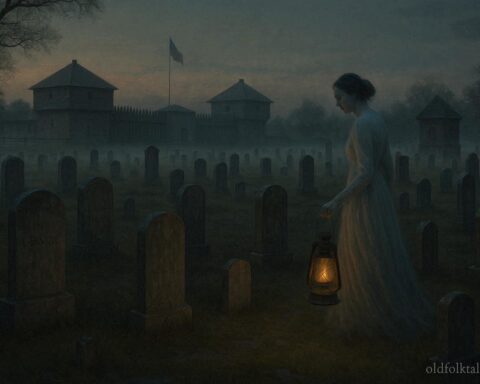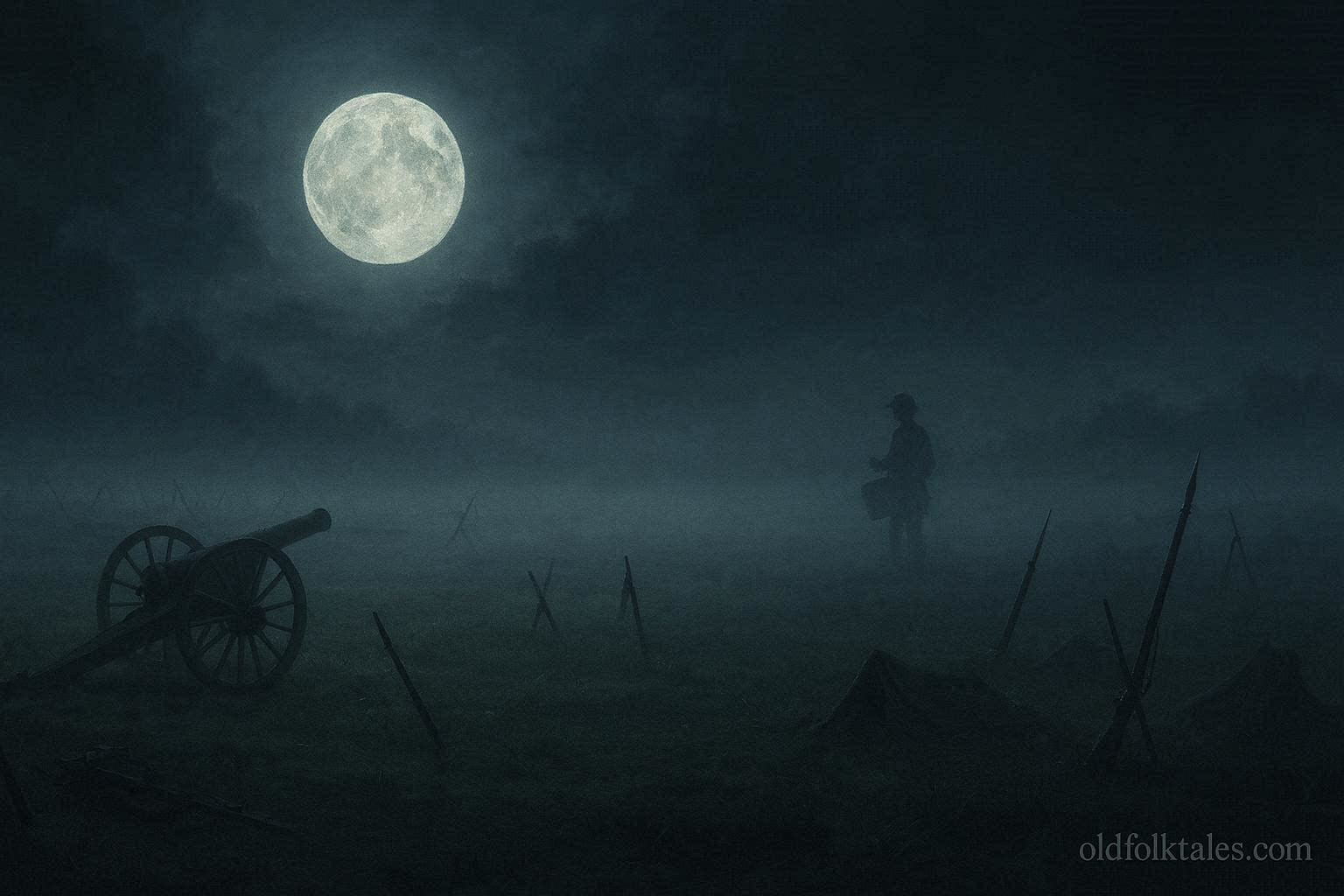
In the rolling fields of Gettysburg Battlefield, where one of the most significant clashes of the American Civil War took place, the land appears calm today. Grass covers the ground where soldiers once stood, and monuments mark the positions where history unfolded.
By day, it is a place of learning and remembrance.
By night, some say, it becomes something else.
Visitors and locals alike have long reported hearing a sound that does not match the quiet stillness of the field after dark. It is not loud, nor sudden, but steady and unmistakable.
The beat of a drum.
The stories often begin the same way. Someone walking along a quiet path, or standing still to take in the silence, hears a faint rhythm in the distance. At first, it is easy to dismiss. The mind searches for an explanation—a distant event, an echo carried by the wind, or a sound from far beyond the hills.
But the rhythm continues.
Slow.
Measured.
Deliberate.
Those who hear it describe it as the kind of beat used to signal movement or command, a sound that once guided soldiers during times of war. It is not chaotic or random. It follows a pattern, as though it still serves a purpose.
Step into shadowy legends of restless spirits and ghostly travelers in American Ghost Stories.
When listeners try to follow it, the experience changes.
The sound does not grow closer.
No matter how far they walk, the drum remains at a distance, always just beyond reach. It does not fade quickly, but it never becomes clear enough to locate. Eventually, it stops, leaving only silence behind.
No drum is found.
No person is seen.
Only the memory of the sound remains.
These accounts have been shared for generations, becoming part of the folklore surrounding the battlefield. Some visitors arrive having heard the stories, curious to experience something unusual. Others encounter it unexpectedly, unaware of the legends until afterward.
Descriptions vary slightly, but certain details remain consistent.
The timing is often late evening or night.
The environment is quiet, with little to no wind.
And the rhythm is steady, not hurried, as though marking time rather than calling for action.
There are those who believe the sound is simply an echo.
Battlefields hold history in a way few places do. The events that occurred there were intense, filled with movement, noise, and emotion. It is possible, some suggest, that the mind, aware of this history, interprets natural sounds in a way that connects them to the past.
Others believe the explanation is not so simple.
They see the drum as a form of memory that remains tied to the land. Not a physical object, but an impression, a trace of the actions that once took place. In this view, the rhythm is not being played again, but remembered.
There are also those who approach the story with caution.
They do not claim certainty, but they acknowledge the consistency of the accounts. When many people, across different times, describe similar experiences in the same location, it raises questions that are not easily answered.
The drum, in these stories, is not frightening.
It does not signal danger.
Instead, it carries a sense of order and purpose, much like it would have during the time of battle. It feels connected to the structure of military life, where rhythm guided movement and communication.
This connection gives the story a different tone.
Rather than focusing on fear, it invites reflection.
It reminds listeners of the people who once stood on that ground, the commands they followed, and the moments they experienced. The sound becomes less about mystery and more about memory, a way of connecting the present to the past.
Over time, the legend has become part of how the battlefield is understood.
Institutions such as the Gettysburg Foundation work to preserve the history of the site, ensuring that the events of the past are documented and remembered. Alongside this work, the stories of unexplained sounds continue to be shared, adding a cultural layer to the historical record.
Not everyone hears the drum.
Many visit the battlefield and experience only its quiet beauty. But for those who do hear it, the moment is often unforgettable. It is brief, subtle, and difficult to explain, yet it leaves a lasting impression.
The meaning of the sound remains open.
It may be a natural occurrence, shaped by the environment and the mind.
It may be an echo, not in the physical sense, but in the way history lingers in certain places.
Or it may be something else entirely, something that cannot be fully understood but continues to be experienced.
What is certain is that the story endures.
It is told not as proof of anything, but as part of the broader narrative of a place that holds deep historical significance. The battlefield is not only a site of past events, but also a space where people continue to reflect, remember, and sometimes encounter moments that feel connected to something beyond the present.
And on quiet nights, when the air is still and the land is silent, some say the rhythm returns.
A steady beat.
Measured and calm.
As if time, for just a moment, has not moved on.
Click now to read all American Legends — heroic tales where truth and imagination meet, defining the American spirit.
Moral Lesson
History leaves lasting impressions, and remembering the past helps us understand and appreciate the present.
Knowledge Check
- Where is this legend commonly reported?
At Gettysburg Battlefield. - What sound do people claim to hear?
The steady beat of a drum. - When is the sound usually heard?
During quiet nights or late evenings. - Can people find the source of the drum?
No, the sound cannot be traced to a visible source. - What are two explanations for the sound?
Natural causes or lingering historical memory. - What is the main idea of the story?
That places with deep history can carry experiences that connect the past to the present.
Source
Adapted from materials preserved by Gettysburg Foundation
Cultural Origin
Civil War folklore