Long ago, in the frozen tundras of what is now Alaska, the Yupik people lived in small villages near the coastline. Life was harsh and survival depended on knowledge of the land, the animals, and the spirits that walked unseen. Among the community was a boy named Akuluk, known for his quiet curiosity and deep respect for the natural world. One winter, a mysterious illness swept through his village, leaving both children and adults weak and fearful. Akuluk himself fell ill, shivering with fever and experiencing strange dreams that seemed to blur the lines between the physical world and the spirit realm.
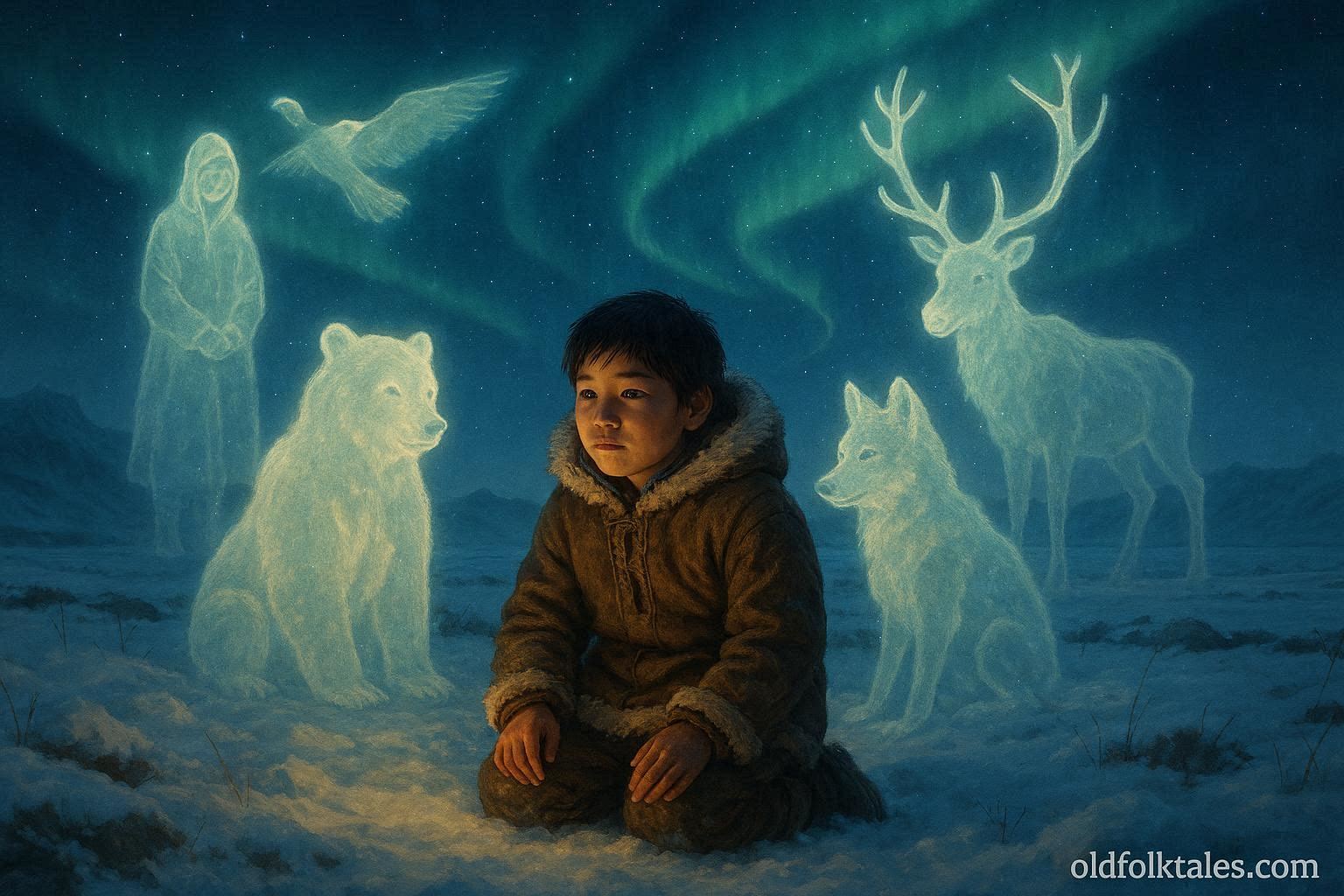
As the illness consumed him, Akuluk was visited in his dreams by figures made of light and shadow. They guided him to a distant landscape of ice and stone, where the spirits of animals, ancestors, and natural forces spoke in a language that transcended words. He saw the path of the salmon, the flight of the snow geese, and the movements of the foxes in the night. In his visions, the spirits taught him to feel the energy of the land and understand the interconnectedness of all life. He was told that the illness he had suffered was a calling, a sign that he was chosen to become a bridge between the human world and the spiritual world.
When Akuluk awoke, he remembered the lessons of his visions in vivid detail. He began to observe the village’s ailments and the patterns of nature with a new understanding. He learned which plants could be used for healing, how certain chants and dances could guide spirits to aid the sick, and how the movements of animals often reflected messages from the unseen world. His elders noticed a change in the boy. He spoke with a quiet authority and an unusual insight that seemed beyond his years.
Discover chilling ghost tales and haunted places that echo through America’s towns and countryside.
One day, a fisherman returned from the frozen sea weak and feverish. The villagers were unsure how to help him, but Akuluk stepped forward. He carefully prepared a healing ritual, invoking the guidance of the spirits he had seen in his visions. He sang a soft chant, touched the patient gently with knowledge he had received in dreams, and observed signs in the wind and smoke. The man recovered, much to the astonishment of the villagers. News of Akuluk’s abilities spread quickly, and he began to be recognized as the first shaman, a spiritual guide who could heal, interpret visions, and maintain harmony between humans and spirits.
Over time, Akuluk’s training deepened. He spent long hours in the wilderness, learning from animals, rivers, and ice formations. He followed the tracks of bears and wolves, listening for the subtle messages in their movements. He observed the northern lights and the patterns of stars, understanding their cycles as signs from the ancestors. His powers were not simply magical; they were rooted in careful observation, patience, and respect for the natural and spiritual worlds.
The Yupik people relied on him during times of famine, sickness, and confusion. Akuluk would interpret dreams and visions, offering guidance that kept his community safe and prosperous. Children gathered around him to learn the songs, dances, and wisdom that connected them to the spirits. Adults sought his advice on hunting, fishing, and resolving conflicts, trusting that his insights were guided by forces beyond ordinary perception.
Akuluk’s story also contained warnings. He learned that his powers came with responsibility. Misusing knowledge or acting out of selfish desire could bring imbalance and suffering. Once, when he tried to use his abilities to impress another village, he inadvertently caused a storm that damaged their homes. The spirits spoke to him, reminding him that shamanic powers must be used in service of the community, not for personal gain. This lesson humbled him and reinforced the moral guidance at the heart of the Yupik tradition: wisdom and skill must be tempered by care, respect, and humility.
As Akuluk grew older, he trained other young people who showed promise. He passed on the rituals, chants, and understanding he had received from the spirits, ensuring that the knowledge would survive generations. His teachings emphasized that humans and the natural world were inseparable, and that spiritual insight could not be gained through greed, impatience, or disrespect. He reminded everyone that illness, danger, and hardship were often opportunities to learn, observe, and grow.
Even after his passing, the story of the first shaman lived on. The Yupik people told tales of Akuluk around fires during long winters, describing how a young boy, chosen by visions and guided by spirits, became a healer and protector of his people. The tale reinforced the importance of courage, patience, and listening to the unseen. It encouraged young members of the community to approach life with curiosity, respect, and attentiveness to the lessons of the world around them.
Through generations, Akuluk became a symbol of the spiritual connection between humans, animals, and nature. His story teaches that illness or adversity can sometimes mark the beginning of a journey toward wisdom. It illustrates that true power lies in understanding, observation, and humility, rather than brute strength or arrogance.
Explore the heart of America’s storytelling — from tall tales and tricksters to fireside family legends.
Moral Lesson
True wisdom and healing come from patience, observation, and respect for the natural and spiritual worlds. Power must be used responsibly, and challenges can serve as lessons guiding one toward growth and community service.
Knowledge Check
- What event led the boy Akuluk to begin his spiritual journey?
He fell ill with a mysterious disease that triggered visions and dreams. - What did Akuluk learn from the spirits in his visions?
He learned to observe nature, understand the interconnectedness of life, and gain insight into healing. - How did Akuluk demonstrate his shamanic abilities in the village?
He performed healing rituals, guided visions, and provided spiritual advice to the sick and the community. - What lesson did Akuluk learn from misusing his powers?
That shamanic powers must be used responsibly and for the benefit of the community, not personal gain. - How did Akuluk pass on his knowledge to future generations?
He trained young people in rituals, chants, observation of nature, and spiritual guidance. - What overarching moral does the story convey?
Adversity can lead to growth, and wisdom comes from observation, respect, humility, and service to others.
Source
Adapted from materials preserved in the Harvard Peabody Museum Archives
Cultural Origin
Yupik traditions