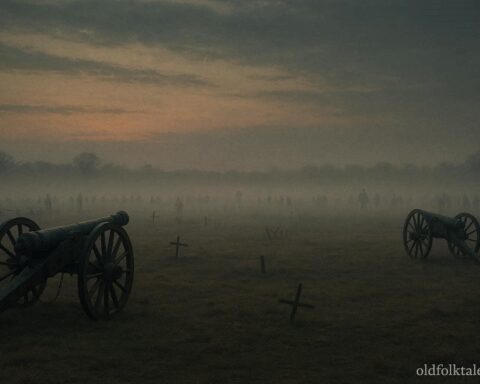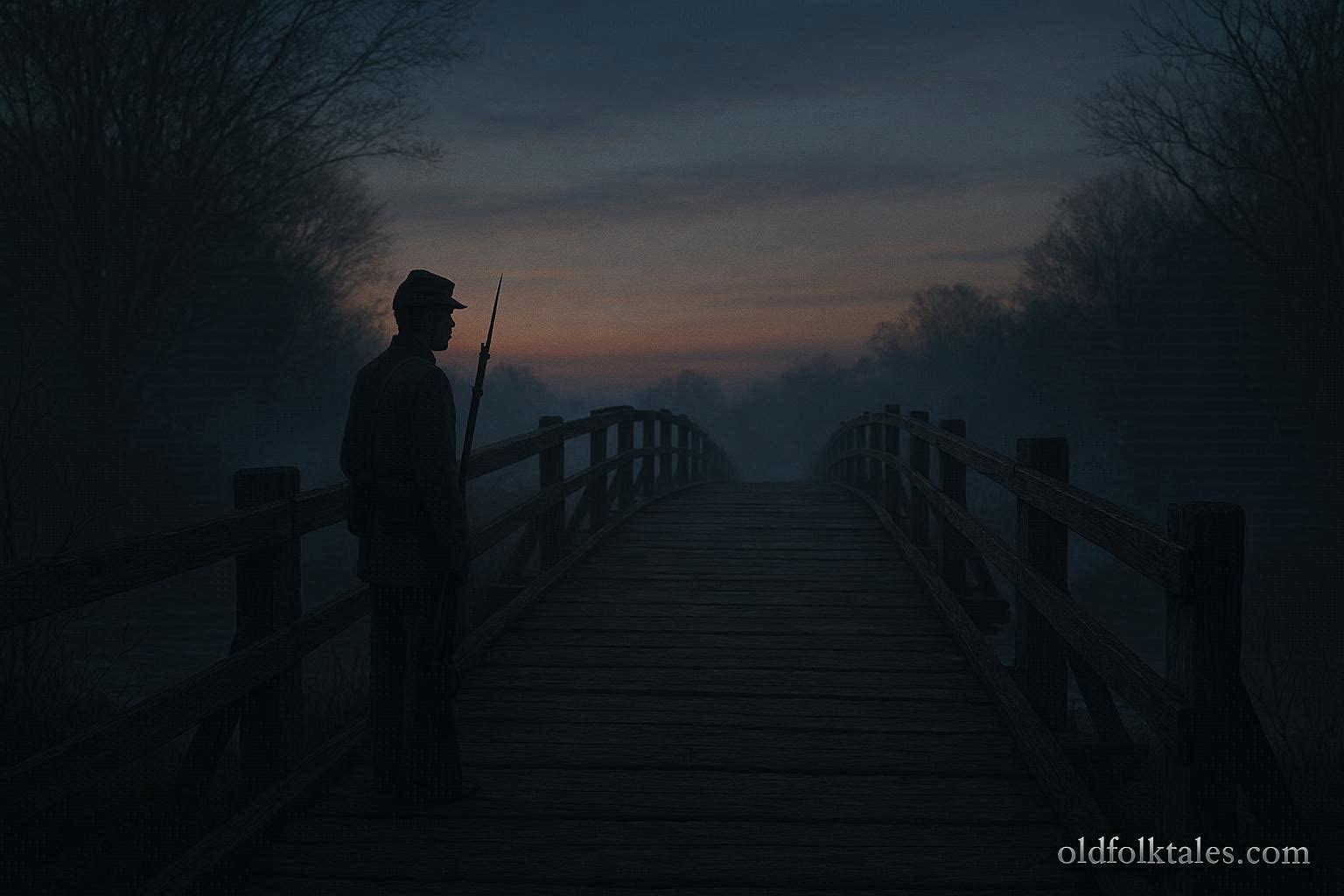
In the years following the American Civil War, many roads that had once carried troops and supplies returned to ordinary use. Wagons, horses, and later carriages crossed the same paths where soldiers had once marched. Among these places were old wooden bridges, built over narrow rivers and quiet streams, connecting small communities.
One such bridge became the center of a story that would be told for generations.
It was not known for its size or importance, but for what people claimed to see there, especially during moments of danger.
The first account came from a traveler crossing late in the evening. The light was fading, and the road ahead was difficult to see clearly. As he approached the bridge, he noticed a figure standing near its entrance.
A soldier.
The uniform appeared worn, not like those of the present time, but older, belonging to another era. The man raised his hand, signaling the traveler to stop. There was no urgency in the gesture, but it was firm enough to be understood.
The traveler hesitated, then brought his horse to a halt.
Moments later, a section of the bridge ahead gave way, collapsing into the water below. Had he continued forward, he would have crossed at that exact point.
Shaken, he looked back toward the soldier.
The figure was gone.
At first, the story was treated as an unusual coincidence. The traveler had been fortunate, perhaps noticing a weakness in the structure without realizing it. The figure he described could have been a passing guard or another person on the road.
Encounter the strange and the unseen — from Bigfoot to regional monsters hiding in America’s forests.
But then, similar accounts began to appear.
Another traveler, this time in daylight, reported seeing a man standing near the bridge, waving him back just before a wagon wheel broke on the uneven surface. A third described hearing a voice, clear but unseen, telling him to slow down as he approached.
In each case, the warning came just before something went wrong.
And in each case, the figure or voice could not be found afterward.
Descriptions of the soldier were consistent.
He was said to wear clothing from the Civil War period, simple and worn. His expression was calm, not fearful, and his actions were direct. He did not speak at length, nor did he remain after the warning was given.
He appeared only when needed.
Then disappeared.
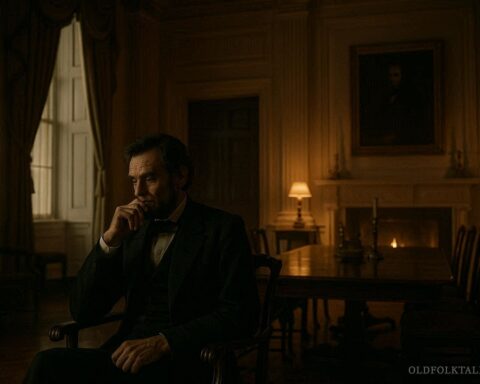
As the stories spread, people began to connect the sightings to the history of the area. It was said that during the American Civil War, a soldier had been stationed near the bridge to guard it. His duty was to watch for danger, to protect the crossing, and to ensure safe passage.
According to local accounts, he had remained at his post even during difficult conditions, refusing to abandon his position. Some said he had lost his life nearby, though details were unclear and varied depending on who told the story.
What remained consistent was the idea of duty.
A soldier assigned to guard a bridge.
A responsibility carried out with care.
And, according to the legend, a role that continued even after his time had passed.
Not everyone believed the story.
Some argued that the warnings could be explained by natural awareness. Travelers, familiar with the risks of old bridges, might slow down or hesitate at the right moment. Their minds could then create the image of a figure to explain the decision.
Others pointed out that structures like these often showed signs of weakness. A cautious person might notice something others overlooked, reacting instinctively without realizing why.
Yet these explanations did not fully account for the consistency of the accounts.
The timing.
The description.
The sense of being deliberately warned.
Those who experienced it often spoke with certainty. They did not claim to understand what they had seen, but they were sure of one thing.
The warning had been real.
Over time, the story became part of Civil War folklore, preserved alongside other accounts of places where history seemed to remain present. Institutions such as the University of Virginia have documented similar traditions, where past events continue to shape how locations are experienced.
The bridge itself eventually changed.
Repairs were made, and in some cases, older structures were replaced with stronger ones. Traffic increased, and the quiet isolation that once defined the area began to fade. Yet even as the physical setting evolved, the story remained.
There were still occasional reports.
A driver slowing unexpectedly.
A figure glimpsed at the edge of the road.
A moment of hesitation that prevented something worse.
Each new account added to the legend, not altering its core, but reinforcing its presence.
The meaning of the story is often seen not in whether the soldier truly appears, but in what the story represents.
Protection.
Responsibility.
And the idea that some roles, once taken seriously, leave a lasting impression.
The soldier, whether real or remembered, stands as a symbol of vigilance. A reminder that watching over others, even in small ways, can have lasting effects.
And on certain days, when the light is low and the road is quiet, some travelers still approach that bridge with a sense of awareness.
Not out of fear.
But with the understanding that they may not be crossing alone.
Explore how American legends shaped the nation — from frontier heroes to Revolutionary War tales.
Moral Lesson
Acts of responsibility and protection can leave lasting impacts that continue to help others over time.
Knowledge Check
- What historical period is connected to the story?
The American Civil War. - What does the soldier do in the legend?
He warns travelers of danger near the bridge. - When does the soldier usually appear?
Moments before an accident or danger occurs. - What happens after the warning is given?
The soldier disappears. - What is one possible explanation for the sightings?
Instinct or awareness of danger. - What is the main idea of the story?
That protection and duty can leave lasting impressions beyond time.
Source
Adapted from materials preserved by University of Virginia
Cultural Origin
Civil War folklore