The wind howled across the red canyons of Zuni land, carrying with it the dry whisper of stories told around sacred fires stories passed down through countless generations, stories that lived in the bones of the earth itself. Among them, none was spoken with more caution than the tale of Átahsaia, the Cannibal Demon. His name was never uttered lightly, never spoken in jest or curiosity. It was a name that carried weight, that made even the bravest hunters pause and look over their shoulders when walking the high country.
Parents warned their daughters never to wander beyond the cornfields at dusk, never to stray from the well-worn paths that connected village to river, home to sacred ground. For it was said that when the sun touched the mesas and the shadows grew long, stretching like dark fingers across the red earth, Átahsaia prowled the land in search of his next meal.
Explore Native American beings, swamp creatures, and modern cryptid sightings across the country.
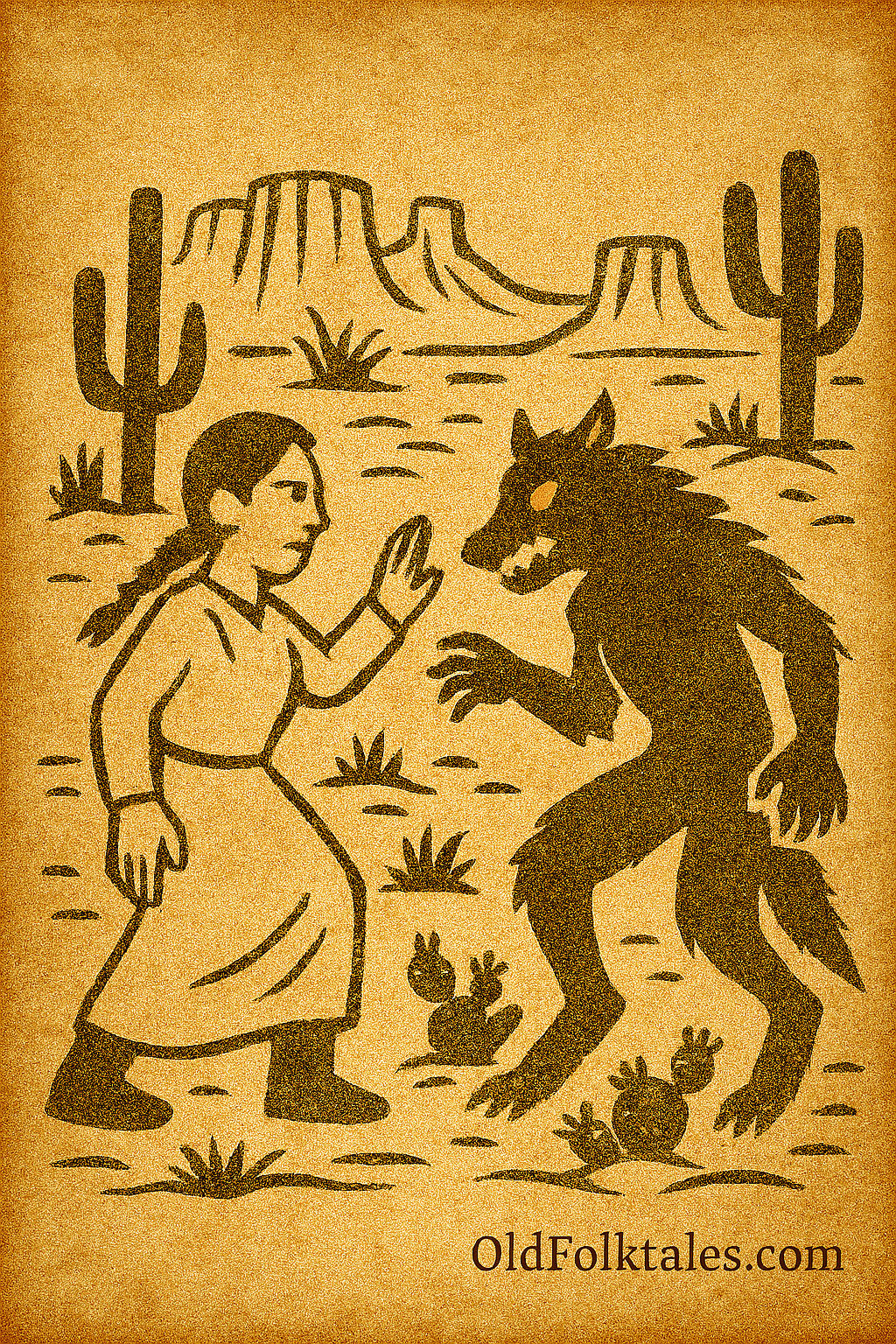
He was not like any man not in form, not in spirit, not in hunger. His skin was thick and gray like cracked stone, weathered by centuries of darkness. His muscles bulged beneath scales that shimmered faintly in the moonlight, catching the silver light like polished flint. His hair hung in matted, silver strands down his back, tangled with bits of bone and dried blood. But it was his eyes burning red and swollen with an eternal, insatiable hunger that turned the hearts of those who saw him to ice.
One evening in late summer, when the heat still clung to the canyon walls and the cicadas sang their endless song, two sisters, Sialana and Kewa, were returning from the river carrying baskets of water balanced carefully on their heads. They had lingered too long, collecting reeds for basket-weaving and laughing at the antics of the younger children who splashed in the shallows. Now the sun had already dipped low, painting the sandstone cliffs blood-red and casting the land into that dangerous, liminal time between day and night.
As they hurried along the narrow path that wound through the rocks, their bare feet moving quickly over the warm sand, a deep, rasping voice called out from the shadows between two towering stones.
“Little ones,” it said, the words slow and thick as honey, “come rest in my cave. The night is cold, and I have warm stew for you. You must be tired from your journey.”
The girls stopped, their hearts quickening. They could smell the stew even from where they stood rich and thick, with the aroma of meat and herbs that made their mouths water despite their unease. But something about the voice made their stomachs twist with a fear they couldn’t name. It was too smooth, too inviting, like a trap disguised as kindness.
Still, curiosity tugged at them. They were hungry, and the village was still far. Kewa looked at her older sister questioningly. Sialana hesitated, then nodded slowly. Against their better judgment, they followed the voice through the narrow passage to a cave whose entrance was marked with strange carvings spirals and angular symbols they didn’t recognize and bones. So many bones, bleached white by the sun and arranged in patterns that spoke of dark rituals.
Inside, the firelight flickered against the rough stone walls, revealing the enormous figure of Átahsaia hunched over a large stone pot. He was even more terrifying than the stories had described massive, angular, his shadow dancing across the cave ceiling like a demon from the underworld. Steam rose from the pot in lazy spirals, carrying a smell that slowly transformed their initial hunger into creeping horror.
As their eyes adjusted to the dim light, they saw what floated in the broth: small bones, delicate and unmistakable the bones of children.
“Eat,” the demon said, turning his massive head toward them. His red eyes glinted with malicious pleasure. “It will make you strong like me. It will give you power.”
Sialana clutched her younger sister’s hand tightly, her fingernails digging into Kewa’s palm. “We cannot eat,” she whispered, her voice barely audible over the crackling fire. “That is not food for humans. That is… that is forbidden.”
Átahsaia’s grin stretched slowly across his face, revealing jagged teeth blackened with old blood and bits of flesh. “Then perhaps you will comb my hair,” he said, his voice dropping to a rumble that vibrated through the stone floor. He thrust a bone comb toward them fashioned from a human femur, polished smooth by use. “I like to be clean before a feast.”
The sisters trembled but obeyed, knowing that to refuse might provoke him to violence before they could find a way to escape. With shaking hands, they took the comb and began brushing the silver tangles of his matted hair, working carefully through the knots thick with grime and worse things they tried not to imagine. All the while, they whispered prayers under their breath soft, desperate prayers to the spirits of protection, calling upon Ashiwi Kyanu, the Zuni War God who defended his people from evil.
Átahsaia leaned back, savoring the attention, his eyes half-closing in pleasure. “You will make a fine meal,” he murmured. “Young, tender. I can taste your fear already, and it is sweet.”
Just as the demon leaned closer to the fire, savoring the moment before his feast like a predator playing with its prey, the wind outside the cave suddenly shifted. The air grew electric, charged with power. A blinding light flashed across the darkening sky, so bright it turned night into day for a heartbeat. And there, framed in the mouth of the cave, stood a figure cloaked in flames Ashiwi Kyanu himself, the War God, answering the prayers of the innocent.
“You have fed upon my children long enough, Átahsaia,” the War God thundered, his voice shaking the very stones of the canyon. “Your hunger ends tonight. Your darkness ends tonight.”
The demon roared, a sound that echoed through the canyons and sent birds fleeing from their roosts. He swung a massive arm toward the god, his claws extended like knives. But the War God’s spear of lightning struck true, piercing the demon’s chest with a crack that split the air. The cave shook violently as Átahsaia staggered, his red eyes widening in shock and rage. Then, with a final, earth-shaking roar, he fell. His massive body crumbled into ash and stone, scattering across the cave floor like dust, leaving only silence and the fading smell of sulfur.
The War God turned to the trembling sisters, his fierce expression softening. “Go home,” he said, his voice now gentle as summer rain. “Tell your people that the red hills are clean again. Tell them that those who prey upon the innocent will face divine justice.”
When the girls returned to the village, their water baskets forgotten in their flight, the elders listened in awe to their tale. The entire community gathered as Sialana and Kewa recounted every detail the demon’s cave, his terrible stew, the prayers they had whispered, and the arrival of Ashiwi Kyanu in fire and lightning. The elders built a sacred fire and offered cornmeal to the spirits in thanks, singing prayers of gratitude that rose into the star-filled sky.
From that day on, the cliffs where Átahsaia once lived were said to echo faintly with his last scream, a warning to any who would break the sacred laws of balance, who would take more than they need, who would harm the innocent. The place became sacred ground, a reminder that even in the darkest corners of the world, protection exists for those who call upon it with pure hearts.
And so, the Zuni people remember: even the fiercest darkness cannot withstand the light of the gods who protect their own. Evil may seem powerful, but it is temporary. Justice, though it may take time, is eternal.
Click to read all American Cryptids & Monsters — creatures of mystery and fear said to inhabit America’s wild landscapes.
The Moral of the Story
This story teaches that divine protection exists for the innocent who call upon it with sincere hearts, and that evil, no matter how powerful it appears, cannot ultimately triumph over justice and righteousness. The tale also warns against the dangers of greed and the violation of sacred laws Átahsaia represents the consequences of consuming more than one needs and preying upon the vulnerable. Through Sialana and Kewa’s faith and the intervention of Ashiwi Kyanu, we learn that courage, prayer, and adherence to cultural values provide protection even in the most terrifying circumstances.
Knowledge Check
Q1: Who are Sialana and Kewa in the story?
A: Sialana and Kewa are two Zuni sisters who encounter the Cannibal Demon Átahsaia while returning home from the river at dusk. Sialana is the older sister who shows protective instincts and spiritual wisdom by whispering prayers to the War God. Their faith and courage in the face of extreme danger ultimately save their lives and rid their people of the demon’s terror.
Q2: What is Átahsaia in Zuni mythology?
A: Átahsaia is a Cannibal Demon in Zuni tradition, a malevolent supernatural being who preys upon humans, especially children. Described as having gray, stone-like skin covered in scales, silver matted hair, and burning red eyes, he represents the violation of sacred laws, unchecked hunger, and evil that disrupts the balance of the natural and spiritual worlds.
Q3: What physical characteristics identify Átahsaia as inhuman?
A: Átahsaia’s monstrous features include thick gray skin like cracked stone, muscles bulging beneath shimmering scales, matted silver hair tangled with bone and blood, massive size, jagged blackened teeth, and most distinctively, burning red eyes swollen with eternal hunger. These features mark him as something far removed from humanity, a creature of darkness and depravity.
Q4: Who is Ashiwi Kyanu and what role does he play?
A: Ashiwi Kyanu is the Zuni War God, a divine protector of the Zuni people who responds to the sisters’ desperate prayers. Appearing cloaked in flames and wielding a lightning spear, he represents divine justice and the spiritual forces that defend the innocent against evil. His intervention demonstrates that the gods actively protect those who maintain faith and honor sacred traditions.
Q5: What is the significance of the bone comb in the story?
A: The bone comb, fashioned from a human femur, serves multiple symbolic purposes: it demonstrates Átahsaia’s complete disregard for human life, turning victims into objects; it delays his attack, giving the sisters time to pray; and it represents the demon’s perverse pleasure in being served by those he intends to consume. The act of combing his hair becomes a moment of spiritual resistance rather than submission.
Q6: Why were the sisters warned not to wander at dusk?
A: Dusk represents a liminal or “in-between” time in many Indigenous traditions, including Zuni belief, a dangerous transition between day and night when the boundary between the physical and spiritual worlds is thin. This is when Átahsaia hunts, making it the most dangerous time to be outside the safety of the village. The warning reflects practical wisdom passed down through generations about respecting spiritual dangers.
Cultural Origin: This story comes from the oral traditions of the Zuni people (A:shiwi), a Pueblo nation located primarily in western New Mexico near the Arizona border. Átahsaia is a genuine figure from Zuni mythology, appearing in their traditional stories as one of several dangerous supernatural beings that serve as cautionary figures. The tale reflects Zuni spiritual beliefs about the balance between good and evil, the importance of divine protection, and the consequences of violating sacred laws.