In early American agrarian settlements, the turning of the season from autumn to winter was a moment of both celebration and solemn preparation. Farmers and their families worked tirelessly to gather the fruits of months of labor, carefully harvesting corn, wheat, and other staple crops. Among these customs, one practice stood out for its blending of artistry, spirituality, and practicality: the creation of the corn doll. These figures, woven from dried corn husks, were much more than simple decorations. They were believed to house the spirit of the harvest itself, a guardian that would protect the family’s abundance through the cold and barren winter months.
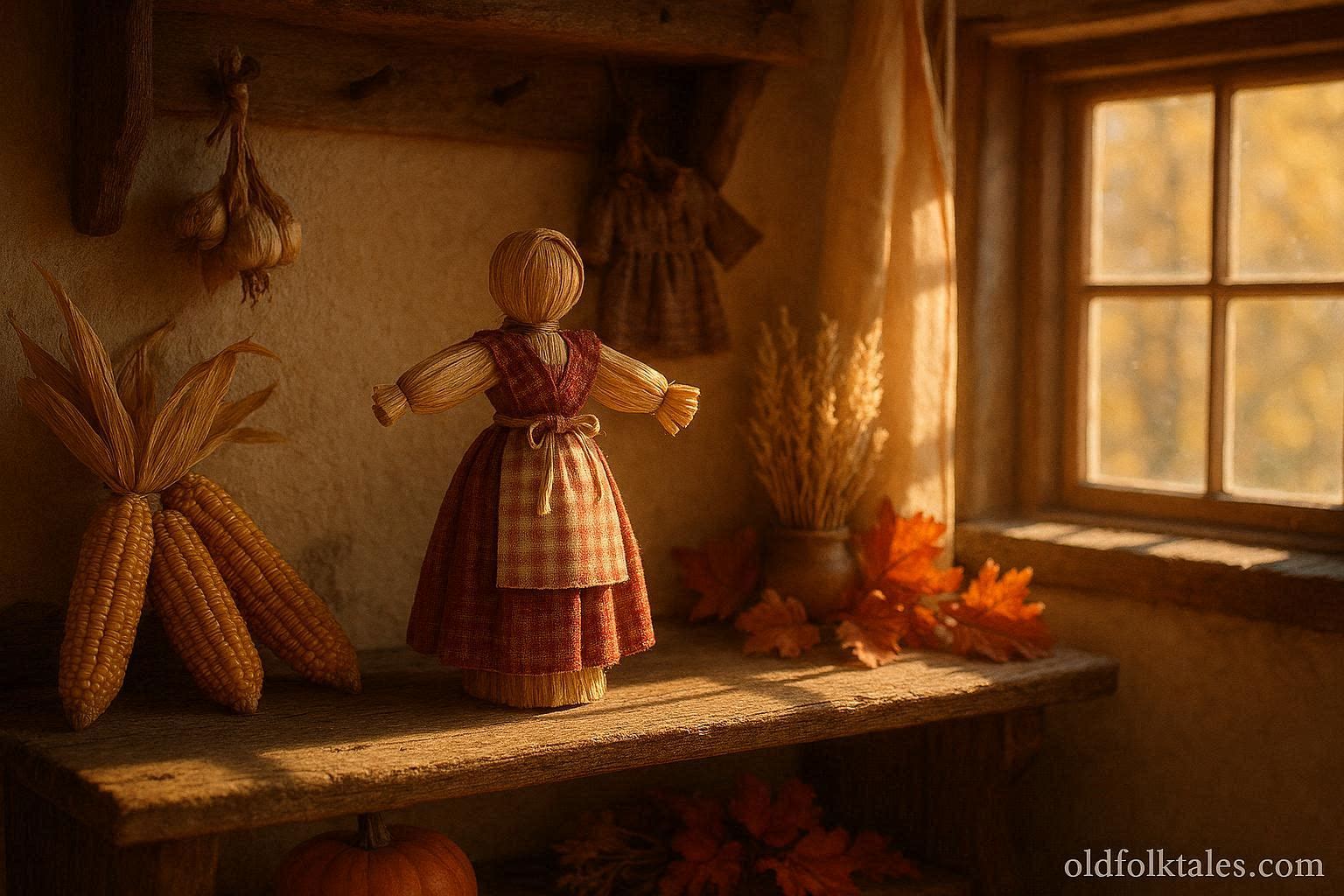
The process of making a corn doll began with careful selection of the husks. Early settlers often chose the first and last ears of the harvest season, believing that these carried the strongest essence of the crop’s vitality. The husks were soaked in water to make them pliable, and then carefully twisted, tied, and folded to create the shape of a human figure. Some dolls were simple, with basic arms and legs, while others were more elaborate, dressed in miniature garments crafted from fabric scraps, ribbons, or even remnants of the family’s own clothing. Each doll was unique, reflecting the personality, skill, and intention of its maker.
The creation of a corn doll was a family affair. Children were taught to weave the husks and tie the knots, learning not only practical craft skills but also absorbing deeper lessons about responsibility, patience, and respect. Parents often recounted stories as they worked, explaining how past generations had relied on these figures for protection and guidance. In some communities, the corn doll was seen as a teacher of ethical behavior: it rewarded careful attention to resources and punished carelessness or greed. A broken or neglected doll was believed to invite misfortune, spoil stored grains, or even bring illness to the household.
Discover chilling ghost tales and haunted places that echo through America’s towns and countryside.
Placement of the corn doll in the home was equally significant. The doll often sat on a shelf near the hearth, a place symbolizing warmth, family, and sustenance. Some families placed the figure near the pantry or granary to watch over stored grains. Others even gave the doll a position on the main table during family meals, reminding everyone of the blessings of the harvest. Tiny offerings were sometimes left at the doll’s feet: a few kernels of corn, a pinch of wheat, or a miniature tool, all symbolic gestures meant to honor the spirit of the harvest and ensure its continued benevolence.
The corn doll was more than a household object; it was a focal point for storytelling and education. Parents and elders explained how their own ancestors had relied on corn dolls, telling stories of harsh winters when the spirit seemed to protect the granary from spoilage or pests. In these stories, the doll was an active participant in the household’s survival, a bridge between human labor and the mysterious forces of nature that determined the success of the crops. Through these narratives, children learned the value of careful planning, respect for the land, and the importance of contributing to the family and community.
The ritual of caring for the corn doll reinforced community cohesion as well. In some villages, children would bring their corn dolls to school or church, sharing the figures and explaining their significance. This practice spread knowledge and maintained cultural continuity, even as families moved or communities changed. Seasonal festivals sometimes included parades or displays of corn dolls, turning the figures into a visual representation of collective gratitude and hope. Songs and poems often accompanied the figures, with verses praising the harvest spirit, encouraging good stewardship, and warning of the consequences of neglect.
Beyond its spiritual and educational significance, the corn doll also had practical implications. Its presence reminded households to conserve food, store crops carefully, and plan for the harsh winter ahead. Farmers knew that nature could be unpredictable; droughts, early snow, or pest infestations threatened survival. By honoring the corn doll, families felt a sense of control and reassurance, believing that their respect for the harvest spirit could tip the balance in their favor. In a time when survival depended on both skill and luck, such rituals were a source of hope and comfort.
Modern adaptations of the corn doll tradition continue to preserve its lessons. While some families now treat the dolls primarily as seasonal decorations, many still use the craft to teach children about patience, respect, and sustainability. Workshops in folk art and heritage museums demonstrate how to make corn dolls, blending historical accuracy with contemporary creativity. Scholars note that the tradition illustrates a universal principle: human effort, mindful stewardship, and cultural memory work together to sustain communities through cycles of scarcity and abundance.
The corn doll also serves as a symbol of human connection to the environment. It reminds us that the success of a household depended not only on physical labor but also on attentiveness to natural rhythms. The act of creating, placing, and caring for a corn doll embodies a philosophy of balance: gratitude for what has been harvested, responsibility in preserving it, and faith that care will be rewarded with continued abundance. In this sense, the corn doll tradition is both a practical tool and a moral guide, encouraging reflection on the interconnectedness of humans, nature, and community.
Click to read all American Traditions & Beliefs — the living folklore of daily life, customs, and superstitions.
Moral Lesson:
Respect and care for resources through mindful action. Gratitude and stewardship of the harvest strengthen community, preserve abundance, and foster resilience through difficult times.
Knowledge Check:
1. What material is used to make the Corn Doll?
Corn husks.
2. Why were corn dolls created in early American agrarian settlements?
To house the spirit of the harvest and preserve abundance through winter.
3. Where were corn dolls typically placed in the home?
Near the hearth, pantry, or granary to watch over stored food.
4. How did children benefit from participating in making corn dolls?
They learned responsibility, respect for tradition, and care for resources.
5. What actions accompanied the care of the corn doll?
Offering small gifts like kernels, seeds, or miniature tools to honor the spirit.
6. What broader lesson does the corn doll tradition teach about abundance?
Abundance depends on careful stewardship, mindfulness, and respect for natural cycles.
Source: Adapted from National Museum of American History folk craft archives
Cultural Origin: Early American agrarian settlements