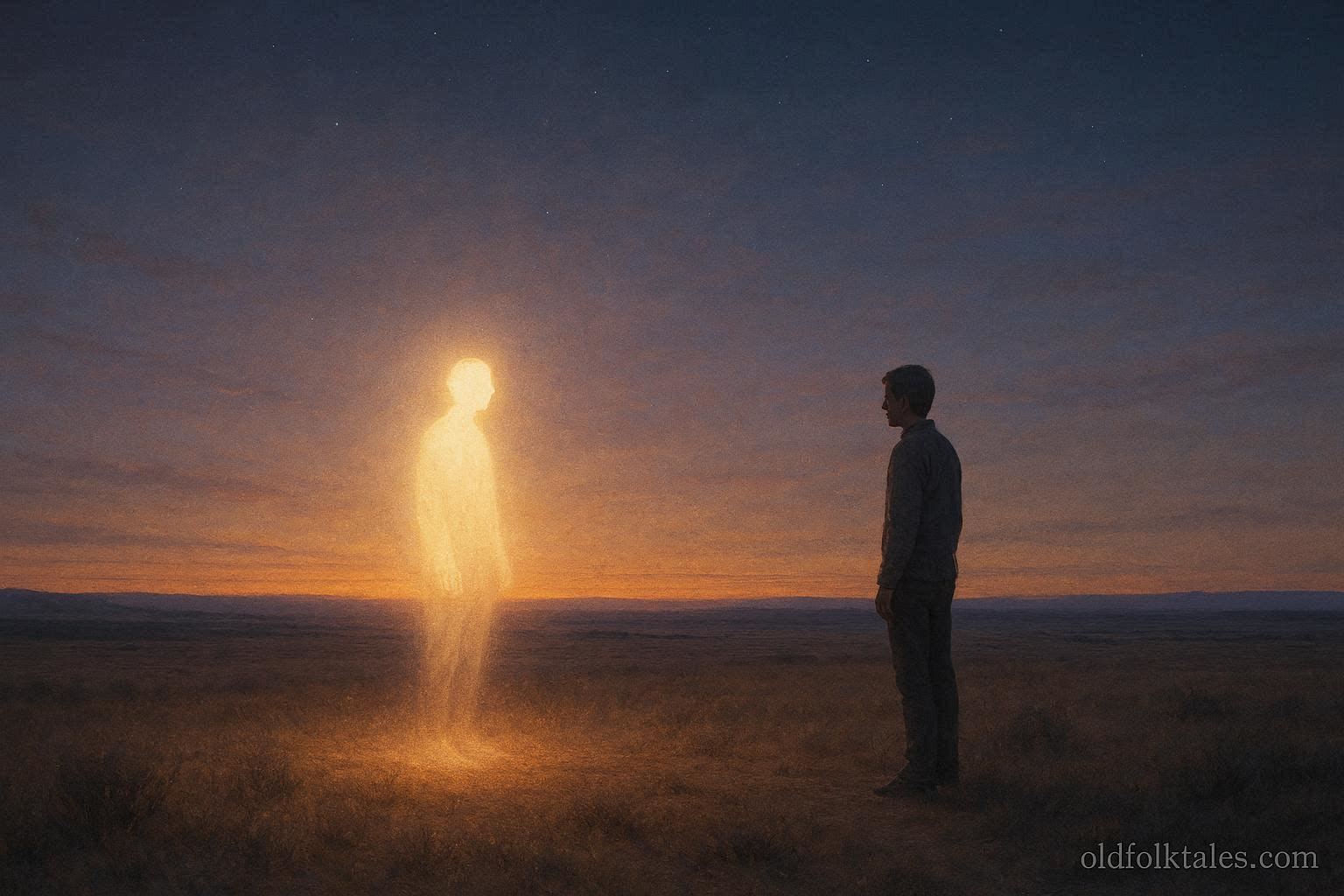
In the earliest time, before the world had settled into the patterns known today, life moved without an ending. People lived, grew, and continued on without the presence of death. The land changed with the seasons, rivers flowed, and the sky shifted from light to darkness, but human life itself did not come to a close.
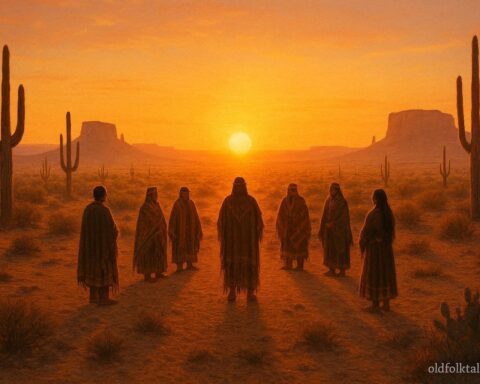
Among the people of the plains, in the lands now known as Great Plains, this state of existence was both a gift and a challenge. Without death, there was no separation, no final goodbye, but there was also no balance.
The world continued to fill.
Generations did not pass in the way they do now. Instead, they remained, growing in number without limit. The land, though vast, began to feel the weight of this endless life. Resources were shared, but strain slowly appeared. Movement became harder. Space became limited.
The people began to notice that something was missing.
Not something they had lost, but something that had never been present.
An ending.
A cycle.
A way for life to renew itself.
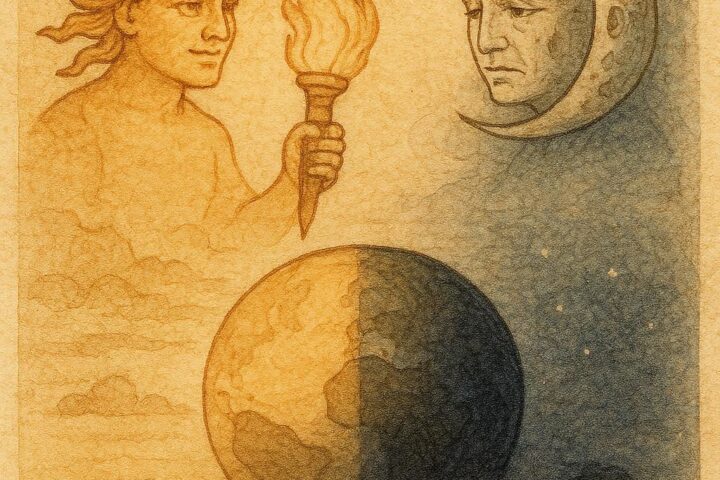
Among them was a figure known for wisdom and deep thought. This figure observed the world closely, watching how everything in nature moved in cycles. The sun rose and set. The seasons changed. Plants grew, withered, and returned again.
Encounter the strange and the unseen — from Bigfoot to regional monsters hiding in America’s forests.
Only human life remained unchanged.
The figure began to consider whether life, too, needed a cycle.
Not as an end, but as part of a greater balance.
It is said that this idea was brought before a powerful spiritual presence, one who held the ability to shape the nature of existence. The question was simple, yet carried great weight.
Should life continue without end.
Or should it follow a cycle like everything else.
The answer was not given immediately.
Instead, a choice was presented.
Two possibilities.
Two paths.
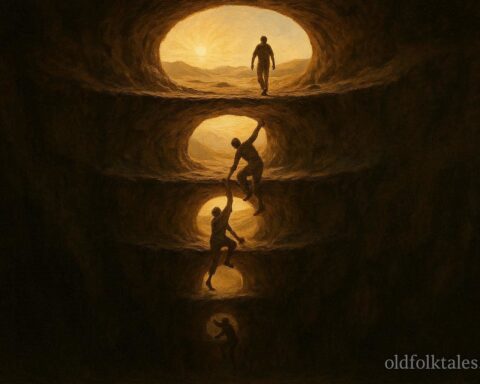
In one, life would remain as it was, endless and unbroken. In the other, life would come to an end, but not completely. There would be a place beyond, a continuation in a different form.
The responsibility of choosing was given to a messenger.
This messenger was trusted, but also human, capable of both wisdom and error. The message had to be carried clearly, without confusion, and delivered exactly as it was given.
The messenger set out.
The journey was long, and the weight of the decision remained present with every step. The message was repeated over and over, held carefully to avoid mistake.
But along the way, something changed.
In some tellings, the messenger grew uncertain, questioning which choice would be best. In others, it is said that the message itself was misunderstood, altered slightly without intention.
When the message was finally delivered, it was not exactly as it had been given.
The choice that reached the people was the one that allowed life to end.
And with that, death entered the world.
At first, it was not understood.
When the first person reached the end of life, the people were confused. They had never seen such a thing. The stillness, the absence of movement, the silence that followed, all were unfamiliar.
There was fear.
There was sadness.
But there was also a question.
Where had the person gone.
It was then that the second part of the message became known.
Life did not simply stop.
It continued.
Not in the same form, but in another place.
A place beyond the visible world.
This was the beginning of the afterlife.
The understanding of this new reality did not come all at once. It grew slowly, shaped by experience and reflection. The people began to see that death, though difficult, was not without meaning.
It created space.
It allowed new life to begin.
It formed a cycle that connected generations.
Those who passed were not lost completely. They became part of something beyond, still connected in ways that could not always be seen, but could be felt.
In the traditions of the Blackfoot, this story reflects the importance of balance. Life and death are not opposites in conflict, but parts of the same cycle. One makes the other possible.
The introduction of death brought change.
People began to value time differently. Moments became meaningful because they were not endless. Relationships carried greater weight, knowing they would not last forever in the same form.
The idea of the afterlife brought comfort.
It allowed the people to understand that separation was not absolute. That there was a continuation, even if it could not be fully seen or understood.
The mistake, or the choice, became part of the world’s design.
It was not reversed.
It was accepted.
And from that acceptance came a deeper understanding of life itself.
The land returned to balance.
Generations began to pass in a natural rhythm. The world continued, not as an endless line, but as a cycle that renewed itself again and again.
Even now, the story remains.
Not as something distant, but as something lived.
Every life follows the path that was set in that early moment. Every ending carries the idea of continuation. Every generation is part of the cycle that began with a single choice.
The question that was once asked still echoes in the understanding of the world.
Not why death exists.
But how it shapes life.
Moral Lesson
Every choice has consequences, and even difficult changes can bring balance and meaning to life.
Knowledge Check
- What was life like before death existed?
Life continued endlessly without an ending - What problem did this create?
The world became unbalanced and overcrowded - How did death enter the world?
Through a choice or mistake in delivering a message - What came along with death?
The idea of an afterlife - How did people begin to see death?
As part of a natural cycle - What is the main idea of the story?
That life and death are both necessary for balance
Source
Adapted from materials preserved by University of Chicago
Cultural Origin
Blackfoot