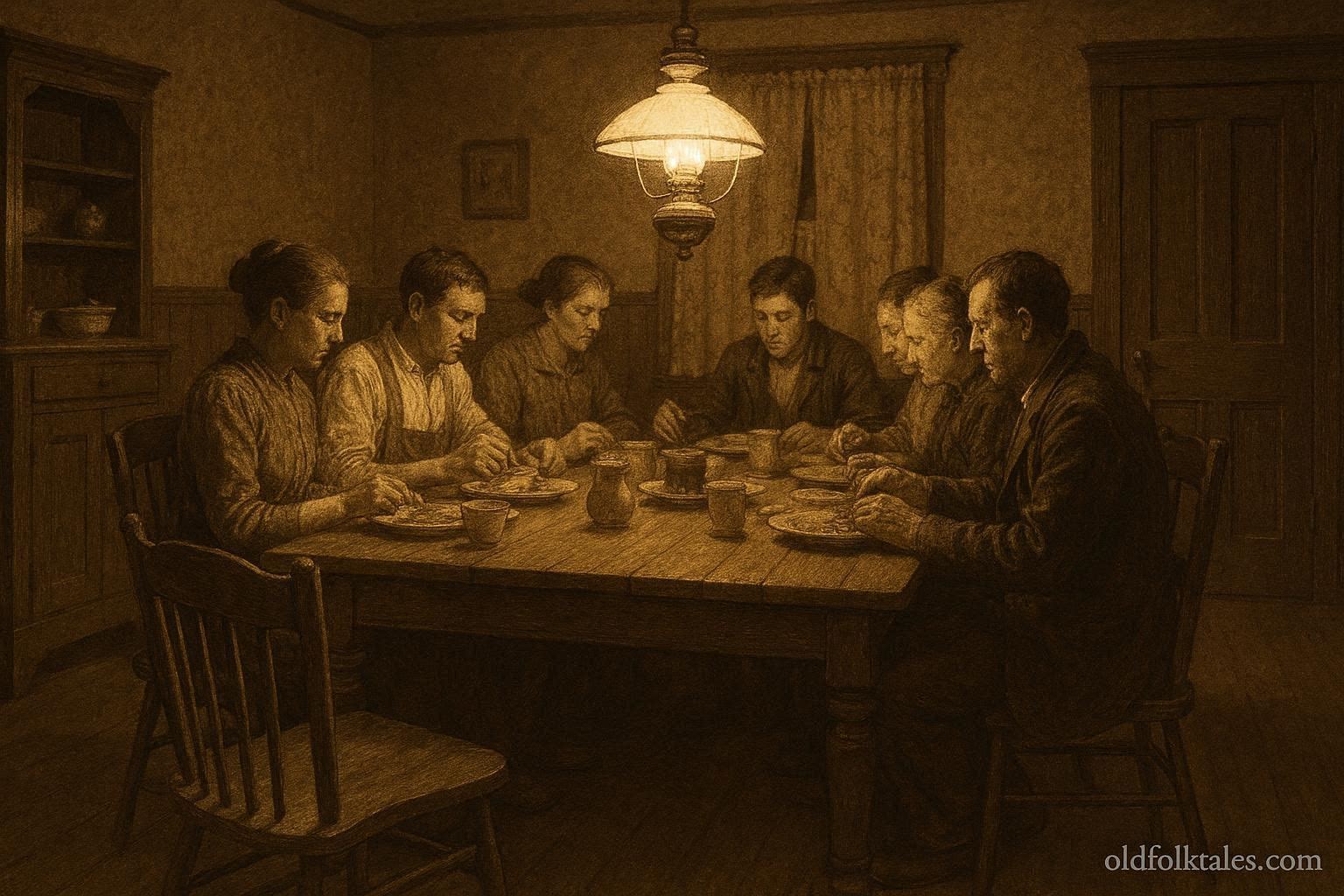
Long before dining rooms became casual spaces and meals were eaten in haste, the table occupied a central role in American domestic life. It was where families gathered at fixed hours, where conversations unfolded slowly, and where social roles were quietly reinforced. In such spaces, every detail mattered, including where a person sat. Among the many beliefs tied to shared meals, one superstition endured across generations. Sitting at the corner of a table was believed to invite loneliness and delay companionship.
This belief appeared in households across American cities and towns. It was spoken in immigrant kitchens, boarding houses, farm homes, and urban apartments. The warning was often delivered gently, sometimes humorously, but rarely without intention. Elders believed that repeated placement at the corner subtly shaped a person’s social future.
The corner seat was physically awkward. Unlike seats along the length of the table, the corner required the body to twist slightly. Conversations flowed past rather than toward the sitter. Eye contact was harder to maintain, and voices reached unevenly. Over time, this physical separation became symbolic. Being placed at the corner meant being slightly removed from the group.
Explore the heart of America’s storytelling — from tall tales and tricksters to fireside family legends.
In immigrant families adjusting to American life, the dining table was one of the few constants preserved from the old world. Shared meals reinforced unity in unfamiliar surroundings. To sit apart, even slightly, was believed to weaken one’s ties to family and community. Elders worried that a child who grew comfortable at the corner might grow accustomed to standing on the margins of social life.
The superstition was especially strong where marriage and companionship were considered social milestones rather than personal choices. Remaining unmarried or socially isolated was viewed with concern. Families used small rituals and warnings to guide children toward what they believed was a stable future. Seating was one such ritual. Sitting along the side of the table symbolized inclusion, readiness, and visibility.
In boarding houses common during the nineteenth and early twentieth centuries, seating arrangements were rarely equal. Long narrow tables filled crowded rooms. Corners were often assigned last or reserved for those with lower status or fewer social ties. Over time, the corner became associated with transience. People who stayed briefly, kept to themselves, or lacked strong connections often occupied those seats.
Stories circulated quietly within families. A woman who always sat at the corner never married. A boarder who preferred the corner seat left without saying goodbye. A man who laughed at the superstition remained distant and unsettled. These stories were not framed as punishment but as patterns that reinforced the belief.
Children learned the superstition early. A parent might tap the corner chair and shake their head. A grandmother might smile and say it was not a good place for the future. Even when not taken seriously, the message lingered. Where you sit reflects where you belong.
As American society modernized, the belief softened but did not vanish. People began to joke about it, yet many still avoided the corner instinctively. The superstition survived because it mirrored a truth about human interaction. Physical placement affects attention, engagement, and connection.
Today, the superstition is remembered more as cultural memory than strict rule. Still, it reveals how deeply people once believed that small choices shaped long outcomes. The corner seat was never just a chair. It was a symbol of social distance and the quiet fear of being left out.
Click to read all American Traditions & Beliefs — the living folklore of daily life, customs, and superstitions.
Moral Lesson
Belonging is shaped by attention and inclusion. Traditions like this superstition remind us that even small social choices can influence how connected or isolated a person feels within a community.
Knowledge Check
- Why was the dining table socially important in American households?
Because it served as a central space for family bonding, social instruction, and shared rituals. - What was believed to happen to those who sat at the corner of a table?
They were thought to experience loneliness or difficulty forming close relationships. - Why did immigrant families preserve this superstition?
Because shared meals helped maintain unity and cultural continuity in unfamiliar environments. - How were children taught this belief?
Through gentle warnings, family stories, and repeated corrections during meals. - How did boarding houses reinforce the superstition?
Corner seats were often assigned to outsiders or temporary residents, reinforcing social separation. - Why does the superstition still feel familiar today?
Because physical placement still affects visibility, engagement, and social connection.
Source
Adapted from Library of Congress social customs folklore records
Cultural Origin
Urban and immigrant American communities