Ranchers and hunters in the Fossil Ridge region of Colorado have long shared stories of a massive black cat moving through the Rockies with remarkable stealth. Unlike the cougars known to inhabit the area, this feline is said to be larger, more elusive, and capable of disappearing into forests and high-altitude terrain with incredible ease. For decades, it has been a source of fascination, fear, and speculation, inspiring both modern cryptid enthusiasts and local folklore. Sightings describe a creature that defies conventional understanding of wildlife, leading many to wonder whether unknown predators still roam America’s western landscapes.
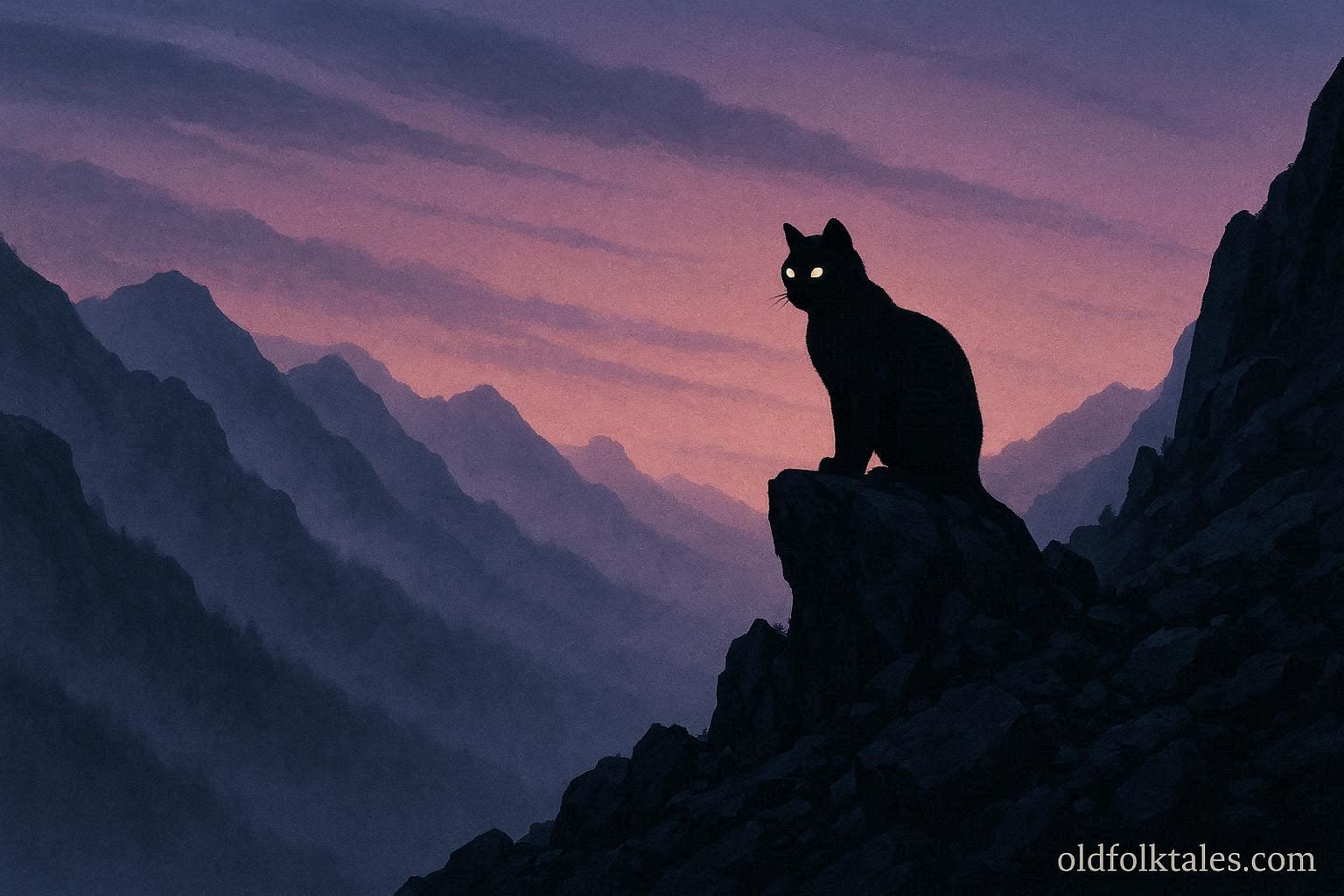
Early reports began in the mid-20th century. Ranchers noticed missing livestock and unusually large paw prints in soft soil and snow. Hunters reported spotting a dark, muscular feline on ridges and along steep mountain slopes, often only catching a glimpse of its silhouette before it vanished. Witnesses described glowing eyes reflecting the sun or moonlight, a long tail, and a muscular body that appeared far larger than any known mountain lion in the region. These sightings quickly became part of oral storytelling, shared around campfires, ranch houses, and hunting lodges.
The Fossil Ridge Cat is reported to have an uncanny ability to move silently through dense forests and rugged terrain. Observers note that it avoids populated areas yet often appears near human activity, particularly along remote trails, mountain passes, or river valleys. Some hunters recounted moments when the feline appeared to watch them, remaining still for several minutes before disappearing without a trace. Its speed, agility, and ability to remain unseen contribute to the enduring mystery and the belief that it may be an undiscovered species or a particularly large variant of known mountain cats.
Explore ancient Native American creation myths and the symbolic tales that shaped America’s belief systems.
Eyewitnesses consistently describe the cat as completely black or dark brown, with fur blending seamlessly into shadows. Its size is often estimated at over eight feet in length from nose to tail tip, making it larger than any cougar or lynx in Colorado. Ranchers recall that livestock such as sheep, goats, and even young cattle were occasionally found killed in ways suggesting an unusually strong predator. Some accounts note claw marks on trees and deep tracks in mud or snow that cannot be attributed to any known wild cat, reinforcing the creature’s cryptid status.
Interest in the Fossil Ridge Cat grew in the 1970s and 1980s as more sightings were reported over consecutive years. Local newspapers documented encounters, and wildlife biologists occasionally investigated, though no definitive evidence was found. Camera traps and tracking devices placed in suspected territories occasionally recorded unusual movements or shadows, but images were often unclear or inconclusive. Despite the lack of concrete proof, the consistency of eyewitness reports over decades has cemented the Fossil Ridge Cat as a prominent figure in Colorado’s cryptid folklore.
The legend of the Fossil Ridge Cat is tied closely to the culture and history of ranching in the Rockies. For families who depend on livestock, tales of an unknown predator provide both explanation for unexplained losses and a cautionary lesson about the challenges of living in a rugged environment. Hunters and hikers also share the story as a reminder to respect wildlife and the unpredictability of mountainous terrain. In this way, the cat exists as both a cryptid and a symbolic figure representing the untamed wilderness of the American West.
Some researchers suggest natural explanations for the sightings. Large cougars, bobcats, or escaped exotic pets could account for some reports. Optical illusions caused by light, shadows, and mist in mountainous terrain may also play a role in perceived size and shape. Yet others argue that these explanations do not fully account for the number of consistent reports describing a feline far larger than known species. This uncertainty allows the legend to persist, bridging the line between documented wildlife and cryptid mythology.
The Fossil Ridge Cat has also influenced modern popular culture. Local artists and writers often depict it in books, illustrations, and community art projects. Cryptid enthusiasts travel to Colorado hoping to spot the elusive feline, setting up cameras and organizing observation trips in remote areas. Even though no confirmed specimen has been captured, the legend thrives through storytelling, media coverage, and the fascination humans hold for creatures that evade classification.
Ecologists note that the Rocky Mountains and surrounding areas offer dense forests, rugged cliffs, and secluded valleys where unknown predators could theoretically survive. While the existence of an entirely undiscovered feline remains speculative, the Fossil Ridge Cat demonstrates how folklore, eyewitness accounts, and environmental conditions combine to create enduring legends. It reflects the human instinct to explain what cannot be fully understood and to imbue the natural world with mystery.
Over time, the Fossil Ridge Cat has become a symbol of the Rockies themselves. It embodies the wild, untamed character of the mountains, reminding residents and visitors alike that nature holds secrets beyond observation and measurement. The creature’s story encourages respect for wildlife, caution in remote areas, and the preservation of folklore that links communities to their environment and history. For those who venture into the Rockies, the legend of the Fossil Ridge Cat is more than a tale of a mysterious predator; it is a living narrative connecting humans to the vast, unexplored wilderness.
Encounter the strange and the unseen — from Bigfoot to regional monsters hiding in America’s forests.
Moral Lesson
Respect the natural world and its unpredictability. Value the knowledge passed down through folklore and remain cautious when exploring wild and remote environments.
Knowledge Check
- Where is the Fossil Ridge Cat said to live?
Fossil Ridge area, Colorado - What does the cat reportedly look like?
A large black or dark brown feline, muscular, with glowing eyes and a long tail - What types of evidence support the sightings?
Eyewitness accounts, paw prints, claw marks, and livestock predation - Why is the cat considered unusual compared to known species?
It is much larger than known mountain lions and exhibits extraordinary stealth - How has the legend affected local culture?
It provides cautionary lessons for ranchers, hikers, and hunters and enriches local folklore - Which sources preserve stories of the Fossil Ridge Cat?
Colorado Historical Society archives and regional wildlife reports
Source:
Adapted from Colorado Historical Society archives and regional wildlife reports
Cultural Origin:
Colorado frontier folklore