In the deep South of the United States, when the sun rose over fields of cotton and tobacco, enslaved men and women began another day under the watchful eyes of their overseers. Their bodies labored from dawn until dusk, but their minds remained alert to survival and freedom. Amid this harsh life, ingenuity became a lifeline. Communities whispered, planned, and remembered that freedom, while distant, was possible.
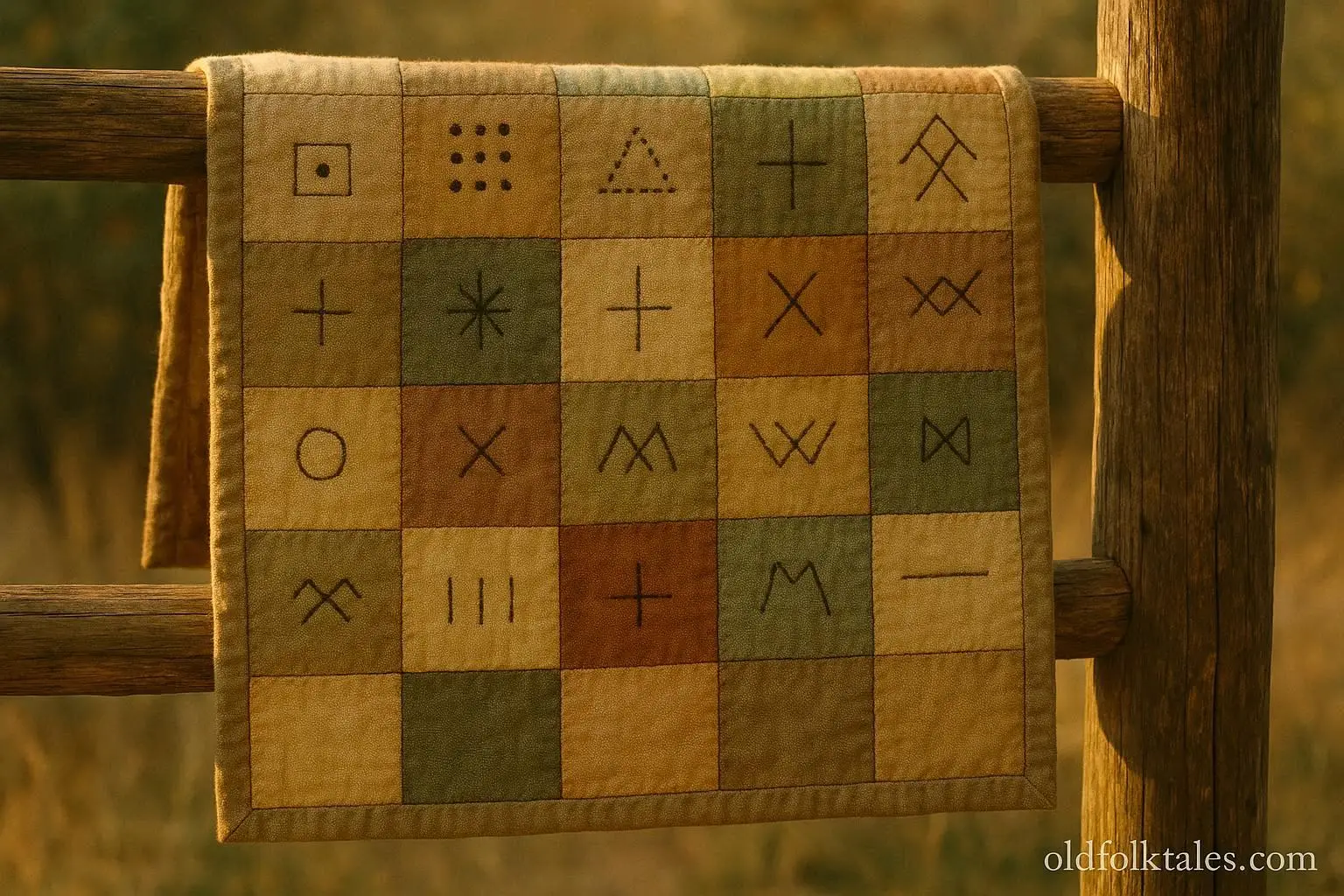
Among the many tools that arose from necessity, one of the most remarkable was the quilt. To an untrained eye, these were ordinary household objects: blankets sewn to keep warmth at night. Yet hidden within their carefully stitched patterns were secret messages of hope and escape. Each square, each geometric pattern, contained instructions, directions, or warnings. Knowledge was passed along quietly, from one generation to the next, ensuring that vital information could circulate without detection.
The patterns were rich with meaning. A simple log cabin pattern indicated a safe house, a refuge where those fleeing bondage could find shelter and food. Diamonds signaled river crossings that were safe at night, while stripes might indicate the number of nights to travel before resting. Spirals and stars marked significant landmarks or hidden resources. To the observer, it appeared to be domestic artistry, but to those in the know, these quilts were maps, guides, and lifelines.
Encounter the strange and the unseen — from Bigfoot to regional monsters hiding in America’s forests.
In one small plantation, a young girl named Liza learned to sew under the guidance of her grandmother. Her grandmother told her, “Every stitch is a word. Every square is a sentence. One careless stitch can lead someone to danger. Remember, the quilt speaks only if you listen.” Liza took these words to heart, carefully selecting fabrics and patterns. Each evening, after the day’s work, she would sew in secret corners of the cabin, stitching diamond shapes for the nearby river and log cabins for safe homes along the route north.
One night, a young boy named Samuel approached Liza. He had heard whispers from his parents of the secret routes to freedom, and he was desperate to find them. “Can the quilts really guide us?” he asked, almost in a whisper. Liza nodded solemnly. “If you watch closely, if you understand the patterns, they will show the way. But you must trust the symbols and never reveal them to those who do not understand.”
Weeks passed, and Samuel learned to read the quilts. Each morning, he memorized the patterns, plotting paths and learning the safest moments to move. One night, when the moon rose high, he used the quilt his grandmother had sewn to guide a small group of escapees. They followed the symbols: diamonds marking safe river crossings, squares indicating where to rest without being discovered. Liza had hidden extra provisions under the cabin, guided by the quilt’s instructions. By dawn, the group had safely reached the next stop, their freedom still fragile, but their lives spared by the knowledge sewn into the fabric.
These quilts were not just tools; they were lessons in courage and community. If a person was selfish or careless, the quilt’s messages might fail them. There were stories of quilts that were misread or tampered with, leading travelers into danger. It was a reminder that survival required discipline, trust, and respect for those who had come before. These objects were a testament to the ingenuity of people who faced unimaginable oppression and refused to surrender their spirit.
The quilts also carried lessons for future generations. Children who grew up learning to sew learned not just the art of stitching but the importance of observation, responsibility, and the consequences of their actions. They were taught to notice small details, understand the subtleties of patterns, and appreciate that knowledge, when wielded wisely, could be a powerful tool for liberation.
Beyond survival, the Freedom Quilts became symbols of hope. They reminded those who remained enslaved that courage could manifest in quiet ways, that small acts of creativity and intelligence could make a profound difference. Every stitch told a story, every pattern contained a moral lesson. They showed that even under extreme oppression, human ingenuity, resilience, and solidarity could prevail.
Even today, these quilts are remembered not only as artifacts of material culture but as embodiments of wisdom and courage. Museums, such as the Smithsonian National Museum of African American History and Culture, preserve these stories, showing the intersection of art, resistance, and survival. Each exhibit tells of the hidden codes, the secret knowledge, and the lives that depended upon it.
Click to read all American Folktales — timeless oral stories passed through generations across the United States.
Moral Lesson:
Ingenuity, courage, and collaboration can triumph over oppression. Even in the harshest circumstances, small acts of creativity and solidarity can make a profound difference.
Knowledge Check
1 What was the primary purpose of Freedom Quilts?
Answer: To secretly guide enslaved people to freedom
2 How were quilt patterns used as communication tools?
Answer: Each pattern and color conveyed instructions or warnings
3 Why was secrecy important in using these quilts?
Answer: Exposure could lead to punishment or capture
4 Which pattern might indicate a river route?
Answer: A diamond pattern
5 What did the log cabin pattern signify?
Answer: A safe house or place of refuge
6 What larger lesson do Freedom Quilts teach us?
Answer: Ingenuity, courage, and unity can triumph over injustice
Source:
Adapted from African American material culture studies, Smithsonian National Museum of African American History and Culture (2018)
Cultural Origin:
African American enslaved communities, United States