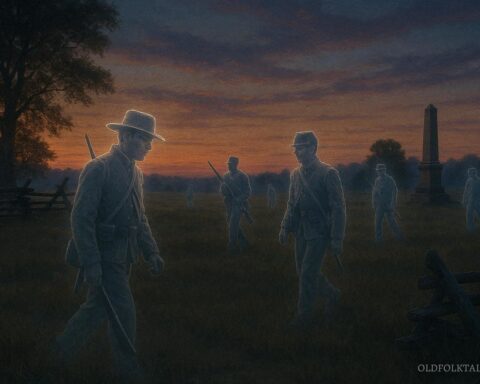
In the quiet hours before dawn, when mist curls low over the fields of Gettysburg, the air seems to hold its breath. The grass glistens with dew, and the monuments that rise across the rolling land stand like silent sentinels. To anyone passing through at that hour, the battlefield appears peaceful, even sacred. Yet for more than a century, those who have walked these grounds at dawn have told a different story.
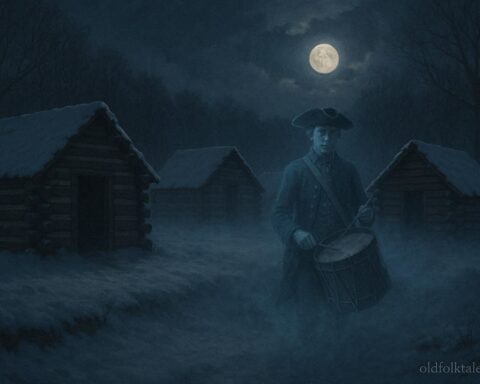
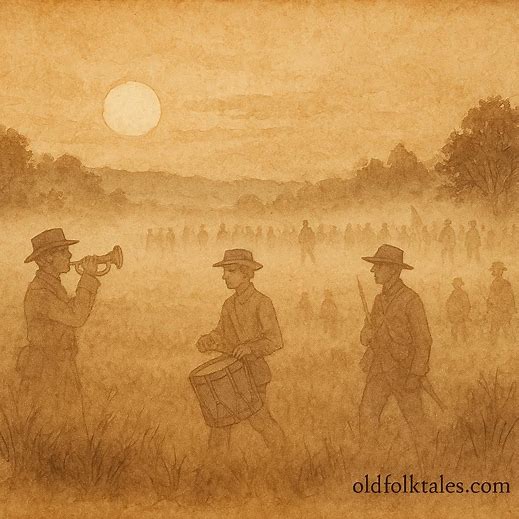
They speak of a faint, rhythmic sound that begins somewhere beyond the low hills. At first it is little more than a tremor on the air, a distant pulse that might be mistaken for the wind. But then it grows clearer, the steady beat of drums, the brassy call of bugles, the measured tramp of hundreds of boots striking the earth in perfect time. Some say the sound moves like a tide, rolling across the fields where once the armies of the Union and Confederacy clashed in terrible fury.
According to the legend, it happens only once each year, just after the anniversary of the great battle. As the sun begins to rise over Seminary Ridge, the dead return to march. Not in anger, not to refight the war, but to remember.
The Battle of Gettysburg was fought in early July of 1863, a turning point in the American Civil War. More than fifty thousand men were killed, wounded, or went missing over the course of three days. The fighting was fierce and desperate. Families living nearby fled their homes or hid in cellars as cannon fire shook the very earth. When the smoke finally cleared, the once-green fields were scarred with trenches and filled with the fallen.
Explore ancient Native American creation myths and the symbolic tales that shaped America’s belief systems.
Those who came to bury the dead spoke of a heavy silence that hung over the land, as if the ground itself grieved. Townspeople tended to the wounded, built makeshift hospitals in churches and barns, and prayed for the end of suffering. In the months that followed, the people of Gettysburg worked to heal the land and their hearts, but some said the battle had left an imprint too deep to fade.
The first tale of the ghostly march appeared not long after the war. A farmer who lived near Cemetery Ridge claimed that, on a misty morning in July, he had heard drums echoing faintly through the fog. Thinking a regiment had returned for memorial ceremonies, he went to the ridge and waited. But there was no one there only the drifting mist and the low rustle of grass. Still, the sound had been clear enough that his horse shied and refused to move forward.
Others soon told similar stories. A Union veteran who returned to visit the field years later swore he heard a company moving through the haze, the metallic clink of bayonets and the thud of boots on the ground. When he called out, the sound stopped, then slowly faded as if swallowed by the morning air. He believed the dead were marching still, their spirits bound to the place where courage and tragedy met.
As the decades passed, the legend deepened. Visitors who came to Gettysburg to honor their ancestors spoke of feeling a sudden chill, hearing a faraway call of a bugle when none was being played, or catching the scent of gunpowder on the wind. Park rangers and caretakers sometimes reported strange noises near the old Union lines before sunrise, though none could ever explain them. Some said that the spirits of both sides marched together now, no longer divided by color or cause, but joined in eternal remembrance.
One of the most enduring versions of the tale tells that, on the morning of July fourth, the phantom army begins its march from Seminary Ridge. The drummers lead, followed by ghostly soldiers from both armies, their forms pale and shifting in the fog. They pass silently through the fields toward Cemetery Hill, where they pause before fading with the first light of dawn. Those who claim to have witnessed it describe a sense of peace rather than fear as though the march is not a haunting, but a memorial.
The idea that enemies could walk side by side in spirit captured the imagination of many who heard the tale. To some, it symbolized reconciliation, the healing of old wounds between North and South. To others, it was a reminder that the cost of war lingers far beyond the battlefield. The ghosts of Gettysburg are not restless in vengeance, but steadfast in memory.
Every summer, visitors still come to the battlefield hoping to glimpse or hear something beyond the ordinary. Some bring recorders to capture the faint echo of a drumbeat. Others come simply to stand in silence as the morning mist rises, feeling the weight of history settle around them. Whether one believes in ghosts or not, there is a power in that place that words cannot easily describe.
For generations, the story of the Ghostly March at Gettysburg has been told and retold, passed from soldiers to families, from guides to travelers, from one heart to another. It endures because it speaks to something deeply human — the longing to be remembered and the hope that, even in death, unity and peace can prevail.
When the first rays of sun break through the fog, the sound always fades. The field grows still once more. But those who have heard the phantom march say that, for a few moments, they felt the presence of history moving around them, as if the past itself had come alive to remind the living of what it cost to secure the future.
Journey through the lives of folk heroes, war legends, and hometown champions in our American Legends collection.
Moral of the Story
The Ghostly March at Gettysburg reminds us that remembrance and reconciliation can outlast conflict. Even in death, unity is possible, and the echoes of sacrifice continue to teach the living the value of peace.
Knowledge Check
1. What event is the story centered around?
The Battle of Gettysburg, a major turning point in the American Civil War.
2. What is said to happen each year after the anniversary of the battle?
Visitors and locals hear ghostly drums, bugles, and footsteps marching across the fields at dawn.
3. Who are the spirits said to be?
The fallen soldiers of both the Union and Confederate armies, returning to remember rather than to fight.
4. What emotion does the legend evoke instead of fear?
A sense of peace and remembrance, symbolizing unity beyond death.
5. What does the ghostly march symbolize in American folklore?
It represents reconciliation, remembrance, and the shared cost of freedom.
6. How has the legend endured over time?
Through generations of storytelling, visitors, and historical reflection, it remains one of America’s most famous battlefield tales.
Source: Adapted from battlefield ghost-lore collected in Ghosts of Gettysburg (Mark Nesbitt, 1991) and Pennsylvania Legends & Lore of the Civil War (Thomas White, 2012).
Cultural Origin: United States (Pennsylvania / Civil War battlefield folklore)