Beneath the restless rhythm of New York City, where millions hurry above ground and the streets thrum with life, another world breathes in shadow. It is a world of tunnels, echoes, and steel, a city beneath the city. For more than a century, the subway has carried countless stories, but some of its deepest tales belong not to the living.
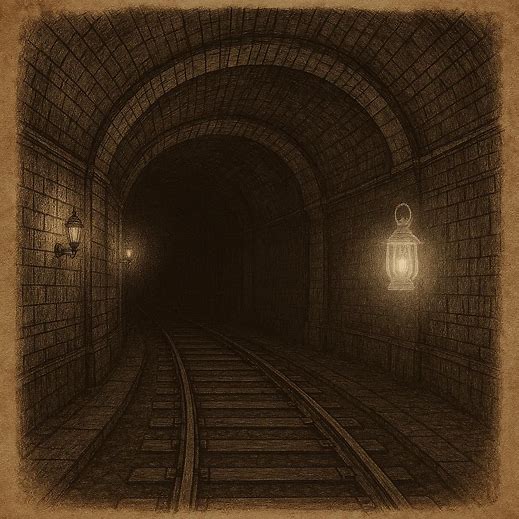
From the earliest days of its construction, workers spoke of strange happenings beneath the earth. Men toiled by lantern light, carving miles of tunnel through rock and mud, and sometimes never returned to see daylight again. Accidents were frequent, and the dark tunnels became the final resting place for those lost to cave ins or electric mishaps. Soon after, other workers began to whisper of ghostly figures moving in the distance, dim lamps swaying in the stale air. When they called out, there was no reply, only the faint rattle of unseen footsteps fading into silence.
As the subway grew, so did its legends. By the early twentieth century, passengers reported glimpses of phantom trains, old cars that roared through tunnels long abandoned. Some swore they saw a line of dimly lit windows glide past, filled with shadowy passengers dressed in outdated clothes. The lights flickered once, then vanished into the dark as if swallowed by the earth itself. When the living trains followed along the same route moments later, there was nothing ahead but cold air and empty track.
Explore ancient Native American creation myths and the symbolic tales that shaped America’s belief systems
Maintenance workers still tell stories of encountering ghostly figures during late night shifts. One story tells of a man seen walking through the tunnel near the Fourteenth Street station, carrying a lantern and wearing clothes decades out of date. When approached, he turned and vanished, leaving only the faint glow of his light bobbing deeper into the passageway. Another tale speaks of the spirit of a young woman in a long coat who appears at deserted platforms after midnight, waiting patiently for a train that will never come.
The sounds, too, carry their own mysteries. In stations long sealed off, echoes of old announcements sometimes drift through the air, clipped voices calling out stops that no longer exist. Train operators say they have heard the sound of an approaching car on tracks that are closed, only for the noise to stop abruptly when no train arrives. The city above may sleep, but its underground arteries still hum with the restless energy of generations past.
Among the most chilling stories is that of the so called Ghost Train of Track Sixty One, an unused platform hidden beneath the Waldorf Astoria Hotel. During World War Two, it served as a secret route for President Franklin Roosevelt, who used it to enter the hotel unseen. After it was decommissioned, night staff reported hearing the rumble of an approaching train even though the line had long been closed. Some have claimed to glimpse flashes of light through the tunnel and hear the hiss of brakes as the invisible locomotive pulls to a stop. Yet when they look again, the platform lies silent and still.
The legends are not all frightening. Some stories tell of spirits that seem protective, workers who died during construction and now watch over those who labor in the tunnels. A few subway employees say that during near accidents, they have felt a sudden pull or shove that saved them from harm, followed by a fleeting glimpse of a figure in an old worker’s cap fading into the darkness. These tales, told quietly among crews, lend a strange comfort, as if the city’s ghosts still have a purpose, still part of the endless machinery of movement and survival.
Folklorists studying these stories have noted how deeply they reflect the nature of New York itself. The city is always moving, always burying the past beneath new layers of progress. But in the subway, deep below the bright towers and crowded avenues, the past lingers. Every tunnel, every platform, holds traces of lives once lived, voices once raised, footsteps once hurried. The ghost stories of the subway are not merely tales of fear, but echoes of memory that refuse to fade.
Even today, modern passengers waiting for a train might catch the feeling that they are not alone. A faint breeze passes before the train arrives, a flicker of light glints on metal long before headlights appear, or a whisper travels along the platform when no one is near. The ghostly trains and lantern bearers remind New Yorkers that beneath the noise and motion of the city lies a silent world that never sleeps, filled with the shadows of those who built it and the echoes of those who traveled before.
Discover chilling ghost tales and haunted places that echo through America’s towns and countryside.
Moral Lesson
The legends of the New York City subway remind us that progress comes with unseen costs and that beneath every layer of modern life lie the memories of those who made it possible. Even in places built for speed and movement, the past waits quietly in the dark, asking not to be forgotten.
Knowledge Check
1. What mysterious event is most often reported in the New York subway tunnels?
The appearance of ghostly trains and phantom workers carrying lanterns through the underground.
2. Who are the spirits said to haunt the subway according to legend?
They are believed to be the spirits of workers who died during construction and passengers from decades past.
3. What is the story of the Ghost Train of Track Sixty One?
It is a phantom train said to appear at a hidden platform beneath the Waldorf Astoria, once used by President Franklin Roosevelt.
4. How do these subway ghost stories reflect the spirit of New York City?
They show how history and human effort remain alive beneath a city that constantly renews itself.
5. Why do some workers believe the ghosts of the subway are protective?
Because they tell stories of unseen forces saving them from danger or accidents.
6. What moral truth does the story of the haunted subway reveal?
That the past, even when buried beneath progress, continues to live through memory and unseen presence.
Source: Adapted from New York City Ghost Stories by Tara Leigh Parks, 2017
Cultural Origin: United States (New York Northeastern urban folklore)