In a quiet farming village where fields stretched endlessly beneath the open sky, people worked from sunrise to sunset, tending to crops with careful hands and steady eyes. The rhythm of planting, watering, and harvesting shaped daily life, and farmers relied on experience, observation, and the turning of the seasons to guide their work. Yet amid this world of familiar toil, there was a girl who seemed unlike anyone else.
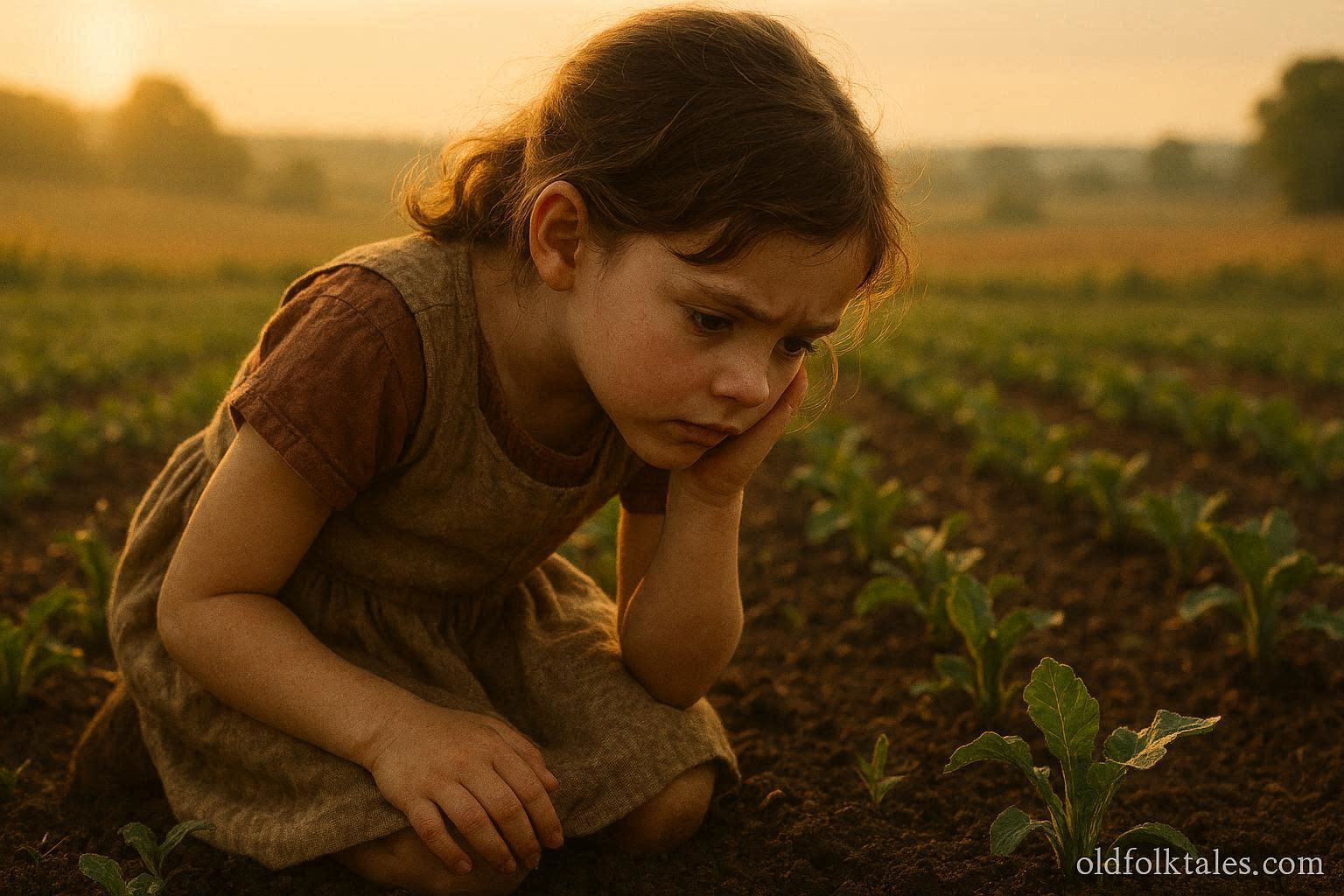
From an early age, she displayed an unusual gift. She would sit for long periods in the fields, her ears tilted toward the soil, eyes closed as if listening to some secret language. Villagers whispered that she could hear the earth itself growing. Some thought it fanciful, a child’s imagination at play. Others, especially those who had witnessed her uncanny predictions, began to believe there was truth in her claim.
The girl’s talent revealed itself most clearly during the planting season. She would wander through rows of newly sown seeds, stopping suddenly to tap the soil with a careful finger. “Here it will grow tall,” she would say, or, “This row needs more sun.” Farmers who followed her guidance often saw stronger shoots emerge where she indicated, healthier plants sprouting where she paused. Word of her unusual skill spread, and soon everyone in the village sought her counsel before major planting decisions.
Step into shadowy legends of restless spirits and ghostly travelers in American Ghost Stories.
Neighbors recalled a particular spring when drought threatened the region. Water was scarce, and many crops failed across the county. Yet the girl walked confidently through her own village’s fields, listening intently and pointing to rows that would survive the harsh conditions. To the astonishment of the farmers, the crops she had marked flourished, their roots drawing moisture from hidden underground streams. It seemed as though she could hear life itself whispering beneath the surface.
As the girl grew, so did her reputation. Visitors came from distant towns, curious to witness the girl who could hear the earth growing. Some watched skeptically, expecting trickery or coincidence. Others arrived with hope, desperate for guidance in uncertain seasons. She never failed to demonstrate her gift, pausing, listening, and speaking in a quiet voice that seemed to carry the hum of life itself.
Despite the attention, the girl remained humble. She spoke of the soil as a friend and a teacher, and she credited the success of the harvests not to herself, but to listening closely to the subtle movements of the earth. She taught others to be patient observers, reminding them that nature had rhythms beyond human measurement and that attentive care often revealed secrets hidden to the untrained eye.
Some villagers attempted to challenge her abilities. They marked seeds differently, planted them in unusual patterns, or covered the soil with barriers. Still, she could sense the potential within, pointing accurately to those that would thrive. Her predictions became more than mere tall tales; they were practical knowledge embedded in intuition, observation, and an extraordinary connection to the land.
The girl also possessed a gift for sensing change. She could tell when rain was coming before clouds appeared or when pests threatened certain crops. Her warnings saved countless fields from ruin, and even skeptical farmers grew to respect the quiet certainty with which she spoke. Her presence in the village was more than a curiosity—it was a vital part of life, intertwining human effort with the unseen forces beneath the soil.
As years passed, the girl’s influence spread beyond her village. Farmers from neighboring regions sought her guidance for planting and harvesting, eager to benefit from her uncanny insight. Stories of her gift became part of local folklore, told and retold in the evenings after long days of labor. Children listened wide-eyed, imagining the magic beneath the dirt, while adults reflected on the subtle ways nature communicates with those willing to listen.
The tale of the girl who could hear the earth growing carried a message beyond her personal talent. It reminded the villagers that the world is full of hidden rhythms and that careful attention often reveals what others overlook. Farmers began to observe more closely, feel the soil with their hands, and note small changes in plant behavior. In doing so, they discovered a deeper understanding of their environment and a newfound respect for the delicate balance between humans and the land.
Even in later years, when the girl had grown into a wise woman, villagers would recall her early days, watching her crouch over the soil, listening to what others could not hear. Her story became a symbol of patience, attentiveness, and the extraordinary possibilities that arise when one remains attuned to the natural world.
Ultimately, the legend of the girl who could hear the earth growing became more than a tale of strange ability. It spoke of harmony, respect for the environment, and the wonder hidden in everyday labor. People learned that paying close attention, trusting intuition, and listening to what the world whispers beneath the surface could yield guidance, understanding, and success in ways that ordinary observation alone could not achieve.
Discover African American wisdom, Native American spirit stories, and the humor of early pioneers in American Folktales
Moral Lesson
Listening closely to the natural world and trusting intuition can reveal hidden knowledge, promote harmony with the environment, and inspire patience and care in everyday life.
Knowledge Check
- What unusual gift did the girl possess?
She could hear crops growing beneath the soil and predict harvest success. - How did her predictions affect the village?
Her guidance helped ensure healthy crops and saved fields from drought and pests. - How did the girl view her gift?
She credited the earth and nature, remaining humble and emphasizing careful observation. - How did villagers respond to her ability over time?
They respected her insight, sought her guidance, and learned to observe and care for the land more closely. - What broader lesson does the story teach about nature?
That the natural world communicates subtly, and attentiveness and intuition can uncover hidden knowledge. - Why did the girl’s story become part of local folklore?
Because it illustrated the importance of patience, observation, and harmony with the environment.
Source
Adapted from materials preserved in Cornell University
Cultural Origin
Farming folklore from rural American communities