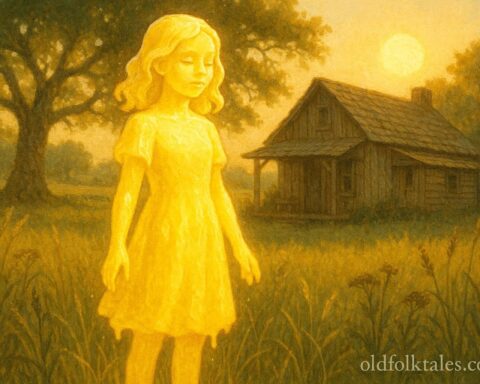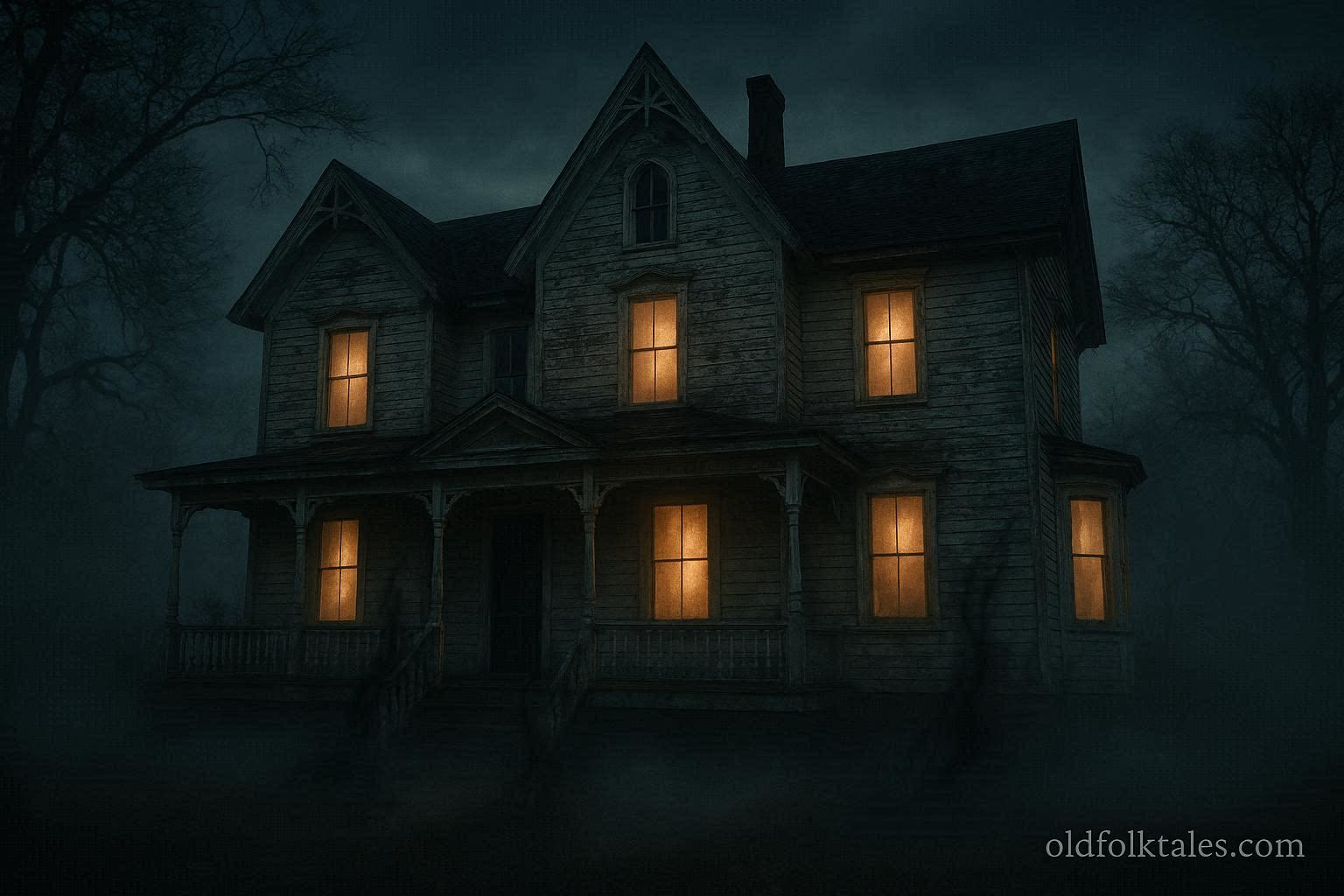
In a quiet Southern town, along a street lined with live oaks and creaking fences, there stood a house that seemed to resist time. Its paint had long peeled away in curling strips, the porch sagged as if sighing under the weight of years, and the windows reflected more shadows than sunlight. The townspeople whispered that the house was haunted, but not by an ordinary ghost. It was home to a haint, a spirit bound not by death alone but by the unfinished moral acts of those who had lived there.
The haint did not wander freely into the world to frighten strangers for fun. It lingered to observe, to remind, and to teach. It was a guardian of memory, a witness to promises broken, kindness withheld, and debts ignored. The townsfolk knew better than to enter the house lightly. Children dared one another to peek through its grimy windows, but the adults watched nervously from afar, knowing that the haint did not play.
One summer, a young man named Elijah arrived in the town. He was new to the community and unfamiliar with its stories. Seeking a home of his own, he purchased the old house, attracted by the bargain and its strange charm. The townspeople warned him, but Elijah laughed. He believed only in what he could see and touch, thinking the tales of spirits were nothing but superstition.
Step into shadowy legends of restless spirits and ghostly travelers in American Ghost Stories.
The first night he stayed, Elijah noticed subtle things that unsettled him. The air seemed thicker than normal, the floorboards creaked in patterns that did not match his movements, and faint whispers slipped through the walls, almost as if they were thoughts spoken aloud. He smiled at the absurdity of it all, attributing it to the imagination and the creaks of an old house settling.
By the second night, the whispers became clearer. They were not random sounds but faint echoes of actions and decisions long past. They spoke of generosity never given, honesty betrayed, and promises made and broken. Elijah began to realize that the house itself was a mirror, reflecting not the visible world but the moral acts of those who had lived within it.
At first, he resisted. He ignored the warnings, dismissed the shadows, and tried to go about his own life. But the haint was patient. It guided him subtly, moving furniture to catch his attention, letting cold drafts brush past him in precise patterns, and letting fleeting shapes in the corners of his vision hint at the presence of what he had ignored.
Gradually, Elijah began to see the lesson. The haint was not punishing him for amusement. It wanted him to face his own actions and the weight of responsibility. In one of the larger rooms, the parlor, he saw shadows replaying moments when he had been selfish, when he had lied or taken advantage of trust. The kitchen held echoes of generosity denied, while the study reminded him of knowledge hoarded and lessons left unshared. Each room taught a distinct principle, each corner revealed a hidden truth.
Over weeks, Elijah confronted himself. He began writing letters to people he had wronged, returned items borrowed and forgotten, and offered apologies where pride had prevented them. He helped neighbors with tasks he had previously ignored and contributed to the community without expecting reward. Slowly, he felt the presence of the haint grow lighter. The house, once oppressive and tense, began to breathe with him, as if acknowledging the restoration of balance.
One night, Elijah saw the haint fully. It was a shimmering figure, indistinct yet luminous, bowing in silent approval before fading into the walls. For the first time, the house felt like home. It no longer carried the weight of past neglect but became a place of reflection, a space that reminded its occupants that their deeds matter and that moral responsibility transcends the individual.
The story of Elijah and the haint spread through the town. Parents told their children not as a tale to frighten, but as a lesson to guide behavior. The house became known as a living reminder of accountability and justice. People learned that the haint did not need to speak loudly to be understood. Its presence taught that courage was not in daring the supernatural but in facing one’s own actions and correcting them. The spirit had no need to punish endlessly. It only asked that those who entered recognize their responsibilities and live with integrity.
Even years later, the house stood as a moral beacon. Visitors, aware of its past, approached with respect and reflection. Some reported feeling a soft pressure, a gentle urging to pause and consider choices, while others said the air smelled faintly of cedar and old paper, scents that reminded them of patience and care. The haint, ever vigilant, continued its quiet work, ensuring that those who lived with it understood the enduring power of accountability.
Click to read all American Folktales — timeless oral stories passed through generations across the United States.
Moral Lesson
Unresolved moral wrongs affect not only individuals but entire communities. True courage lies in confronting one’s own actions, making amends, and living with integrity. Justice and accountability are timeless, and learning to acknowledge mistakes is essential for harmony and collective peace.
Knowledge Check
- What does the haint in the old house represent?
Answer: It represents unresolved moral wrongs and the need for accountability. - How did Elijah initially respond to the haint?
Answer: He dismissed it as superstition and ignored the warnings. - What kinds of lessons did the haint reveal in the house?
Answer: Lessons about generosity, honesty, and sharing knowledge. - Why did the haint become calm?
Answer: Because Elijah acknowledged his past wrongs and made amends. - What does the story suggest about facing moral responsibilities?
Answer: True courage comes from confronting one’s own actions, not avoiding them. - How does the haint serve the community?
Answer: By keeping moral lessons alive and encouraging reflection and justice.
Source: Adapted from African American ghost lore collections, University of Georgia Folklore Archives
Cultural Origin: African American Southern communities