Long after the last freight cars rattled through the limestone hills of southern Indiana, the railroad tunnels remained. They cut through ridges like dark scars, brick lined and damp, breathing cold air even in summer. For generations, these tunnels were avoided after sunset. Locals said something else had claimed them once the trains disappeared. Not a ghost and not an animal anyone could name, but a living thing that learned to survive underground.
The earliest stories came from railroad workers in the late nineteenth century. Men tasked with inspection and maintenance reported strange disturbances inside the tunnels. Tools left near tunnel mouths were dragged inward. Lantern light revealed scrape marks along stone walls at a height too low for a bear but too wide for any known reptile in the region. At first, these accounts were dismissed as exaggeration from tired men working long hours in isolation.
As rail traffic declined and tunnels were sealed or abandoned, the sightings did not stop. They increased.
Farmers living near the hills told of livestock refusing to drink from streams that flowed out of tunnel mouths. Dogs would freeze, hackles raised, and refuse to cross old rail beds. At night, a low dragging sound echoed from the hills, like scales brushing stone. Those who followed the sound never reached its source. It always retreated back into darkness.
Discover chilling ghost tales and haunted places that echo through America’s towns and countryside.
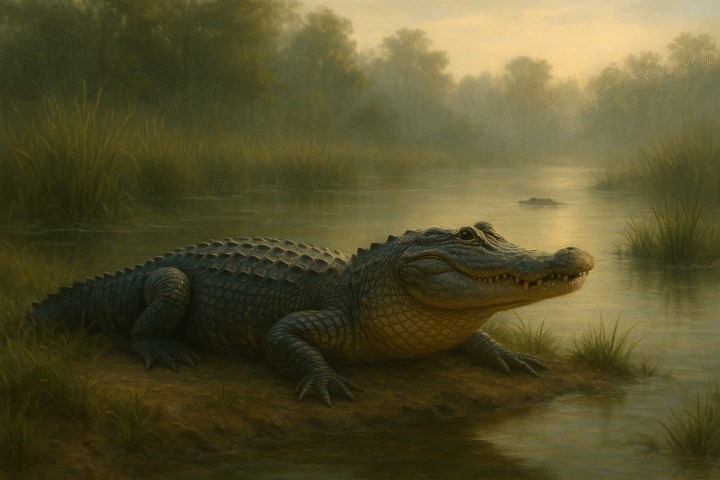
Children growing up near the tunnels were warned never to enter them, not because they might collapse, but because something inside did not like being disturbed. Elders described the creature as long and thick bodied, with a hide darkened by years without sunlight. They said it had limbs, but used them rarely, preferring to slide and coil through tight spaces. Its eyes were described as pale, reflecting light like wet stone.
One of the most detailed accounts came from a group of teenagers in the 1930s who dared each other to explore a tunnel that had been unused for decades. They entered with flashlights and rope, laughing until they reached a bend where the air grew colder and heavier. Their lights caught movement ahead. Not fast, but deliberate. The beam reflected off a broad head that pulled back into the shadows.
The ground beneath them vibrated slightly, as if something heavy shifted its weight.
They ran. One of them dropped a flashlight. It was never recovered.
By mid century, the creature had a name. The Hoosier Tunnel Lizard. The name spread quietly, mostly by word of mouth. People spoke of it only when necessary. Hunters avoided tunnels during tracking season. Surveyors reported missing equipment. A county crew attempting to seal one tunnel permanently abandoned the job after finding deep gouges carved into fresh concrete overnight.
Despite fear, the creature was never described as aggressive without cause. It did not chase people beyond tunnel boundaries. It did not surface during the day. Its appearances were linked to intrusion. Those who left the tunnels alone were left alone in return.
Local folklore began to explain its origin. Some said it was an ancient thing, older than the railroads, driven underground by noise and settlement. Others believed it was changed by the tunnels themselves, an ordinary reptile trapped and altered by generations of darkness, dampness, and isolation. A few claimed it guarded something buried beneath the hills, something the tunnels had cut too close to.
Elders told children that the creature listened. That it learned patterns. That it understood when humans came with intention versus curiosity. The tunnels were its boundary. Cross it without respect, and the ground itself would remind you.
In the 1970s, a geology student from a nearby university attempted to map airflow in abandoned tunnels. He entered one at dawn and did not return by nightfall. A search party found his notebook near the entrance, pages torn and smeared with mud. Deep grooves crossed the rail bed floor, leading inward. The tunnel was sealed shortly afterward, officially for safety reasons.
Even today, locals report hearing movement beneath their feet when walking old rail trails. Vibrations that stop when they stop. Children still claim to see something long and dark slip back into tunnel mouths when headlights pass at dusk. The creature has never been photographed clearly. Those who attempt to do so say electronics fail near the tunnels, batteries draining without warning.
The Hoosier Tunnel Lizard remains part of the landscape, not as a monster to be hunted, but as a presence to be acknowledged. It is a reminder that abandonment does not mean emptiness. That when humans leave, something else may arrive or finally step forward from the dark.
The tunnels still breathe. And something still listens from within.
Click to read all American Cryptids & Monsters — creatures of mystery and fear said to inhabit America’s wild landscapes.
Moral Lesson
Not all places are meant to be reclaimed. Some spaces belong to what endured after we left, and respect is sometimes the only safe boundary.
Knowledge Check
- Where is the Hoosier Tunnel Lizard believed to live?
Answer: In abandoned railroad tunnels in southern Indiana. - When do sightings of the creature most often occur?
Answer: At dusk or night, especially when tunnels are disturbed. - How does the creature usually respond to human presence?
Answer: It avoids daylight and only reacts when its territory is entered. - What physical traits are commonly described?
Answer: A long reptilian body, dark hide, pale reflective eyes, and limited use of limbs. - Why were some tunnels sealed by authorities?
Answer: Due to unexplained disturbances, missing equipment, and safety concerns. - What warning do elders give about the tunnels?
Answer: That intrusion without respect invites danger.
Source
Adapted from Indiana University folklore field reports and regional oral history documentation.
Cultural Origin
Southern Indiana communities