High in the rugged hills of the Appalachian region in the United States, where narrow paths wind through thick forests and quiet valleys, stories have long been told about a boy named Jack. Unlike others who relied on strength or size, Jack was known for something far more powerful. He had a quick mind, sharp instincts, and the ability to turn even the most dangerous situations to his advantage.
Jack did not come from wealth or comfort. He lived simply, often moving through the mountains with little more than what he could carry. But he understood the land, the people, and the risks that came with traveling alone. In those mountains, danger was never far away, especially from those who chose to live outside the law.
One evening, as the sun began to disappear behind the hills and shadows stretched across the forest floor, Jack found himself far from any safe place to rest. The air grew colder, and the sounds of the forest shifted. He needed shelter for the night.
Step into America’s cultural roots — from folk healing and weather lore to seasonal celebrations.
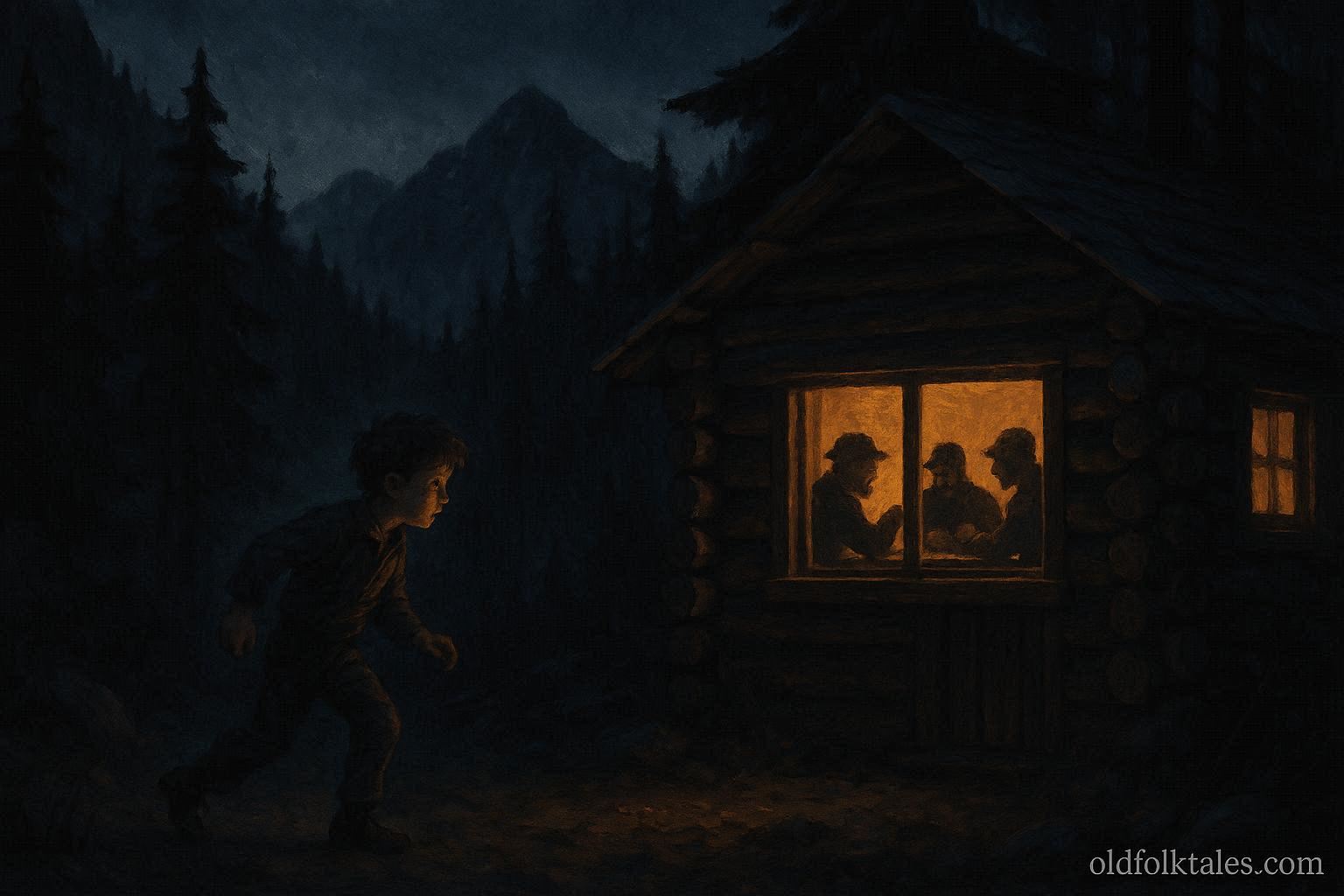
As he moved carefully through the trees, he noticed a faint light in the distance. It flickered between the branches, steady enough to suggest a fire. Jack approached slowly, keeping his steps quiet. When he drew closer, he saw a small cabin tucked deep within the woods.
But this was no ordinary cabin.
Inside were robbers.
Jack did not rush in or turn away. Instead, he observed. The robbers were gathered around a table, counting coins, sorting valuables, and speaking in low voices. Their laughter was rough, and their movements showed confidence. They believed they were safe in that hidden place.
Jack understood immediately that walking away would mean losing an opportunity, but walking in carelessly could mean danger. So he chose a different path. He decided to use his mind.
Waiting until the robbers stepped away from the cabin for a short time, Jack quietly entered. He moved quickly but carefully, studying everything inside. He saw where the treasure was kept, how the room was arranged, and what he could use to his advantage.
Instead of taking the treasure and running, Jack prepared a plan.
He shifted objects, rearranged small details, and set the stage for confusion. Then he hid, waiting for the robbers to return.
When they came back, they immediately sensed that something was different. A chair was out of place. A bag had been moved. Their voices grew tense. Suspicion filled the room.
Jack watched as they began to argue among themselves, each blaming the other for touching the treasure. The more they argued, the less they noticed what was really happening.
At the right moment, Jack made his move.
Using the confusion to his advantage, he slipped out of hiding, gathered what he could carry, and moved silently toward the door. Every step was careful, every movement controlled. The robbers were too distracted to notice.
Once outside, Jack did not run immediately. He kept his pace steady until he was far enough away. Only then did he move faster, disappearing into the darkness of the mountain paths.
By the time the robbers realized what had happened, it was too late.
Jack had outsmarted them.
He had taken advantage of their weakness, not through force, but through understanding. He knew that confusion could be more powerful than confrontation. He knew that patience could create opportunity.
Stories like this have been preserved in collections such as those at the Library of Congress, where Appalachian folktales continue to be studied and shared. These stories often feature characters like Jack, who represent the value of intelligence in difficult situations.
As Jack made his way down from the mountains, carrying the treasure he had gained, the night no longer felt threatening. The same forest that once held danger now felt like a place he understood even better.
He had not only escaped.
He had succeeded.
And his story continued to travel through the mountains, told again and again as a reminder that even in the face of danger, a clever mind can create a way forward.
Click to read all American Folktales — timeless oral stories passed through generations across the United States.
Moral Lesson
Clever thinking and patience can overcome even the most dangerous challenges.
Knowledge Check
- Who is Jack?
A clever boy - Who did Jack encounter?
A group of robbers - What did Jack use to succeed?
Intelligence and planning - Why did the robbers fail?
They became confused and distracted - What did Jack gain?
Treasure - What is the main idea of the story?
That cleverness can defeat danger
Source
Adapted from materials preserved by the Library of Congress
Cultural Origin
Appalachian folklore