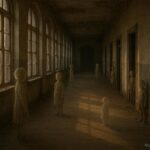
In the town of Gettysburg, Pennsylvania, history is etched into every brick and cobblestone, but none more poignantly than at the Jenny Wade House. The house, modest yet sturdy, was the home of Jennie Wade, a twenty-year-old woman who became an unintended victim of one of the Civil War’s defining battles. Unlike soldiers, Jennie had no uniform, no weapon, and no choice but to continue her daily life amidst chaos. On the fateful morning of July 3, 1863, she was preparing bread for her family, unaware that the war would claim her life.
A stray bullet, fired in the nearby skirmishes, struck Jennie through the walls of her home, ending her life instantly. The tragedy was compounded by the innocence of the victim; she was the only civilian officially documented to die during the Battle of Gettysburg. Over time, her death became entwined with local lore. Visitors, historians, and paranormal enthusiasts alike report an unusual energy within the house, suggesting that Jennie’s spirit lingers, tied to the site of her final moments.
Those who enter often describe subtle but consistent phenomena. Some notice the scent of freshly baked bread, as if the oven itself remembers her labor. Others hear soft footsteps in empty rooms or feel sudden temperature changes, particularly near the hearth where Jennie worked. A few claim to have seen a fleeting figure of a young woman in 19th-century attire, pausing by the doorways and silently observing the present-day visitors.
Explore the heart of America’s storytelling — from tall tales and tricksters to fireside family legends.
While skeptics attribute these occurrences to imagination or the creaks of an old house, the legend persists, sustained by generations of eyewitnesses. The stories surrounding the house do more than thrill; they invite reflection on the broader human cost of war. Unlike soldiers who chose battle, Jennie represents the countless civilians whose lives were disrupted, harmed, or ended by conflict. The house serves as a reminder that war’s impact reaches beyond the battlefield, affecting those who never pick up a weapon.
Over the decades, the house has been preserved carefully to honor both its historical and folkloric significance. The kitchen and hearth where Jennie baked remain intact, complete with period-appropriate furnishings. Guides explain the historical events and the supernatural accounts associated with the house, offering visitors a chance to connect with both the past and the stories it inspires. The combination of historical accuracy and local legend ensures that the house conveys a complete, nuanced perspective on 19th-century civilian life during wartime.
The legend also carries an implicit moral. Visitors often report feeling a sense of solemnity and reflection while walking the rooms, as if the house itself encourages reverence for the life that was lost. Those who act with respect often experience nothing more than a quiet awareness of the space, whereas those who are dismissive sometimes report an uneasy feeling. Folklore interprets this as the house’s way of teaching respect for history, memory, and the consequences of neglecting them.
Beyond the ghostly accounts, Jennie Wade’s story teaches resilience and community responsibility. Though she could not protect herself from the random violence of war, her life has become a symbol for the remembrance of innocents. The house acts as a bridge between the past and present, urging visitors to consider not only historical facts but also the ethical dimensions of memory. It reminds us that honoring those who suffered especially those who had no power over their circumstances is a moral obligation.
Educational programs and tours of the Jenny Wade House emphasize these lessons. School groups, history enthusiasts, and tourists alike are encouraged to reflect on the human cost of conflict, the fragility of life, and the importance of preserving history. Even in its quietest corners, the house speaks of vigilance, empathy, and the moral imperative to remember those who lived and died far from glory yet remain central to the story of Gettysburg.
Discover chilling ghost tales and haunted places that echo through America’s towns and countryside.
Moral Lesson
The story of the Jenny Wade House teaches that innocent lives affected by war deserve remembrance, empathy, and respect. Honoring the past with reverence strengthens moral awareness and community responsibility, reminding us to reflect on the human cost of conflict.
Knowledge Check
- Who is said to haunt the Jenny Wade House?
Answer: Jennie Wade, a civilian killed during the Battle of Gettysburg - How did Jennie Wade die?
Answer: She was struck by a stray bullet while baking bread in her home - What sensory phenomena are reported by visitors?
Answer: Smells of bread, soft footsteps, cold drafts, and fleeting shadows - How should visitors behave when entering the house?
Answer: With respect and reverence for the history and tragedy - What moral lesson is illustrated by the legend?
Answer: The importance of remembering innocent lives affected by war - Why is the house historically significant beyond its haunting?
Answer: It preserves the story of a civilian casualty, highlighting the broader human impact of the Civil War
Source:
Adapted from Gettysburg National Military Park folklore archives
Cultural origin:
American Civil War era