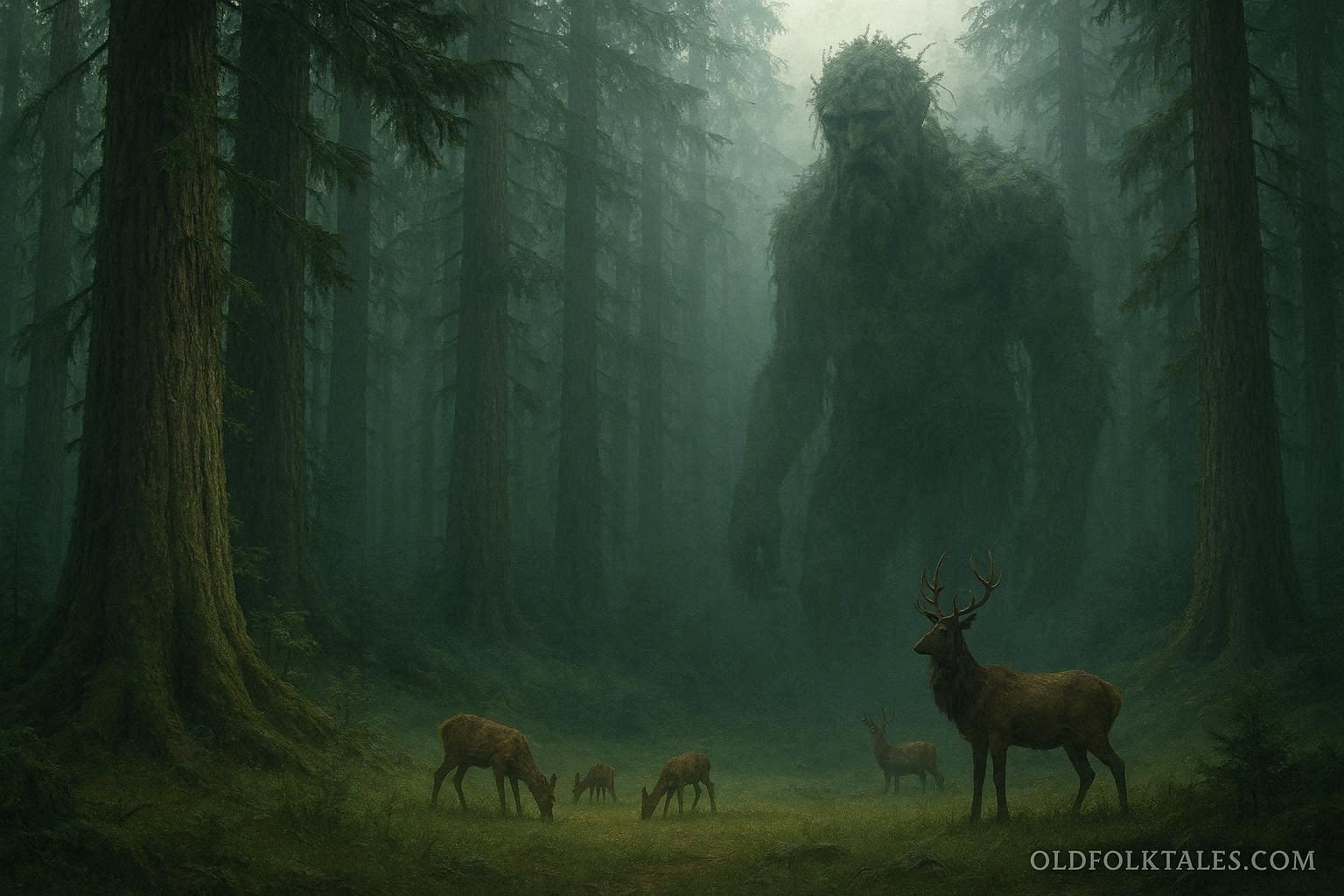
The dense forests of the Pacific Northwest have long inspired stories of powerful beings who dwell among the towering trees and mist covered mountains. For countless generations, Indigenous communities living in this region shared stories about creatures that inhabited the wilderness long before towns and roads appeared. One of the most intriguing figures in these traditions is the Kolowa, a mysterious forest giant believed to roam the deep woods while protecting the animals that live there.
The forests of the Pacific Northwest are vast and ancient. Enormous cedar, spruce, and fir trees rise high above the forest floor, creating a landscape where sunlight often filters through thick branches and drifting mist. Rivers wind through valleys while wildlife moves quietly beneath the canopy. For hunters traveling through these lands long ago, the wilderness could feel both beautiful and mysterious.
Stories about the Kolowa began with unusual discoveries made by hunters exploring remote areas. While tracking deer or elk through the forest, some hunters reported finding enormous footprints pressed deep into the soft ground. These tracks were far larger than those of any known animal and seemed to belong to a creature that walked upright like a human.
Discover chilling ghost tales and haunted places that echo through America’s towns and countryside.
The footprints often appeared in places where few people traveled. Hunters sometimes found them near riverbanks, along mountain trails, or beside fallen trees where animals frequently gathered. Because of their size and shape, the tracks suggested a towering being capable of moving through the wilderness with great strength.
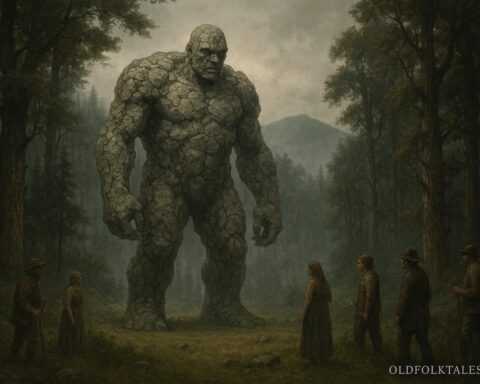
When these stories reached village elders, many explained that the tracks might belong to a powerful forest guardian known as Kolowa. According to traditional accounts, Kolowa was a giant being who lived deep within the mountains and forests, rarely allowing humans to see him directly. His role was believed to be protecting wildlife and maintaining balance in the natural world.
In these traditions Kolowa was not described as a destructive monster but as a watchful guardian of the forest. The giant was said to move quietly through the woods, observing hunters and travelers from a distance. If people treated the land with respect, Kolowa would remain hidden and allow them to pass safely through the wilderness.
However, if someone hunted wastefully or harmed animals without need, the giant might intervene. Some stories say hunters who ignored traditional rules sometimes heard heavy footsteps nearby or branches breaking in the darkness. When they looked around, they could find no one there, yet the feeling of being watched remained strong.
One story passed down through generations tells of a young hunter who traveled far into the forest searching for game. After several days he became frustrated because he had seen no animals at all. Determined to return home with something, he began setting traps in large numbers along a narrow valley path.
That evening the hunter noticed strange tracks around his campfire. They were enormous footprints, far larger than any he had seen before. At first he thought a bear might have wandered nearby, but the tracks clearly resembled the shape of human feet.
During the night he woke to the sound of deep, heavy steps moving slowly through the forest. The ground seemed to tremble slightly as though something large was walking between the trees. The hunter stayed inside his shelter, listening carefully as the footsteps passed near his camp.
When morning arrived he stepped outside and saw that many of his traps had been broken or opened. Yet none of his supplies had been taken and nothing around his camp appeared damaged. Only the giant footprints remained, leading back toward the deeper forest.
Realizing that something unusual had happened, the hunter returned to his village and described what he had experienced. The elders listened carefully and explained that Kolowa may have visited his camp to warn him. By placing too many traps he had threatened the balance of the animals in that area.
The young hunter understood the lesson. From that time forward he hunted only what he needed and treated the forest with greater respect. According to the story, he never again heard the heavy footsteps of the giant, but he continued to believe that Kolowa watched over the wilderness.
Other accounts describe travelers who glimpsed a massive shadow moving between trees at dusk or heard deep echoes of footsteps along mountain trails. These sightings were always brief and uncertain. The giant seemed to disappear quickly into the forest before anyone could see him clearly.
Because of this mysterious behavior, Kolowa became a symbol of the hidden power of nature itself. The giant represented the idea that the wilderness has guardians who ensure that humans respect the balance of life within it.
Folklore scholars studying Indigenous traditions of the Pacific Northwest have noted that stories like the Kolowa legend often served important cultural purposes. They reminded hunters to take only what they needed from the land and to remember that animals were part of a larger natural system.
These stories also reflected the deep relationship between Indigenous communities and their environment. Forests were not simply resources but living landscapes filled with spirits, animals, and powerful forces deserving of respect.
Over time, the legend of the forest giant spread beyond individual communities and became part of the wider storytelling traditions of the region. Travelers and settlers later heard the tales and sometimes compared them to stories of mysterious giant creatures said to live in remote wilderness areas.
Despite these comparisons, the original meaning of the Kolowa legend remained connected to the cultural values of the people who first told the story. The giant was not merely a mysterious creature but a guardian representing the importance of balance between humans and the natural world.
Today the forests of the Pacific Northwest still hold an atmosphere of mystery. Towering trees, drifting fog, and distant animal calls continue to inspire imagination and storytelling. Whether viewed as folklore, symbolism, or spiritual tradition, the story of Kolowa reminds listeners that nature deserves respect and careful stewardship.
The legend continues to be shared as a reminder that humans are only one part of the vast living landscape. Somewhere deep within the forest, the ancient guardian may still be walking quietly beneath the trees, watching over the animals and the land that has been his home for generations.
Click to read all American Cryptids & Monsters — creatures of mystery and fear said to inhabit America’s wild landscapes.
Moral Lesson
Nature must be respected and protected. When humans take only what they need and care for the land, balance between people and the natural world can be preserved.
Knowledge Check
- What kind of creature is Kolowa described as?
A giant forest guardian living deep in the wilderness. - What evidence led hunters to believe Kolowa existed?
They discovered enormous humanlike footprints in remote forest areas. - What role does Kolowa play in the forest?
He protects wildlife and maintains balance in nature. - What happened to the hunter who placed too many traps?
His traps were broken and he found giant footprints near his camp. - Why did elders believe Kolowa visited the hunter?
To warn him about harming the balance of animals in the forest. - What cultural value does the legend teach?
Humans must respect the land and the animals they depend on.
Source
Adapted from materials preserved in the Oregon Historical Society Indigenous Records
Cultural Origin
Pacific Northwest tribal traditions