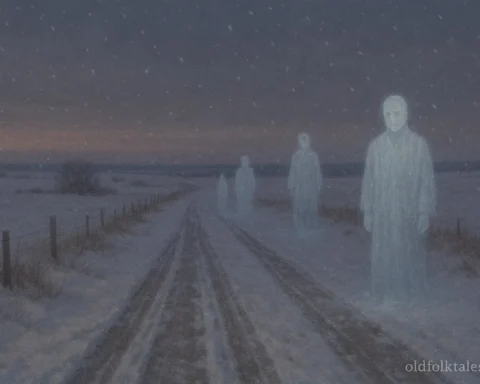
When the morning mist rolls over Lake Lanier in northern Georgia, it carries with it an eerie quiet. The still water stretches wide and blue, framed by pine-covered hills and peaceful homes. To the casual eye, it is a place of beauty and calm, a weekend haven for boating and fishing. But to those who know its story, Lake Lanier is more than a scenic reservoir. Beneath its shining surface lies a hidden world of loss, and many believe the past is not at rest.
Before the lake was created, this valley was home to thriving farming towns. Families lived on fertile land, churches rang their bells on Sundays, and small bridges crossed the creeks that wound between oak trees. In the 1950s, as part of a grand plan to provide hydroelectric power and water supply, the government decided to flood this land. The towns of Oscarville and several neighboring settlements were emptied, their residents forced to leave the homes their ancestors had built. Cemeteries were moved, but not all graves were found. When the Chattahoochee River rose, it swallowed fields, roads, and the remains of old lives.
From the very beginning, the waters of Lake Lanier seemed troubled. Construction workers spoke of accidents during the dam’s building men who fell, equipment that vanished, and sudden waves that struck without warning. Once the lake filled, strange stories began to spread among those who lived nearby. Boats capsized on still days. Strong swimmers were pulled under as if by unseen hands. Fishermen claimed they felt cold fingers brush against them below the surface.
Explore ancient Native American creation myths and the symbolic tales that shaped America’s belief systems.
One story, whispered across generations, tells of the Lady of the Lake.
In 1958, two women were driving home late at night along the bridge that crosses the northern arm of the reservoir. Their car skidded off the road and plunged into the dark water below. Weeks later, one of the women’s bodies was recovered, but the other vanished. Nearly thirty years later, divers repairing the bridge found a rusted car entangled in the silt at the bottom. Inside was a skeleton, still dressed in a tattered blue dress.
Not long after, people began to report sightings of a woman in a blue gown wandering the bridge at night. Drivers swore they saw her standing in the headlights, pale and silent, only for her to disappear when they stopped. Others said she floated just above the water, her hair drifting as if she were still beneath the surface. The locals began calling her the Lady of the Lake.
For many Georgians, the Lady’s story became part of Lake Lanier’s identity, a symbol of the lives taken by progress and the spirits trapped between two worlds. But she is not the only one said to haunt those waters. Some tell of entire ghostly towns visible in the depths during calm days, where the outlines of roofs and fences seem to shimmer under the sun. Divers claim to have found remnants of old cemeteries, tree trunks standing upright underwater, and even church foundations.
Fishermen often refuse to stay on the lake after dusk. They speak of voices echoing across the water when no one is near, and splashes that come from empty spaces. One story tells of a man who fell asleep in his boat one night and woke to find it drifting toward the submerged bell tower of an old church. As the fog thickened, he heard the faint ringing of a bell though everyone knew the bell had been removed before the town was flooded.
In recent years, Lake Lanier has gained a reputation for unexplained accidents. Boats overturn suddenly, swimmers vanish in shallow water, and rescuers sometimes describe feeling a chill, as if the lake itself resists giving back the lost. Scientists point to sudden temperature drops, unpredictable currents, and underwater debris as the cause. But locals say it is something else, the unsettled spirits of those whose homes and graves were drowned without peace.
Despite the fear and fascination, people continue to visit Lake Lanier. They picnic by its shores, speed their boats across the open water, and gather under the sun to watch fireworks in summer. Yet when the evening falls and the last light fades, the lake returns to silence. The wind carries faint ripples toward the dam, and sometimes a thin mist drifts up from the surface, swirling like pale smoke. It is then that some claim to see her, the Lady in Blue gazing across the waters, as if still searching for a way home.
Lake Lanier is both a triumph and a tragedy, a modern creation resting atop forgotten lives. To those who believe in ghosts, it stands as proof that the past cannot be buried, even beneath the deepest water. Every whisper, every ripple, every unexplained chill in the air is said to carry the memory of what lies below.
Discover chilling ghost tales and haunted places that echo through America’s towns and countryside.
Moral Lesson
The story of Lake Lanier reminds us that progress comes with a price. When human ambition displaces the past, its echoes remain. We cannot build our future without honoring the memories buried beneath it.
Knowledge Check
1. Where is Lake Lanier located?
Lake Lanier lies in northern Georgia, formed from the Chattahoochee River.
2. Why is the lake considered haunted?
It was created by flooding old towns and graveyards, leading to tales of restless spirits and strange drownings.
3. Who is the Lady of the Lake?
A ghostly woman in a blue dress said to appear near the bridge where she died in a 1958 car accident.
4. What does the Lady of the Lake symbolize?
She represents memory, loss, and the cost of human progress.
5. What are common supernatural reports at Lake Lanier?
Sightings of the Lady in Blue, phantom towns beneath the surface, cold touches underwater, and mysterious voices.
6. What deeper meaning does the legend carry?
It reflects how the past continues to live beneath the surface of history, waiting to be remembered.
Source:
Adapted from Georgia regional folklore and modern accounts of Lake Lanier hauntings.
Cultural Origin:
United States (Georgia / Southeastern regional haunting folklore)