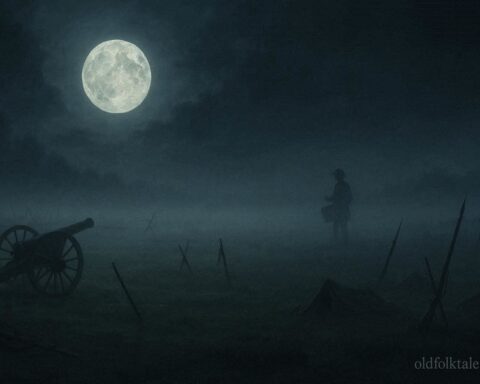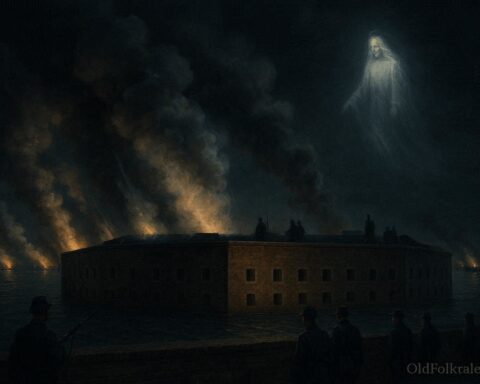
In the years that followed the American Civil War, many communities across the United States were left with deep emotional wounds. Families mourned loved ones who had not returned home, soldiers struggled to rebuild their lives, and the memories of war lingered in towns and military posts throughout the country. One such place where history and legend eventually blended together was Fort Gibson, an important military post located in what is now the state of Oklahoma.
Fort Gibson had served as a strategic location during several conflicts in the nineteenth century. Soldiers, travelers, and settlers passed through the region as the frontier continued to expand westward. After the Civil War ended in 1865, the fort remained active as a military installation, and the nearby community slowly began to rebuild and grow.
Among the many stories connected to the area, one of the most unusual and haunting tales is the legend of a young woman named Vivia Thomas. According to local tradition, her story is tied to love, sacrifice, and a promise that was never fulfilled.
Step into shadowy legends of restless spirits and ghostly travelers in American Ghost Stories.
The legend begins with a young woman who lived near the military post during the years following the Civil War. Vivia was said to be strong willed and deeply devoted to a soldier she loved. The man had been assigned to duty far from home, and the uncertainty of military life meant that long separations were common. Communication was slow, and letters sometimes took weeks or months to arrive.
For Vivia, the distance between herself and the soldier she loved became almost unbearable. The fear that she might never see him again troubled her deeply. Stories from the time describe how many women felt powerless when the men they cared about were sent away to serve in distant military posts. Some waited faithfully for years, while others feared that the hardships of war might keep their loved ones from ever returning.
According to the legend, Vivia refused to remain separated from the soldier she loved. Determined to find him, she made an extraordinary decision that would eventually become the center of the story told around Fort Gibson for generations.
It is said that she disguised herself in clothing similar to that worn by soldiers. By hiding her true identity, she hoped to travel closer to the military camps where her beloved was stationed. Such a plan was risky and unusual, especially during a time when strict social expectations limited the roles women were expected to play in society.
Nevertheless, the legend claims that Vivia managed to leave her home and travel across the frontier while maintaining her disguise. The journey was difficult and filled with uncertainty. Roads were rough, distances were long, and travel often meant enduring harsh weather and unfamiliar terrain.
During this time the American frontier was still a challenging and sometimes dangerous place. Military posts like Fort Gibson served as centers of activity where soldiers protected transportation routes and nearby settlements. Travelers moving through the region often stopped at these forts for safety and supplies.
As the story continues, Vivia eventually arrived near Fort Gibson while still searching for the soldier she loved. By that time, however, circumstances had changed in ways she could not have expected.
Some versions of the legend say that the soldier she was searching for had already been transferred to another post before she arrived. Other versions claim that he had died from illness or injuries sustained during military service. In either case, the story ends with Vivia discovering that the person she had traveled so far to find was no longer there.
The emotional shock of this discovery reportedly left her devastated. Far from home and separated from the person who had inspired her journey, she found herself alone in an unfamiliar place. Frontier life was difficult enough for experienced travelers, and for someone who had secretly crossed long distances while hiding her identity, the situation must have been overwhelming.
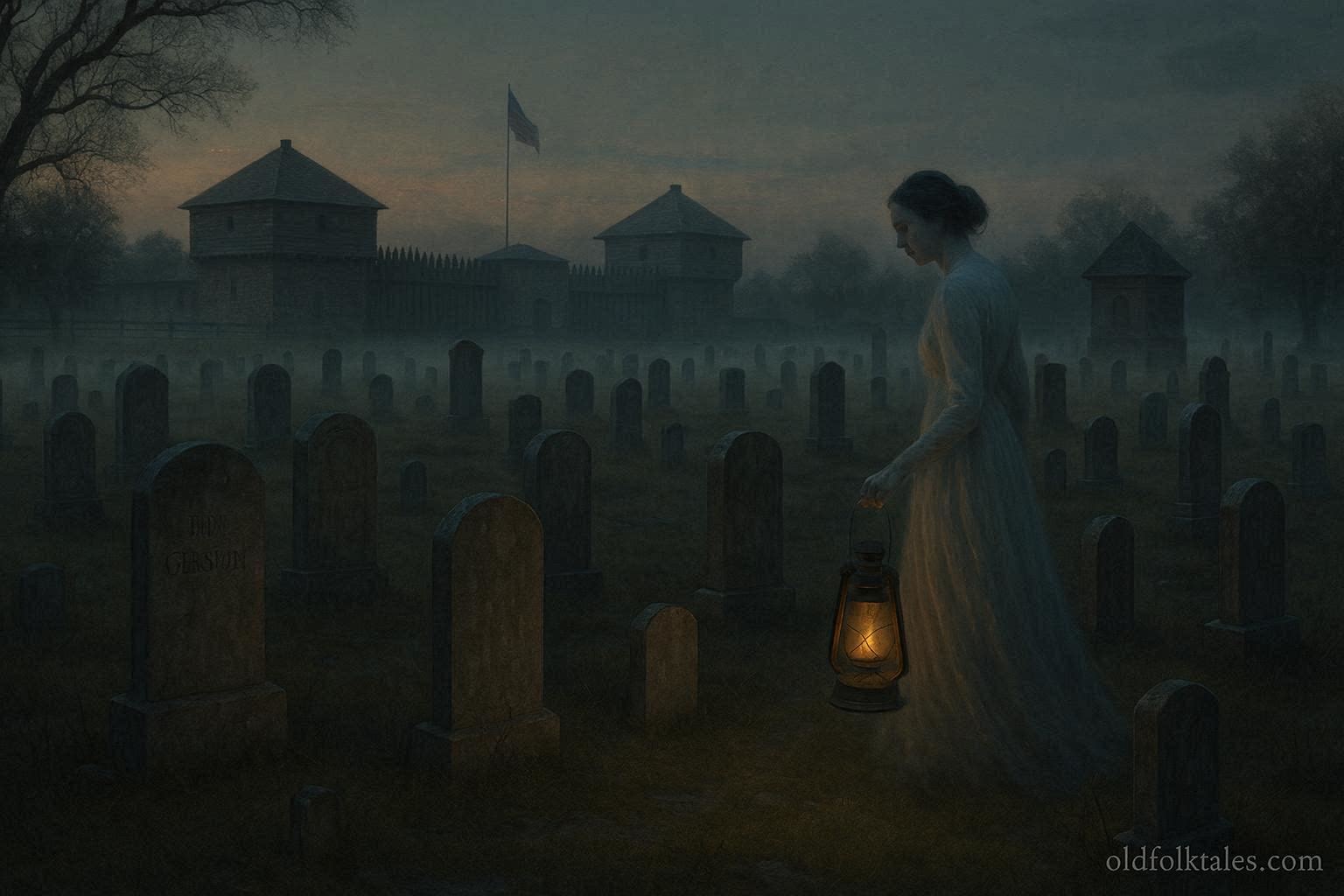
According to local folklore, Vivia remained near Fort Gibson for some time after learning the truth. Some residents claimed they saw a quiet young woman wandering near the military cemetery, often standing silently among the graves. Others said she asked travelers if they had seen a particular soldier, describing the man she loved and hoping someone might recognize the name.
Eventually, the story takes a tragic turn. The legend states that Vivia died not long after arriving in the area. The exact cause of her death has never been clearly recorded in the folklore. Some versions suggest illness, while others say that heartbreak and exhaustion finally overcame her.
She was buried in the cemetery connected to the military post, a place now associated with the historic grounds of Fort Gibson National Cemetery. Over time the quiet burial site became part of the region’s historical landscape, holding the graves of soldiers and civilians whose lives were connected to the fort.
It was not long before unusual stories began to circulate among local residents and visitors to the cemetery.
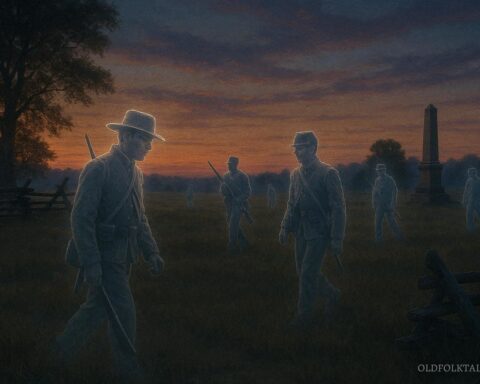
Some people reported seeing the figure of a young woman walking slowly among the graves during the evening hours. Witnesses described the figure as wearing old fashioned clothing and moving quietly through the rows of headstones. When approached, the figure would reportedly fade from sight or disappear among the trees.
Others claimed to hear soft footsteps along the cemetery paths after dark. A few visitors even said they heard a faint voice asking a single question about the whereabouts of a soldier.
These strange accounts gradually developed into the legend of Vivia Thomas, the young woman whose spirit was said to remain near her grave while continuing the search she had begun during her lifetime.
Caretakers and visitors occasionally shared stories about unexplained sensations while walking through the cemetery. Some described a sudden chill in the air or the feeling that someone was standing nearby even when no one else was present. Whether caused by imagination, natural sounds, or the powerful atmosphere of a historic cemetery, such experiences helped strengthen the legend over time.
Historians who study frontier folklore often explain that stories like this grow from a combination of real historical elements and imaginative storytelling. Military posts like Fort Gibson witnessed countless personal tragedies during and after the Civil War. Families were separated, soldiers died far from home, and many people struggled with grief that lasted for years.
In such environments, communities sometimes created stories that gave emotional meaning to these experiences. The legend of a young woman whose spirit continued searching for the man she loved reflected the heartbreak that many people felt during that period of American history.
The story also reflects the deep cultural tradition of ghost tales connected to cemeteries and historic military locations. These places often inspire legends because they represent powerful memories of the past.
Today Fort Gibson remains an important historic site where visitors learn about the many chapters of American frontier history. The cemetery stands quietly nearby, holding the names and stories of people who lived during times of conflict and change.
Among the many historical accounts connected to the area, the legend of Vivia Thomas continues to be shared by storytellers and local historians. Some view the tale as a romantic tragedy about loyalty and devotion. Others see it as an example of how communities preserve emotional memories through folklore.
Whether the story began with a real woman whose life ended in sorrow or developed entirely through imagination and storytelling, the legend has become a lasting part of the cultural traditions surrounding Fort Gibson.
For those who walk through the quiet rows of the cemetery today, the story encourages reflection on the many personal sacrifices made during the years following the Civil War. It also reminds listeners that love, loss, and hope are powerful forces that often leave lasting echoes in the stories people choose to remember.
Explore how American legends shaped the nation — from frontier heroes to Revolutionary War tales.
Moral Lesson
Love and loyalty can inspire great courage, but stories like this also remind us that hope and resilience are necessary when life takes unexpected turns.
Knowledge Check
- Where is the legend of Vivia Thomas connected to?
The story is connected to Fort Gibson in Oklahoma. - What unusual decision did Vivia make according to the legend?
She disguised herself in order to follow the soldier she loved. - What happened when she finally reached the area near the fort?
She discovered that the soldier she was searching for was no longer there. - Where was Vivia eventually buried according to the story?
She was buried near the military cemetery at Fort Gibson. - What strange events have visitors reported at the cemetery?
Some claim to see a ghostly woman walking among the graves. - What does the legend mainly represent in folklore?
It represents devotion, heartbreak, and the lasting memory of love.
Source
Adapted from materials preserved in the Fort Gibson National Cemetery Records and regional historical accounts
Cultural Origin
Fort Gibson Oklahoma frontier traditions