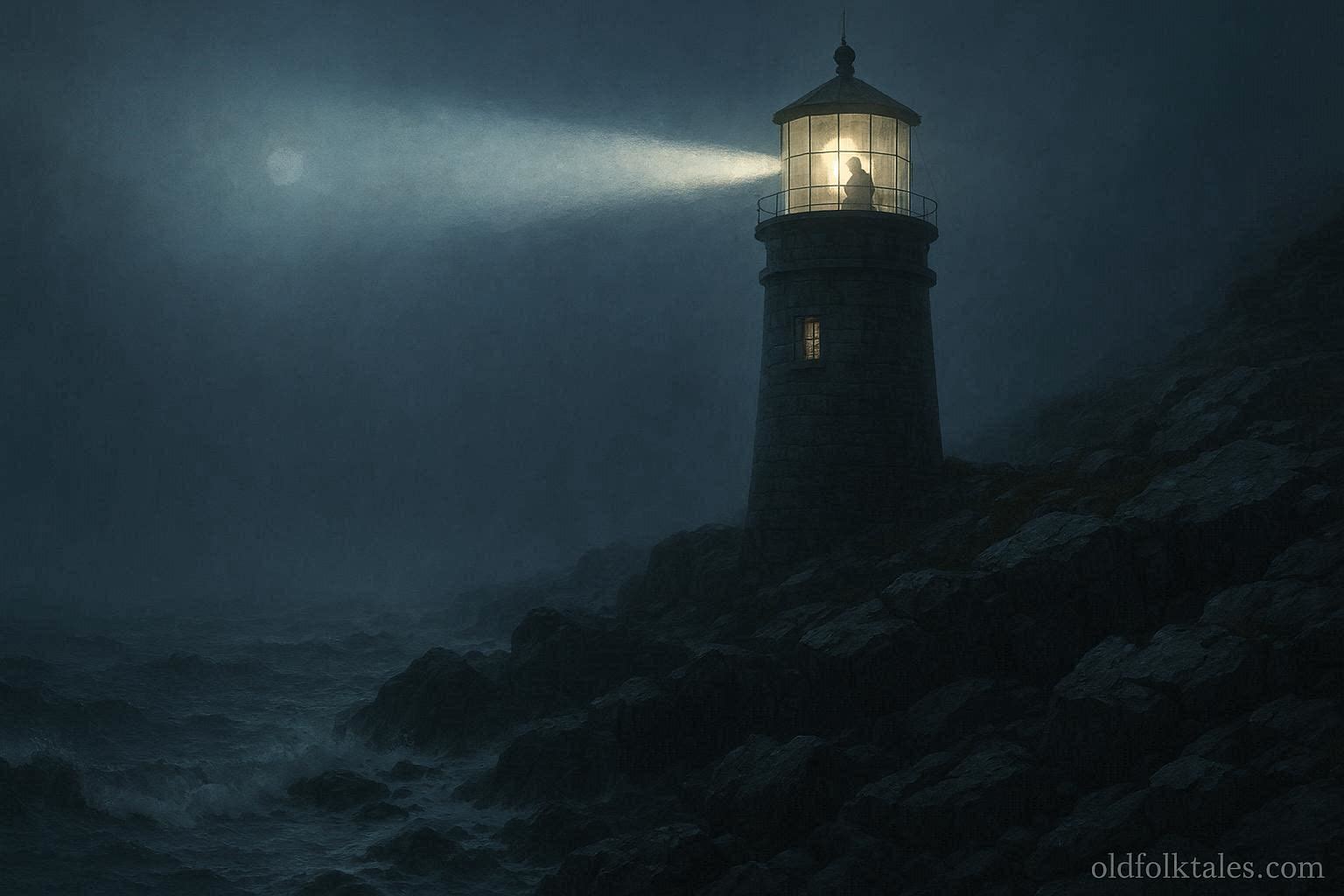
Along the jagged New England coast, where the Atlantic crashes endlessly against stone and fog rolls in without warning, a lighthouse once stood as the final promise between sailors and survival. Its keeper was Elias Mooring, a man whose life became inseparable from the beam of light he tended. While others counted time by seasons or tides, Elias measured his days by storms endured and ships guided safely past hidden reefs.
Elias did not inherit wealth, land, or title. What he inherited was responsibility. Appointed keeper in his early thirties, he accepted a post many refused. The lighthouse stood on a narrow outcropping of rock, accessible only by boat and often cut off entirely during winter gales. Supply runs were irregular. Isolation was absolute. Yet Elias never complained. He believed that duty, once accepted, was not negotiable.
Each evening, before the sun vanished behind the horizon, Elias climbed the winding iron staircase to inspect the lantern room. He cleaned the glass panes by hand, polished the reflectors until they gleamed, and checked the oil reservoirs with meticulous care. A dim light, he believed, was worse than no light at all. It created false confidence, and false confidence killed.
Step into America’s cultural roots — from folk healing and weather lore to seasonal celebrations.
Storms tested him relentlessly. Nor’easters battered the tower with such force that the stone itself seemed to groan. Windows rattled, waves struck high enough to coat the lantern glass with salt, and winds screamed like living creatures. On those nights, Elias did not sleep. He remained awake, trimming the wick, wiping salt spray, and adjusting the beam to cut through the thickening fog.
Sailors later spoke of those storms with awe. They described seeing the lighthouse beam pierce walls of rain just as their ships drifted toward disaster. Many never knew the keeper’s name, only that someone had stayed awake when rest would have been easier.
Elias’s vigilance extended beyond storms. He studied the sea as a living thing. He learned how moonlight altered currents, how certain cloud shapes warned of sudden squalls, and how shifting sandbars changed familiar routes. When fishermen docked nearby, he listened more than he spoke, collecting knowledge as carefully as others collected tools.
Years passed, marked by shipwrecks narrowly avoided and rescues quietly completed. When a schooner ran aground during a winter freeze, Elias launched his small boat alone, hauling survivors aboard one by one while ice formed along the oars. He never spoke of the incident. Others did it for him.
Isolation took its toll, but Elias found companionship in routine. He recorded every night’s conditions in a ledger, writing not only temperatures and wind speeds but observations about the sea’s behavior. These records later proved invaluable to maritime authorities, though Elias never knew their importance beyond his own sense of order.
As technology advanced, rumors spread that lighthouses would soon be automated. Some keepers abandoned their posts early, believing human vigilance obsolete. Elias disagreed. Machines could fail, he argued. Judgment could not be programmed. Until officially relieved, he remained at his station.
One autumn night, a dense fog rolled in without warning. Visibility vanished. Bells from distant buoys rang faintly through the mist, but sound carried poorly. Elias sensed danger before any signal reached him. He increased the lamp’s intensity and adjusted its rotation, creating a sharper, more frequent beam. Hours later, a steamship emerged from the fog dangerously close to the rocks. Its captain later admitted that without the lighthouse’s precise pattern that night, the ship would have been lost.
Age eventually stooped Elias’s shoulders, but it never dulled his resolve. Even when his hands trembled, he cleaned the glass. Even when his eyesight weakened, he climbed the stairs. He slept in fragments, always ready to rise at the slightest change in wind or wave.
When retirement finally came, it was forced upon him. Authorities insisted he leave the lighthouse he had tended for decades. On his final night, he lit the lamp himself and watched it burn steadily against the dark. He left the next morning before dawn, unwilling to see the light extinguished by another’s hand.
Long after Elias departed, sailors claimed the beam seemed steadier than before. Some said the lighthouse never truly slept, that it held the memory of a keeper who refused rest so others might live. Whether truth or tribute, the legend endured.
Elias Mooring never sought recognition. His heroism was quiet, repetitive, and relentless. Yet through storms, fog, and years of isolation, he proved that vigilance is not dramatic but essential, and that the greatest guardians are often those who simply refuse to look away.
Moral Lesson
True heroism is often unseen. Consistent responsibility, vigilance, and devotion to duty can protect countless lives without recognition or reward.
Knowledge Check
1 What motivated Elias Mooring to accept the lighthouse post?
Answer: A strong sense of duty and responsibility.
2 Why did Elias believe a dim light was dangerous?
Answer: It created false confidence for sailors.
3 How did Elias prepare for unpredictable storms?
Answer: By studying sea patterns, weather signs, and maintaining constant vigilance.
4 What role did Elias’s records play beyond his own work?
Answer: They later helped maritime authorities understand coastal conditions.
5 Why did Elias oppose full automation of lighthouses?
Answer: He believed human judgment could not be replaced by machines.
6 What lasting legacy did Elias leave behind?
Answer: A tradition of unwavering vigilance and quiet maritime heroism.
Source
Adapted from U.S. Coast Guard historical folklore archives and maritime ethnography collections
Cultural Origin
New England coastal communities