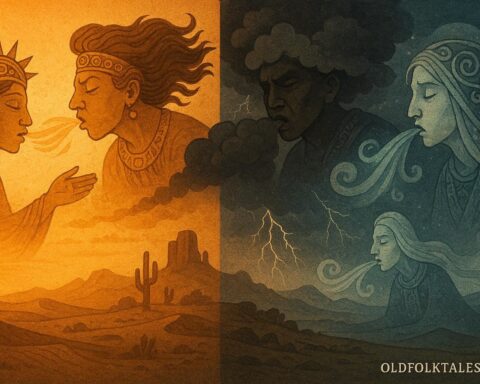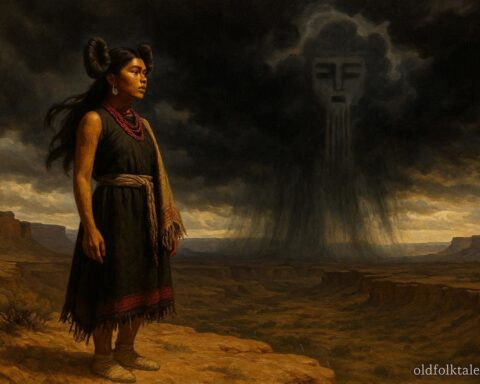
A quiet unease began to spread through the village after a series of strange storms. At first, the lightning seemed no different from what people had always known. It flashed across the sky, struck the ground, and disappeared as quickly as it came. But over time, something unusual became clear. The lightning did not strike at random. It appeared to return again and again to the same place, always when one particular person was nearby.
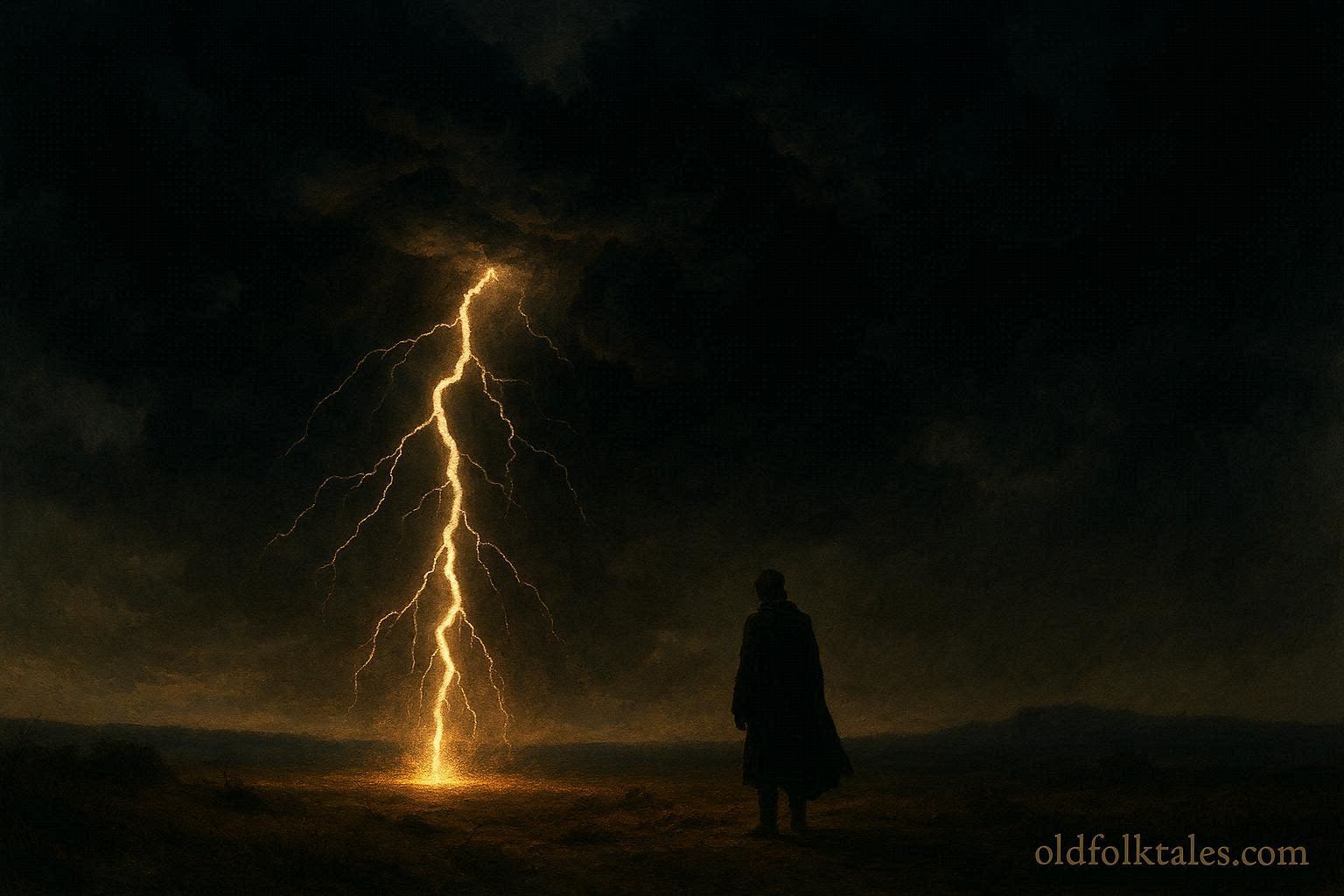
The person was not a stranger or an outsider. They were known in the community, someone who had lived among the people for many seasons. Yet whispers began to follow them. Each time clouds gathered and thunder rolled, others would watch carefully, wondering if the lightning would come again. And it did. Bright flashes would strike the earth close to where the person stood, never directly hitting them but always near enough to cause fear.
At first, many believed it was a coincidence. Storms could be unpredictable, and lightning often followed tall objects or open ground. But the pattern continued. Even when the person moved to different parts of the land, the lightning seemed to find them. It struck trees nearby, split rocks, and burned patches of earth, leaving behind marks that could not be ignored.
Discover African American wisdom, Native American spirit stories, and the humor of early pioneers in American Folktales.
Fear grew stronger with each storm. Some people began to avoid the individual, believing that being near them could bring danger. Others felt pity, seeing the person as someone marked by forces beyond human control. Children were warned to keep their distance when thunder clouds appeared, and families closed their doors when the sky darkened.
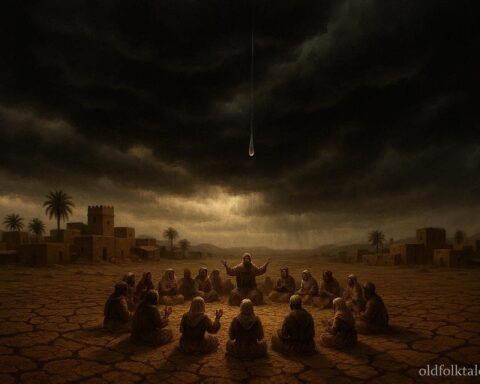
Elders gathered to discuss what this meant. In their teachings, lightning was not just a natural force. It was a powerful expression of the spirit world, often carrying messages that needed to be understood. They spoke of times when lightning had been seen as a warning, a sign that something in the balance of life had been disturbed.
The person at the center of the mystery felt the weight of these beliefs. They could not escape the storms, no matter where they went. Even when they traveled far from the village, the lightning followed. It was as if the sky itself was watching them, waiting for something to change.
One day, after another close strike that shattered a tree only a few steps away, the person went to the elders and asked for guidance. They did not deny what was happening. Instead, they listened carefully, then spoke of the need to look inward. They explained that such signs were not meant to destroy but to reveal something hidden.
The elders asked the person to reflect on their actions, their choices, and their connection to others and the land. They spoke gently but firmly, reminding them that the spirit world often communicated through signs that could not be ignored. The lightning, they said, might be calling for change.
For many days, the person remained quiet and thoughtful. They began to remember moments they had overlooked. They thought of times when they had acted without respect, when they had taken more than they needed, or when they had ignored the wisdom of others. These memories weighed heavily on them.
When the next storm approached, the sky darkened as before, and thunder echoed across the land. Instead of hiding, the person stepped into the open. The wind moved around them, and the air felt charged with energy. As lightning flashed in the distance, they spoke aloud, acknowledging their mistakes and asking for balance to be restored.
The storm grew intense, and once again, lightning struck close by. But something was different. The strikes seemed less frequent, and the thunder less overwhelming. The person remained standing, not in defiance, but in understanding. They had accepted that the lightning was not an enemy but a message.
Over time, the pattern began to change. The lightning no longer followed them as it once had. Storms passed without the repeated strikes that had caused so much fear. The land seemed calmer, and the people slowly returned to their normal lives.
The story of the lightning that chose its victim became a lesson shared across generations. It was not told as a tale of punishment but as a reminder that signs from the natural world carry meaning. The lightning had not been random. It had been purposeful, guiding one person to recognize the need for change.
People came to understand that the world around them was deeply connected to their actions. The sky, the land, and the forces of nature were not separate from human life. They responded in ways that required attention and respect.
Even in later years, when storms lit up the sky with sudden flashes, the story would be remembered. Those who heard it would watch the lightning with a different perspective. They would not only see its power but also consider what it might be saying.
The lesson remained clear. When something unusual happens again and again, it is not meant to be ignored. It is a call to reflect, to listen, and to restore balance before the message becomes stronger.
Step into America’s cultural roots — from folk healing and weather lore to seasonal celebrations.
Moral Lesson
Repeated signs should not be ignored, as they may be guiding us to reflect, change, and restore balance in our lives.
Knowledge Check
- What made the lightning unusual in the story?
It repeatedly struck near one person instead of randomly. - How did the community react to the situation?
They became fearful and began avoiding the person. - What did the elders believe the lightning represented?
They believed it was a message or warning from the spirit world. - What did the person do after seeking advice from the elders?
They reflected on their actions and acknowledged their mistakes. - What happened after the person asked for balance to be restored?
The lightning stopped following them and the storms became normal again. - What lesson does the story teach about repeated events?
They may carry important messages that require attention and change.
Source
Adapted from materials preserved in the Smithsonian National Museum of the American Indian Cultural Resources Center
Cultural Origin
Southeastern tribal traditions