The morning air over the valley of Chickamauga was heavy and still, as if the land itself held its breath. Mist drifted above the tall grass, and the soft murmur of the Chickamauga Creek echoed through the trees. It was September of 1863, and the hills of northern Georgia were about to witness one of the fiercest battles of the Civil War.
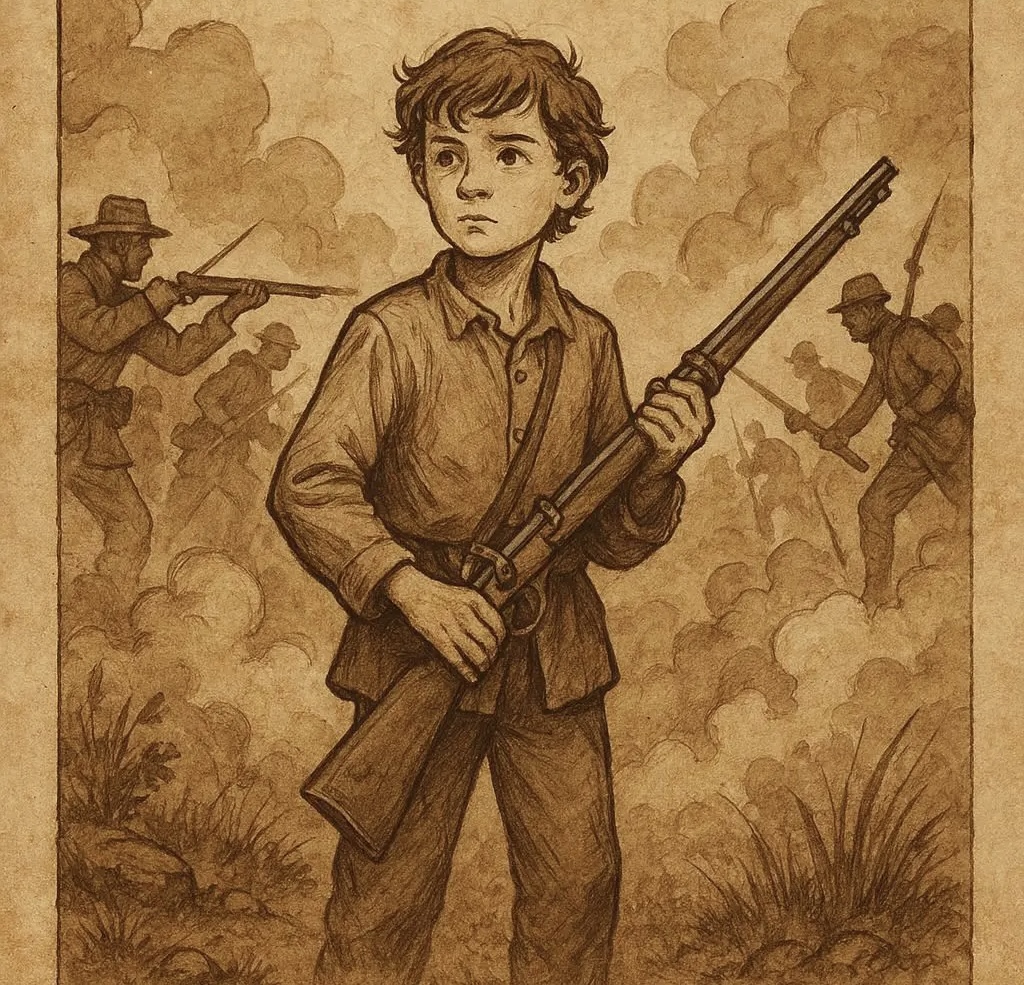
Among the thousands of gray-clad soldiers preparing for the fight was a boy who barely reached the shoulders of the men around him. His uniform was oversized, his boots too heavy, and his musket was only for show. He was a member of the regimental band, a drummer and messenger, one of many children who followed the army not as warriors but as bearers of rhythm and spirit. He was known simply as the little soldier.
No one knew exactly how old he was. Some said twelve, others guessed fourteen. He had followed his father and older brother into service, refusing to stay behind when their regiment marched off to war. Though small in size, he carried himself with the pride of a full-grown soldier. He woke before dawn, helped fetch water, polished his drum, and stood straight when the roll call came. The older men teased him kindly but also looked after him. To them, he was a symbol of home and innocence amid the grim march of war.
Encounter the strange and the unseen — from Bigfoot to regional monsters hiding in America’s forests
That morning, as sunlight began to pierce the mist, the boy felt the ground tremble beneath his feet. From beyond the ridge came the distant thunder of artillery. Orders rang out, and the regiment took their places. He beat the long roll, the steady rhythm that sent the men into line. The sound of his drum echoed through the forest, blending with the rising roar of battle.
Soon the air filled with smoke. The roar of cannon fire and the sharp crack of rifles merged into a deafening storm. Leaves and dirt burst into the air as shells exploded around them. The boy kept drumming until his hands blistered, the sticks slick with sweat and powder. The rhythm gave the men something to hold on to, a pulse that carried them forward.
But as the battle grew fiercer, the band was ordered to fall back to a safer position. The boy hesitated, looking toward the smoke and chaos ahead where his regiment fought. He could hear their shouts, see flashes of bayonets, and smell the sharp scent of gunpowder. Then came a cry for help, the desperate call of a sergeant he knew well. The line was breaking, the enemy pressing hard. Without a thought, the boy dropped his drum and ran toward the fight.
When he reached the soldiers, he saw them falling back under the assault. Among the bodies lay a fallen man, his rifle still clutched in his hand. The boy picked it up. It was heavy, almost too heavy to lift, but he raised it to his shoulder as he had seen others do. With trembling hands, he aimed toward the advancing enemy. No one told him to stop. The men beside him saw the determination in his eyes and felt their own courage rekindle.
He fired once, then again. The recoil nearly knocked him down, but he stood his ground. He reloaded clumsily, fingers fumbling with the cartridge, but his heart burned with fierce resolve. Around him, the soldiers rallied. They shouted, cheered, and surged forward, pushing the line back into place. The sight of that small figure standing among them gave them strength they did not know they had left.
The battle raged for hours. Smoke turned the day into twilight, and the thunder of guns seemed endless. The boy fought until his shoulders ached and his throat was raw from shouting. When at last the fighting slowed and the enemy withdrew, he sank to his knees, exhausted. The men gathered around him, patting his back, calling him “our little soldier.” Some said they owed their lives to his courage. Others said they had seen him standing firm while grown men had faltered.
When the wounded were carried from the field, the boy helped tend them, fetching water and bandages, offering quiet words of comfort. He had seen the true face of war and did not boast of his bravery. That night, as the fires burned low, he sat by his broken drum, the rifle beside it, and stared into the flickering light. In his eyes was both pride and sorrow.
Word of his bravery spread quickly through the Confederate ranks. Officers spoke of him with admiration, and soldiers told his story by campfires in distant places. Newspapers carried the tale of the child who fought like a man at Chickamauga. Mothers wept when they heard it, both proud and fearful for their own sons. In time, the boy’s name was lost to history, but his legend endured.
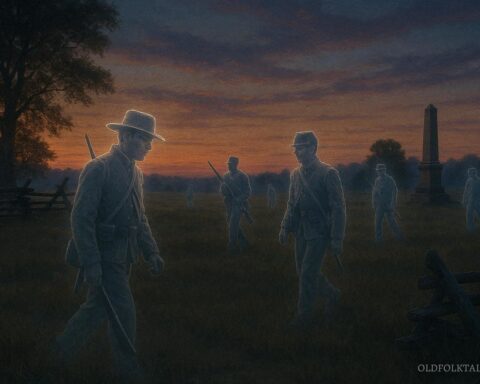
Years after the war ended, travelers who passed through the old battlefield at dawn spoke of hearing the faint sound of a drumbeat coming from the misty fields. Some said it was only the wind through the trees, others swore it was the spirit of the little soldier keeping watch over the ground where he had stood so bravely.
The story of the Little Soldier of Chickamauga became part of Southern folklore, a reminder of courage born not from strength but from the heart. His story carried the weight of a thousand unspoken memories, of boys who became men before their time, and of lives forever changed by war.
Journey through the lives of folk heroes, war legends, and hometown champions in our American Legends collection.
Moral of the Story
True courage does not depend on age or size but on the spirit within. The Little Soldier of Chickamauga reminds us that bravery often comes from unexpected hearts and that the purest acts of heroism are those born from love, loyalty, and duty.
Knowledge Check
1. Who is the main character in “The Little Soldier of Chickamauga”?
A young boy serving with his regiment’s band during the Battle of Chickamauga.
2. What was his role before the battle began?
He was a drummer and messenger who helped keep rhythm and morale for the soldiers.
3. What did he do when his regiment faltered?
He picked up a fallen soldier’s rifle and fought beside the men, rallying their courage.
4. How did his bravery affect those around him?
His fearless actions inspired his regiment to hold their ground and fight on.
5. What became of his story after the war?
It spread through Southern towns and became a lasting legend of courage and youthful determination.
6. What is the main lesson of the folktale?
That true heroism can come from even the youngest among us when guided by faith and purpose.
Source: Adapted from oral and documented Civil War accounts as referenced in Researching a Civil War Drummer Boy, Virginia Libraries Journal, Vol. 60, No. 1 (2014), by M. L. Clifford.
Cultural Origin: United States (Southern States / American Civil War folklore)