In the summer of 2008, along the quiet shoreline of Montauk on the eastern tip of Long Island, New York, an unexpected discovery stirred widespread fascination and debate. Montauk, known for its windswept beaches, historic lighthouse, and steady rhythm of Atlantic waves, had long attracted surfers, fishermen, and seasonal visitors. Yet on one July afternoon, the tide carried in something that would briefly transform this peaceful coastal town into the center of a national mystery.
A bloated and partially decomposed carcass lay on the sand.
Photographs taken by beachgoers quickly circulated online. The creature appeared hairless, with a pronounced snout, sharp visible teeth, and an unusual body shape that seemed difficult to identify at first glance. Its front limbs were extended forward, its back arched slightly, and its skin stretched tightly across bone. Because decomposition had altered its features, the animal looked unfamiliar and even unsettling.
Within days, the images spread rapidly across blogs, news outlets, and early social media platforms. Speculation intensified. Some observers believed the carcass resembled a dog or raccoon stripped of fur. Others argued that its proportions seemed inconsistent with known wildlife. The unusual appearance sparked rumors of laboratory experiments, secret facilities, or undiscovered species. It did not take long for the nickname “Montauk Monster” to emerge.
Step into shadowy legends of restless spirits and ghostly travelers in American Ghost Stories.
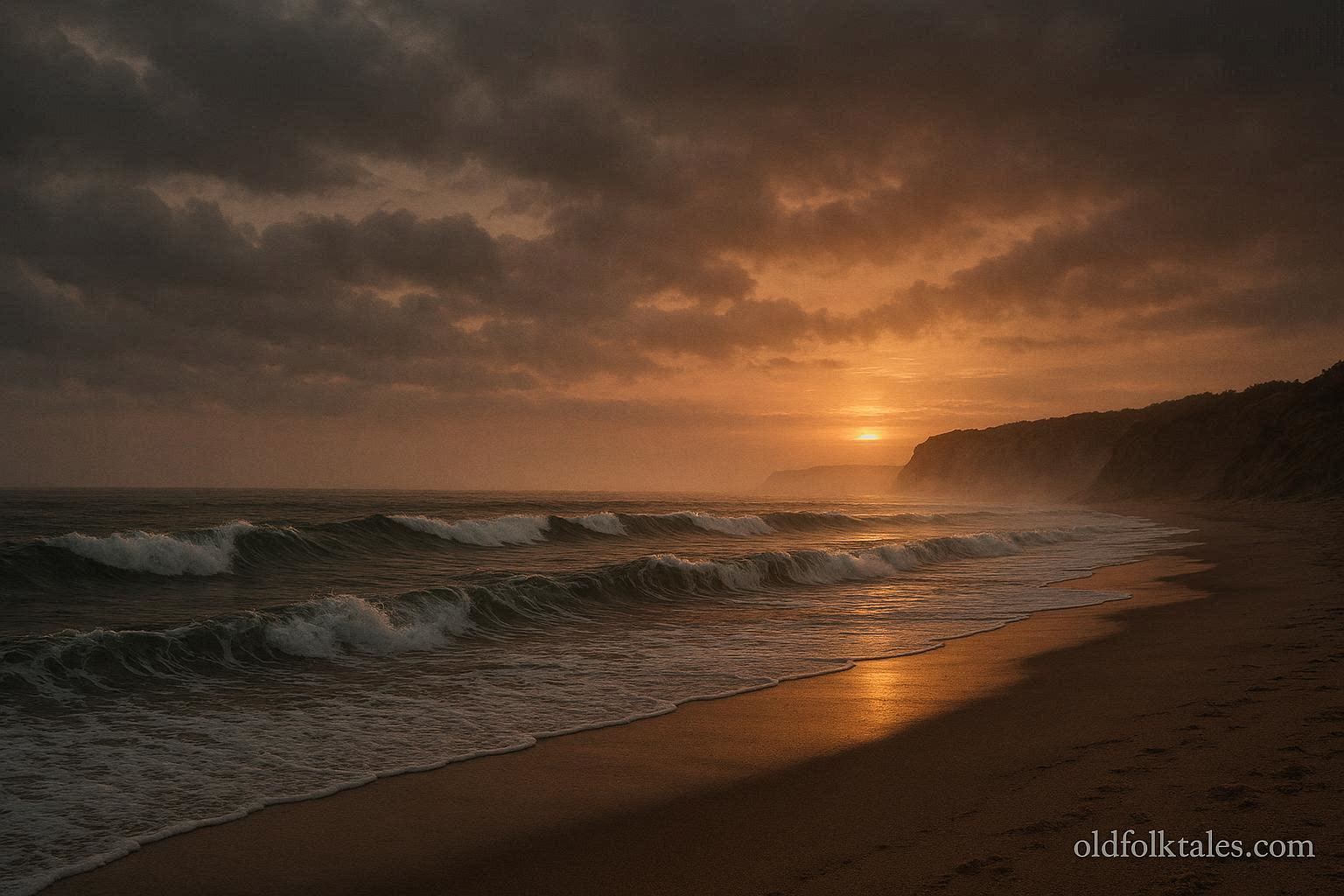
Montauk itself has long held an atmosphere of mystery. Perched at the edge of Long Island, bordered by ocean currents and shifting weather, it often feels remote despite its popularity. The nearby Montauk Point Lighthouse stands watch over powerful Atlantic waters. Offshore, currents collide, carrying debris and marine life across long distances. In such an environment, unusual objects sometimes wash ashore.
The carcass was discovered near Ditch Plains Beach, an area popular with surfers. Witnesses described its body as approximately the size of a medium dog. Its teeth were prominent, and its paws appeared elongated. Yet its hairless condition gave it an almost prehistoric or experimental appearance. Without fur to soften its features, the creature’s skeletal structure appeared exaggerated and strange.
Wildlife experts soon offered more grounded explanations. Many suggested the remains likely belonged to a raccoon. When raccoons decompose in water, their fur can slip away, and the bloating process can distort their facial features. The loss of hair combined with water exposure can cause the snout to appear longer and the skin to tighten unnaturally across bone. Others proposed it could have been a dog or another common mammal affected by similar postmortem changes.
Despite these explanations, public fascination persisted. The timing of the discovery played a significant role. In 2008, internet culture was rapidly expanding. Viral images could reach global audiences within hours. The Montauk Monster became one of the early examples of a modern cryptid fueled largely by digital circulation rather than long standing folklore.
Local officials did not conduct extensive publicized testing, and the carcass eventually disappeared, reportedly removed by unknown individuals or reclaimed by natural processes. The lack of formal documentation only added to speculation. Without definitive laboratory confirmation released to the public, debates continued online for years.
Beyond the biological question lies a broader cultural theme. The Montauk Monster reflects how contemporary society responds to the unexplained. Unlike older legends passed through oral tradition, this mystery unfolded in real time across screens. Viewers analyzed photographs, compared skull shapes, and debated anatomical details. Amateur investigators scrutinized pixel by pixel evidence. The event blurred the line between science, rumor, and entertainment.
Montauk’s coastal geography also contributed to the intrigue. Ocean currents can carry remains from distant locations. Storms shift sand and reveal hidden objects. Marine exposure changes appearance dramatically. To a casual observer encountering a decomposed animal in such a setting, it is easy to perceive something unfamiliar.
Standing today on Montauk’s beaches, waves roll in steadily, indifferent to past speculation. Seagulls circle overhead. The horizon stretches endlessly toward the Atlantic. Nothing suggests that a single carcass once ignited international curiosity. Yet for those who remember the summer of 2008, the image remains vivid.
The Montauk Monster stands as a modern legend not born from centuries of oral storytelling, but from a single photograph amplified by digital culture. Whether it was a raccoon altered by decomposition or another known animal reshaped by natural processes, the mystery captured public imagination because it appeared just unfamiliar enough to invite doubt.
In a world saturated with information, even one strange image can awaken curiosity. The Montauk shoreline has returned to calm routine, but the legend remains archived in headlines and online discussions, a reminder that mysteries need not be ancient to feel compelling.
Encounter the strange and the unseen — from Bigfoot to regional monsters hiding in America’s forests.
Moral Lesson
The Montauk Monster reminds us to balance curiosity with critical thinking. Not every mystery requires a supernatural explanation, yet every unexplained image invites careful investigation rather than quick conclusions.
Knowledge Check
- In what year did the Montauk Monster appear?
It appeared in 2008. - Where was the carcass discovered?
It was found on a beach in Montauk, Long Island, New York. - Why did the carcass appear unusual?
Because decomposition altered its features, making it look unfamiliar. - What animal did many experts believe it likely was?
Many suggested it was probably a raccoon. - Why did the story spread so quickly?
Because photographs circulated rapidly online and through news outlets. - What important value does the story encourage?
It encourages critical thinking and careful examination of unusual claims.
Source
Adapted from Long Island press archives and New York State wildlife records
Cultural Origin
Montauk New York coastal folklore 2008