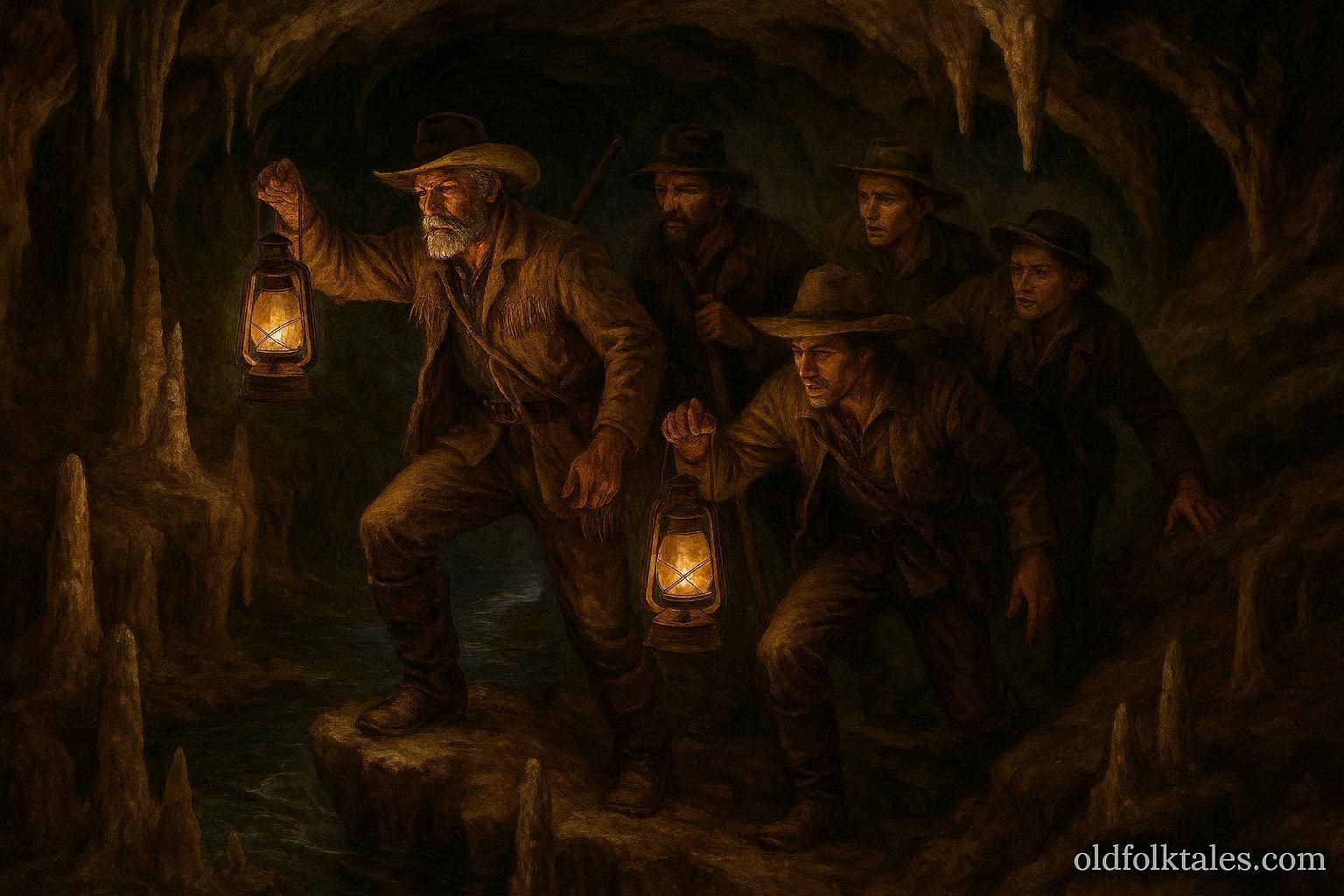
In the heart of the Ozark Mountains, communities have long whispered tales of explorers who ventured into the hidden underground world with nothing but courage and flickering lantern light. These were not ordinary travelers but figures whose bravery became legendary, inspiring countless stories that blended fact with imagination. The Ozark caves, twisting and winding deep into the Missouri and Arkansas hills, were known for sudden drops, narrow passages, underground rivers, and eerie echoes. To enter them was to confront darkness itself, yet the cave explorers of legend descended without hesitation, guided by instinct, skill, and unshakable courage.
These heroes were said to possess lanterns that never dimmed, ropes that never frayed, and a sense of direction that allowed them to navigate the labyrinthine passages where even seasoned settlers feared to tread. Many tales recount explorers spending days underground, emerging with knowledge of hidden springs, previously unknown caverns, and mysterious rock formations. Their discoveries not only served personal glory but also aided the surrounding settlements, providing critical maps of the underground terrain, identifying safe routes, and occasionally uncovering mineral resources that could support frontier communities.
The bravery cycle is not just about physical endurance. Oral tradition emphasizes the mental sharpness of these explorers. They listened for the subtle trickle of underground streams, felt air currents to sense hidden passageways, and read the textures of walls to avoid collapse. In some stories, supernatural elements appeared: ghostly lights guided explorers through impossible turns, and distant echoes seemed to warn of danger. Whether real or imagined, these elements heightened the aura of courage and moral strength necessary to face the unknown.
Explore how American legends shaped the nation — from frontier heroes to Revolutionary War tales.
Mentorship was a recurring theme in these legends. Veteran explorers passed down their knowledge to younger adventurers, teaching techniques for tying secure knots, choosing the right tools for climbing and digging, and signaling companions in complete darkness. This transfer of skill and wisdom became a cultural cornerstone, highlighting that true heroism is not only in personal feats but in guiding others safely through treacherous spaces. Communities celebrated those who emerged from the caves unharmed, honoring them at festivals, in songs, and around campfires where stories grew with each retelling.
Historians and modern spelunkers often attempt to separate fact from legend. While the existence of every individual explorer is uncertain, the persistence of these stories in archives, folklore collections, and local memory speaks to their cultural importance. Explorers were depicted overcoming cave-ins, navigating rushing underground streams, and discovering formations so magnificent they seemed supernatural. These exaggerated accounts reinforced frontier values: courage in the face of danger, intelligence in overcoming challenges, and responsibility to the wider community.
The Ozark Cave Explorer Bravery Cycle also symbolized human curiosity and the desire to conquer unknown frontiers. While some explorers sought mineral wealth or mapping opportunities, others were simply driven by the thrill of discovery. The legends emphasize that heroism is multifaceted, combining physical skill, sharp intellect, endurance, and ethical responsibility. Each story served to inspire future generations to respect the underground environment while daring to explore its mysteries with care and ingenuity.
Today, the bravery cycle remains alive in Ozark communities. Schools, local historical societies, and guides in popular caves recount these tales, preserving a uniquely American form of heroism. The stories encourage respect for nature, courage in the face of fear, and the value of knowledge passed from one generation to the next. Through the Ozark Cave Explorer Bravery Cycle, the ordinary settlers of the past are remembered not just for survival but for the extraordinary bravery that became the backbone of regional folklore.
Moral Lesson
True bravery combines courage, intelligence, and moral responsibility. Facing the unknown requires not only strength but the wisdom to protect oneself and guide others safely.
Knowledge Check
- Where did the Ozark Cave Explorer legends take place?
In the caves and underground passages of Missouri and Arkansas - How did explorers navigate without modern equipment?
By using lanterns, feeling air currents, and listening to echoes - What practical benefits did these explorations provide to settlements?
Mapping safe routes, finding water, and identifying mineral resources - How did mentorship factor into the bravery cycle?
Experienced explorers taught survival skills and safe exploration techniques - What role did supernatural elements play in the legends?
Ghostly lights and echoes emphasized courage and added suspense - Why are these legends considered American hero myths?
They celebrate frontier ingenuity, physical endurance, and communal responsibility
Source
Adapted from Ozark Folklore Society archives
Cultural Origin
Missouri and Arkansas oral tradition