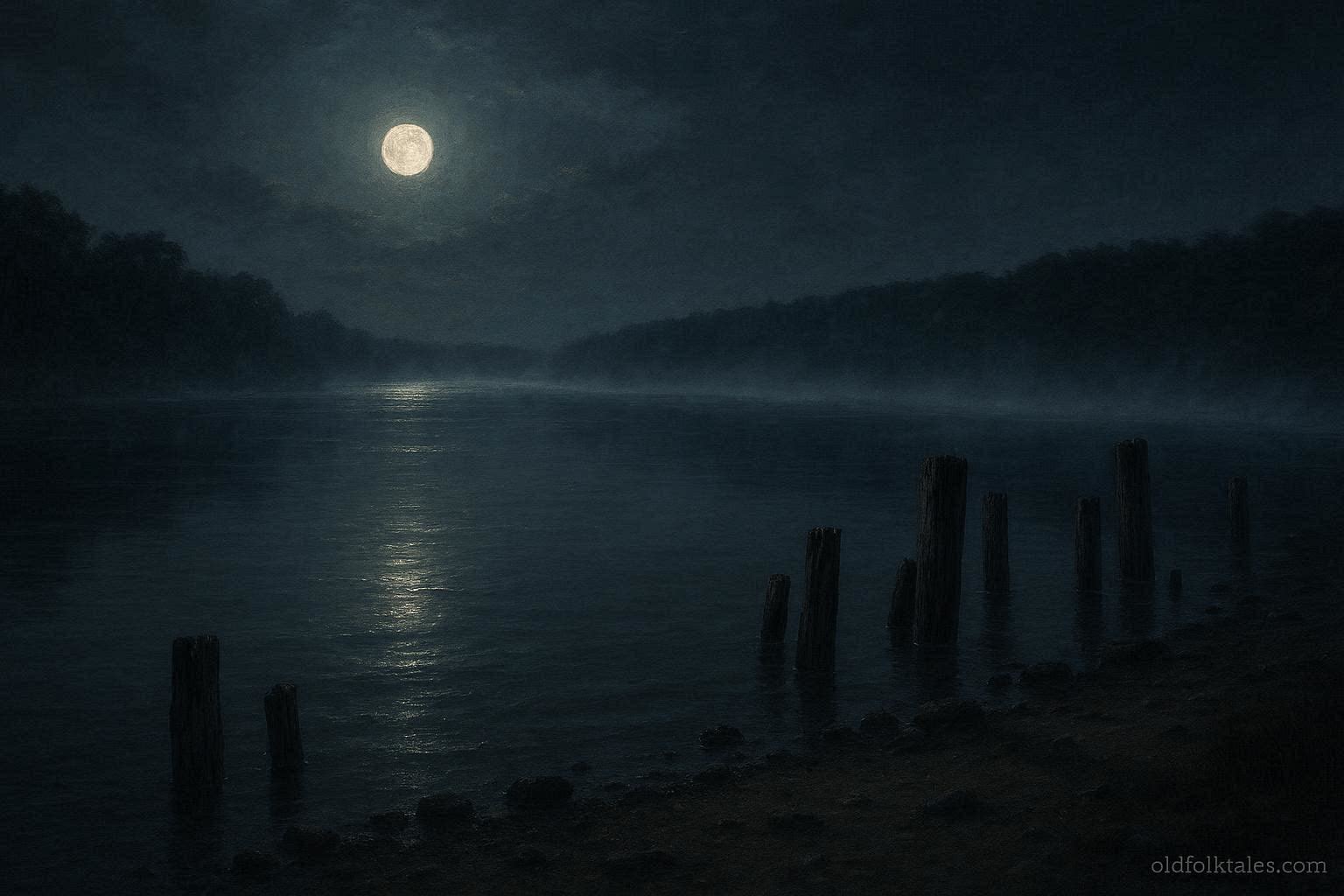
Even before darkness settles, the Susquehanna carries sound. Current presses against stone. Driftwood bumps softly along the banks. Birds quiet themselves as the light thins. Yet those who live near the river learn to tell the ordinary from the unsettling. Ordinary sounds fade into rhythm. The other ones arrive measured and deliberate, like a signal meant to be understood.
Long before modern dams and concrete embankments reshaped its course, the Susquehanna was a working river. Flatboats moved timber and coal downstream. Canal workers guided barges along narrow cuts carved by hand. Men stood knee deep in cold water fastening lines, adjusting gates, clearing debris. The river fed towns and swallowed mistakes without ceremony.
Labor along the Susquehanna was relentless and unforgiving. Floods came fast in spring. Ice broke loose without warning. A slipped footing or snapped rope could pull a man under before anyone could shout his name. Many never returned home. Their bodies were sometimes recovered miles away. Others were never found at all, folded into the river’s long memory.
Encounter the strange and the unseen — from Bigfoot to regional monsters hiding in America’s forests.
It is said that the knocking began after a particularly violent flood season in the mid nineteenth century. Water rose overnight, tearing through temporary camps and unfinished canal sections. Barges broke free. Lanterns vanished beneath churning foam. When the river finally receded, the banks were quieter than before, stripped of tools and voices.
Weeks later, people living near the water began to hear it. Three knocks. A pause. Two more. Always from the river side, never from the land. The sound was not loud, but it carried, cutting through wind and insects. Those who followed it found nothing. No loose boards. No shifting stones. Just dark water moving steadily past.
Canal workers recognized the rhythm first. It matched a signal once used to warn of trouble ahead. Knocked against a hull or lock gate, it meant slow down. Look again. Danger near.
As years passed, the knocking became selective. It appeared late at night when visibility was poor. It echoed near sharp bends, unstable banks, and old crossing points where the current behaved unpredictably. Boatmen who ignored it sometimes found themselves in trouble moments later. A submerged log scraped the hull. A rope tangled unexpectedly. A misjudged landing nearly turned fatal.
Those who listened spoke of narrow escapes. Barges that stopped just in time. Ferries delayed long enough for fog to lift. Children called back from swimming holes before undertows claimed them.
The river did not announce itself every night. Silence often stretched for weeks. But when the knocking returned, it did so with purpose.
One account describes a night watchman stationed near an old canal lock long since sealed. The lock gates stood rotted and half submerged, useless except as markers of what once passed through. Near midnight, the watchman heard knocking from the water side. Assuming debris, he shined his lamp across the surface. The light revealed nothing but ripples. The knocking came again, closer, more insistent. Moments later, part of the embankment collapsed where erosion had hollowed it from beneath. Had he been standing there, he would have been pulled in.
Stories like this accumulated quietly. They were shared at work sites and kitchens, not printed in newspapers. River communities understood the value of caution. Fear was not useful. Awareness was.
Some believed the knocking came from those who drowned, continuing the labor they never finished. Others said it was the river itself speaking in a language shaped by human hands. A few insisted the sound traveled through old timbers still buried beneath silt, tapping together as the current pressed them just right.
Yet no physical explanation fully accounted for the timing. The knocking appeared when human attention waned. It sounded where danger was present but not obvious. It stopped once people changed their behavior.
As industrial traffic declined and recreational use increased, the knocking did not disappear. Kayakers reported hearing it near submerged bridge remains. Anglers felt it vibrate through wooden docks just before sudden drops in water level. Even modern river sensors recorded unexplained rhythmic impacts that did not match debris patterns or wildlife movement.
The Susquehanna no longer carries the same volume of labor it once did, but it still remembers the weight of human effort. Locks may be sealed and barges replaced by trucks, yet the river continues to mark risk where respect fades.
The knocking is not a cry for help. It is not a demand for attention. It is a reminder.
Listen before you step closer. Pause before you proceed. The river gives warning to those willing to hear it.
At night, when mist gathers and sound travels farther than sight, three knocks may rise from the bank. Then two more. Measured. Calm. Unmistakable.
Those who know the river stop what they are doing. They wait. And in that waiting, lives continue.
Click to explore all American Ghost Stories — haunting legends of spirits, lost souls, and mysterious places across the U.S.
Moral Lesson
Labor leaves echoes. Places shaped by human effort deserve continued respect, because neglect of the past often becomes danger in the present.
Knowledge Check
1. What sound defines the haunting of the Susquehanna?
Rhythmic knocking rising from the riverbanks at night.
2. Who are believed to cause the knocking?
Drowned canal and river laborers or the river shaped by their memory.
3. When does the knocking most often occur?
During nighttime hours, especially near dangerous or unstable areas.
4. What purpose does the knocking serve?
It acts as a warning to slow down and recognize hidden danger.
5. How do river communities respond to the sound?
By pausing, reassessing their surroundings, and exercising caution.
6. Why has the knocking persisted into modern times?
Because the river still holds hazards and retains memory of past labor.
Source
Adapted from Bucknell University river folklore documentation and nineteenth century canal labor narratives.
Cultural Origin
Nineteenth century canal and river worker communities along the Susquehanna River.