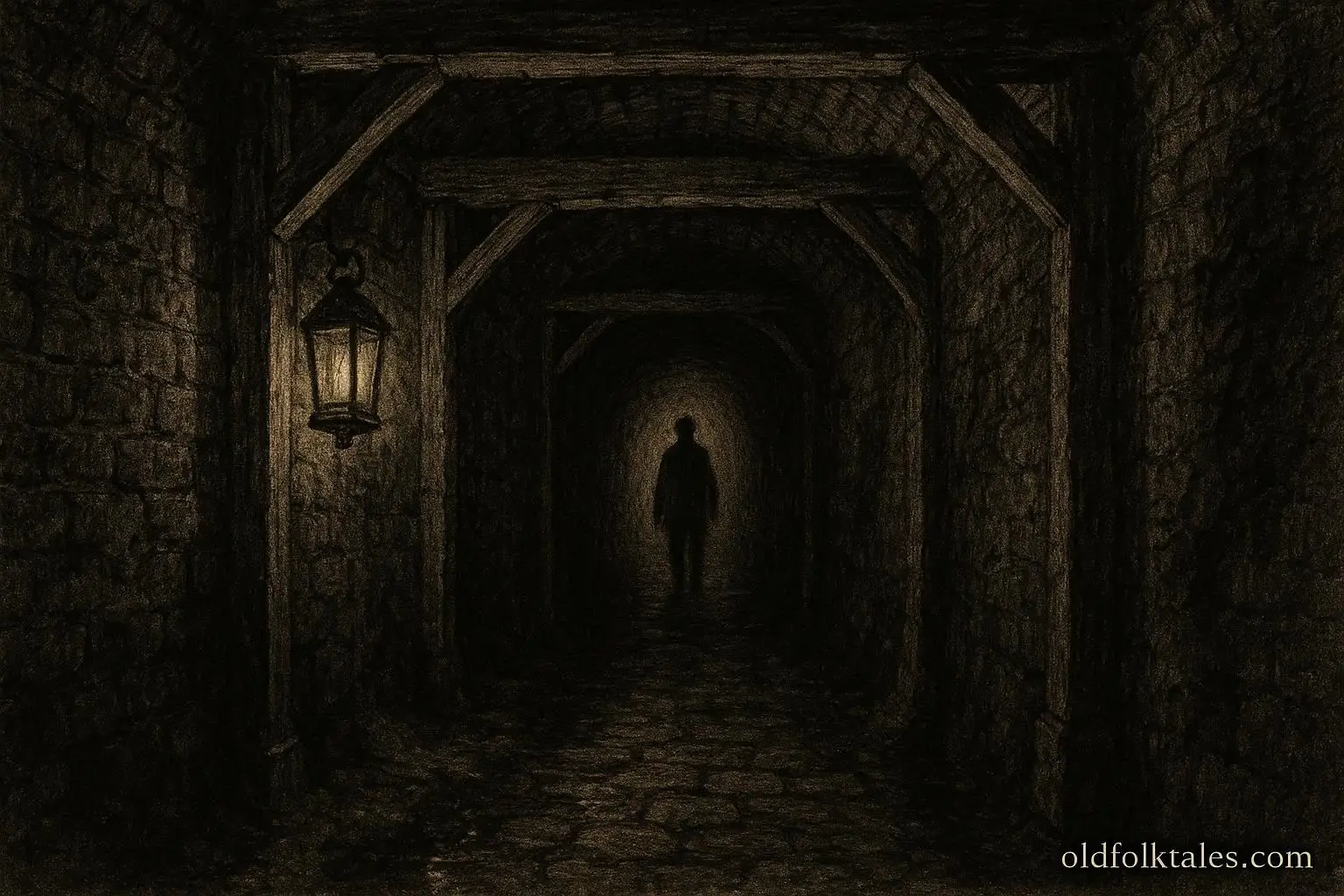
Beneath busy sidewalks and modern storefronts in Portland lies a network of passageways rarely seen in daylight. Tourists walk above them, unaware that below ground stretch dim corridors of brick and stone. Known today as the Shanghai Tunnels, these underground routes are tied to stories of maritime labor trafficking, secrecy, and the ghost legends that grew from their dark reputation.
In the nineteenth century, Portland was a thriving port city along the Willamette River. Ships arrived regularly, bringing goods and transporting cargo to distant markets. However, maritime labor was unpredictable. Sailors frequently deserted ships after reaching port, leaving captains desperate for replacement crews. This demand gave rise to the practice known as “shanghaiing.”
Shanghaiing referred to the coercion or kidnapping of men who were forced to work aboard ships. Historical records confirm that labor exploitation did occur in port cities along the West Coast. In Portland, stories emerged that underground tunnels were used to transport unconscious or unwilling men directly from saloons to waiting vessels. While documentation of the exact scale of these activities is debated among historians, the legend remains deeply embedded in local lore.
Explore Native American beings, swamp creatures, and modern cryptid sightingsacross the country.
The tunnels themselves were initially constructed for practical reasons. They connected basements of hotels and businesses to the waterfront, allowing goods to be moved without blocking crowded streets. Over time, these passageways became associated with darker narratives. The idea that unsuspecting individuals could vanish beneath the city captured public imagination.
Visitors touring sections of the tunnels today often describe an oppressive atmosphere. The ceilings are low. The air feels cool and damp. Faint light reflects off brick walls that have absorbed more than a century of moisture. In such confined spaces, even the sound of dripping water can feel amplified.
Ghost stories began circulating in the twentieth century as public awareness of the tunnels increased. Some visitors report hearing distant footsteps echoing through empty corridors. Others claim to sense sudden cold drafts in sealed sections. A few describe fleeting shadows moving along the walls, visible only for a moment before disappearing.
One recurring legend speaks of sailors who never returned home, their spirits said to wander the tunnels searching for escape. Another tale describes the apparition of a dockworker pacing restlessly near an old holding cell. While there is no verified evidence of these specific hauntings, the stories reflect collective unease about the exploitation associated with the site.
Scholars studying urban folklore suggest that underground spaces often symbolize secrecy and hidden wrongdoing. The Shanghai Tunnels embody this symbolism. Their physical separation from the surface world reinforces the idea of concealed activity. Over time, imagination fills gaps left by incomplete historical records.
Environmental factors contribute significantly to reported experiences. Underground humidity creates unusual acoustics. Footsteps above ground may echo below in distorted patterns. Shadows shift with minor changes in lighting. In a setting already steeped in ominous narrative, these ordinary occurrences can be interpreted as paranormal.
Portland’s maritime history provides context for the legend. As a growing port city in the late nineteenth century, it depended on shipping for economic survival. Labor shortages were common across West Coast ports, not just in Portland. While historians caution against exaggerating the extent of shanghaiing through the tunnels, they acknowledge that labor exploitation was a documented practice in the era.
The blending of fact and folklore gives the tunnels their power. Verified historical conditions maritime labor shortages and underground storage systems intersect with stories passed down through generations. Each retelling adds detail, reinforcing the tunnels’ reputation as a haunted underground city.
Modern guided tours emphasize both history and myth. Visitors learn about maritime commerce, labor practices, and the architectural purpose of the tunnels. They also hear ghost stories shared in hushed tones, often while standing in dimly lit chambers. The combination of education and suspense sustains public interest.
Themes of exploitation and secrecy dominate the narrative. The idea that individuals could be drugged, confined, and forced into dangerous work resonates strongly in contemporary discussions about justice. Ghost legends may serve as symbolic reminders of those whose voices were never recorded.
Some paranormal investigators claim to have captured unexplained audio phenomena within the tunnels. Whisper-like sounds or faint knocks appear in recordings. Skeptics attribute these to environmental noise or equipment interference. The ambiguity allows belief and doubt to coexist.
Unlike abandoned ghost towns or battlefield ruins, the Shanghai Tunnels exist directly beneath a modern city. This proximity heightens their mystique. The contrast between bustling urban life above and shadowed corridors below creates a powerful narrative image. The past feels physically present beneath the surface.
Historians from local archives emphasize careful interpretation. They encourage separating documented fact from sensational embellishment. Yet they also recognize that folklore plays a role in preserving memory. Stories of hauntings may not be literal, but they reflect genuine historical anxieties about labor abuse and urban secrecy.
As visitors descend narrow staircases into the tunnels, they often report a shift in perception. Sounds from the street fade away. Time seems suspended. The darkness encourages reflection. Whether or not spirits inhabit the tunnels, the emotional weight of their history is undeniable.
Ultimately, the legend of the Shanghai Tunnels persists because it merges social history with mystery. It reminds audiences that beneath prosperous cities may lie uncomfortable truths. The ghost stories attached to the tunnels keep those truths visible, ensuring that exploitation and secrecy are not forgotten.
Click to explore all American Ghost Stories — haunting legends of spirits, lost souls, and mysterious places across the U.S.
Moral Lesson
Hidden injustices eventually surface. Understanding and acknowledging difficult history helps prevent its repetition.
Knowledge Check
- What city are the Shanghai Tunnels located in?
Portland, Oregon - What practice is associated with the tunnels?
Shanghaiing, or coercive maritime labor recruitment - What was the original practical purpose of the tunnels?
Transporting goods between businesses and the waterfront - Why do underground spaces often attract ghost legends?
They symbolize secrecy and hidden wrongdoing - What themes define this legend?
Exploitation, secrecy, urban myth - Why do historians urge caution when discussing the tunnels?
To distinguish verified history from exaggerated folklore
Source
Adapted from Oregon Historical Society Digital Collections; Portland State University archives
Cultural Origin
Pacific Northwest maritime folklore