Across the river valleys, wetlands, and thick forests of the southeastern United States, Choctaw storytellers preserved many traditions about powerful spirits that lived close to water. Rivers, swamps, and marshes were not only sources of food and travel but were also believed to be places where supernatural forces could dwell. Among these stories is the mysterious legend of Sint Holo, a shapeshifting snake woman who was said to move between human and serpent form.
The Choctaw people maintained a deep relationship with the natural world around them. Waterways supported fishing, transportation, and plant gathering, and many communities settled near rivers and wetlands. Because these places were so important for survival, they were also believed to contain spiritual guardians and beings whose presence deserved respect.
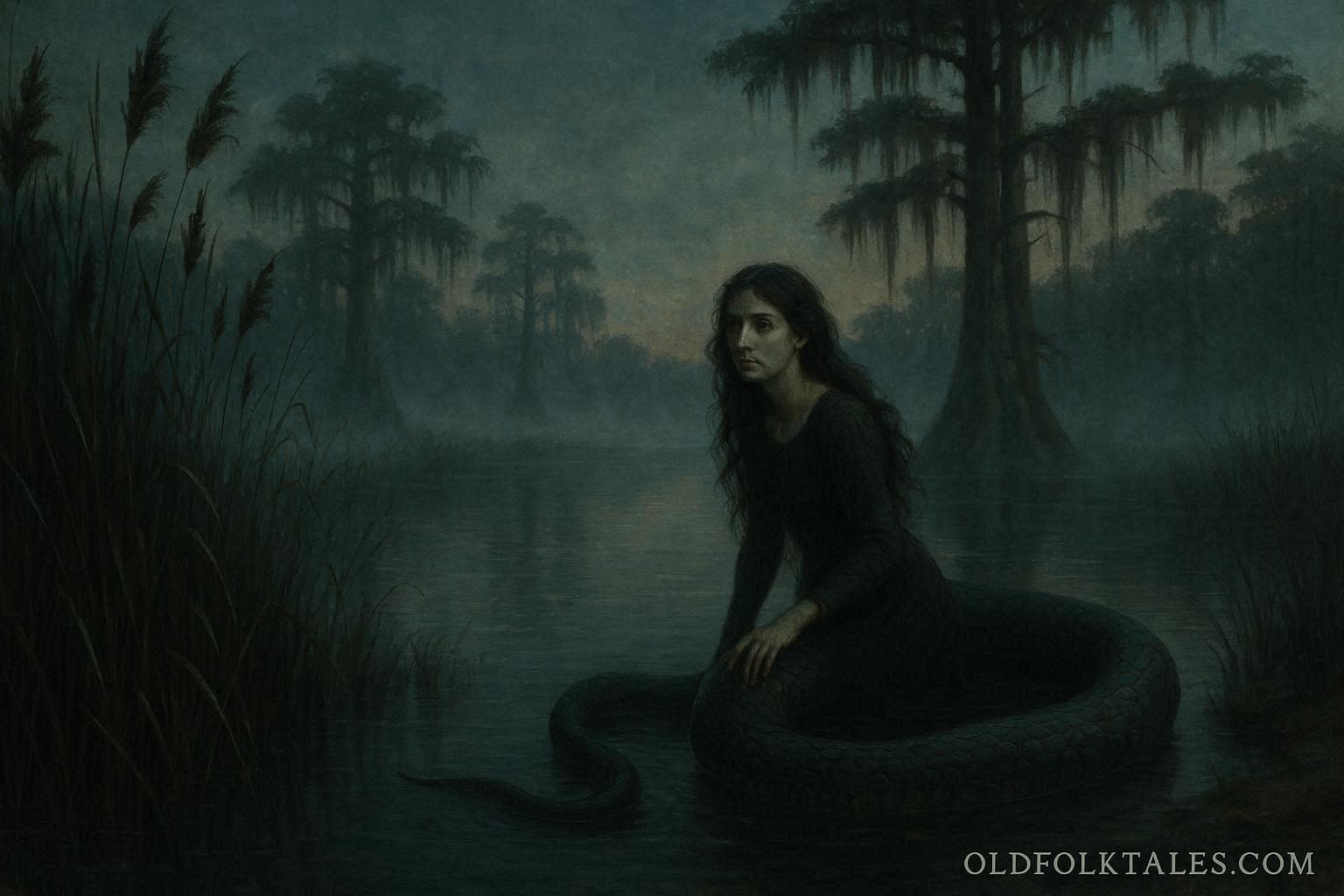
According to traditional stories, Sint Holo appeared most often near quiet waters where tall grasses and trees grew thick along the riverbanks. Travelers sometimes reported seeing a woman standing silently beside the water, watching the slow movement of the river. At first she appeared ordinary, dressed like someone from a nearby village, but something about her presence felt unusual.
Explore ancient Native American creation myths and the symbolic tales that shaped America’s belief systems.
In some versions of the story, the woman would disappear suddenly when approached. Moments later, a large serpent might be seen slipping into the water or moving quietly through the tall reeds. People began to believe that the mysterious woman and the serpent were the same being.
Over time the stories developed into a legend explaining that Sint Holo was a powerful shapeshifter who could move freely between human and serpent form. Her ability to change shape allowed her to live among both the human world and the hidden world of water spirits.
Unlike some creatures of folklore that were purely dangerous, Sint Holo was often described with a sense of caution rather than fear. Elders explained that she was not necessarily hostile but could become dangerous if people disturbed the waters or behaved disrespectfully near sacred places.
Wetlands and rivers were seen as delicate environments where animals, plants, and spirits existed together. The story of Sint Holo reminded listeners that these areas should be treated carefully. Loud disturbances, careless fishing, or unnecessary destruction could anger the beings believed to live there.
One story tells of two young fishermen who decided to explore a quiet marsh that few people visited. The water was calm and surrounded by thick reeds and cypress trees. As they paddled their small canoe through the narrow channels, they noticed a woman standing on a muddy bank watching them.
At first the fishermen thought she might be gathering plants or waiting for someone. They greeted her politely, but she did not respond. Instead she stood silently, her eyes focused on the water.
One of the fishermen stepped onto the bank and approached her. As he drew closer, the woman slowly turned away and moved toward the reeds. Within seconds she disappeared from view.
Confused, the fishermen searched the area but could find no sign of her. Then they noticed the tall grass moving near the water’s edge. A large serpent slid quietly into the marsh, leaving ripples across the still surface.
The fishermen quickly returned to their canoe, realizing that they might have witnessed something supernatural. When they returned to their village, they described what they had seen to the elders.
After hearing the story, the elders explained that the fishermen might have encountered Sint Holo. They warned the young men to be careful when traveling through wetlands because powerful spirits were believed to live in those places.
Another version of the legend describes travelers walking along a river trail who spotted a woman sitting near the water. As they approached, the woman rose slowly and walked into the reeds. Moments later, a massive serpent appeared and vanished into the river.
These encounters strengthened the belief that Sint Holo could move easily between human and serpent form. The serpent shape allowed her to swim through waterways and disappear beneath the surface, while her human form allowed her to observe people who traveled nearby.
Folklore scholars studying Choctaw traditions later recorded stories like these as part of broader research into Indigenous beliefs about shapeshifting spirits. Many cultures across North America have stories about beings that transform between human and animal forms, reflecting the idea that nature and humanity are deeply connected.
In Choctaw tradition, the legend of Sint Holo also carries an important environmental message. Wetlands and rivers were essential ecosystems that required careful respect. By telling stories about powerful beings living there, elders reminded younger generations to treat these places responsibly.
The shapeshifting snake woman became a symbol of the mysterious forces believed to inhabit water environments. She represented the idea that humans should approach nature with humility and awareness.
Even today, rivers and wetlands continue to inspire stories and imagination. The quiet movement of water, the rustling of reeds, and the sudden appearance of wildlife can create moments that feel mysterious or magical.
The legend of Sint Holo survives as part of the cultural storytelling traditions of the Choctaw people. Whether interpreted as a supernatural guardian or as a symbolic reminder of nature’s power, the story continues to emphasize the importance of respecting the natural world.
Through generations of storytelling, the mysterious snake woman has remained a reminder that the waters of the earth are not only sources of life but also places filled with hidden wonders and ancient traditions.
Click to read all American Cryptids & Monsters — creatures of mystery and fear said to inhabit America’s wild landscapes.
Moral Lesson
Nature deserves respect and careful treatment. Rivers and wetlands support life and should be approached with humility and responsibility.
Knowledge Check
- Who is Sint Holo in Choctaw folklore?
A shapeshifting woman who can transform into a serpent. - Where was Sint Holo most often believed to appear?
Near rivers, wetlands, and marshlands. - What unusual ability does Sint Holo possess?
She can change between human and serpent form. - What happened to the fishermen who approached the mysterious woman?
They later saw a large serpent sliding into the marsh. - Why did elders warn people about places where Sint Holo might live?
Because wetlands were believed to contain powerful spiritual beings. - What lesson does the legend teach?
People should respect nature and the environments that sustain life.
Source
Adapted from materials preserved in the Mississippi State University Special Collections
Cultural Origin
Choctaw traditions