Across the vast wetlands and quiet marshlands of the upper Midwest, the Menominee people lived closely connected to rivers, forests, and the creatures that shared their homeland. The wetlands were especially important. These rich environments provided fish, birds, and plants that supported the survival of the community. But wetlands also carried dangers. Heavy rains and melting snow could cause rivers to overflow, turning peaceful marshes into powerful floods that threatened villages and travel routes.
Among the many stories told by elders around evening fires was the legend of the Spirit Crane, a majestic bird believed to be a guardian of the wetlands. According to Menominee tradition, this mysterious crane appeared when the balance of nature was shifting, warning people about approaching floods and guiding travelers safely through marshy lands.
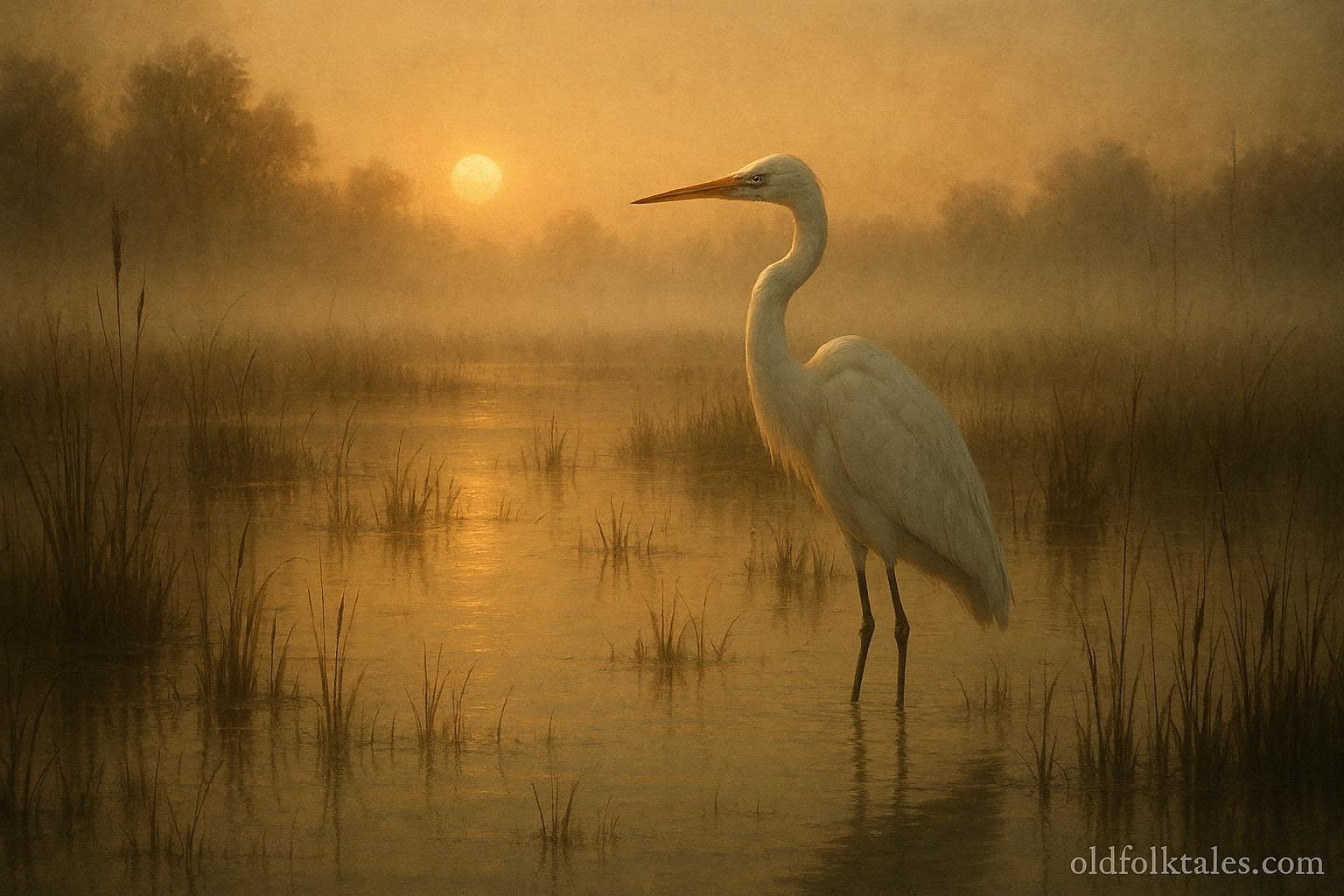
The crane was not an ordinary bird. Witnesses described it as larger and more graceful than any crane seen in the region. Its feathers were said to glow faintly white or silver in the early morning mist, and its long wings moved slowly and powerfully through the air. Some claimed its eyes seemed unusually bright and wise, as if the bird understood the movements of the land and water better than any human could.
Step into shadowy legends of restless spirits and ghostly travelers in American Ghost Stories.
The story most often shared among the Menominee tells of a time when a group of hunters traveled through the wetlands during the early spring season. Snow had recently melted in the northern forests, and the rivers were slowly rising. The hunters paddled their canoes through winding channels between tall reeds and shallow pools, searching for waterfowl and fish.
As the sun began to set, a thick mist spread across the marsh. The hunters realized they had traveled farther than planned and had lost sight of the familiar landmarks that guided their return home. In the fading light, every stretch of water looked the same, and the twisting waterways made it difficult to choose the right direction.
Just as uncertainty began to grow among them, a tall crane appeared on a narrow patch of dry land nearby. The bird stood motionless at first, watching the men quietly. Then it slowly lifted its wings and flew ahead across the marsh.
The hunters watched as the crane glided forward and landed again a short distance away. After a moment, it took flight once more, repeating the movement again and again as if urging them to follow.
Trusting the strange behavior of the bird, the hunters guided their canoes in the direction it traveled. For a long time, the crane continued this silent guidance through the maze of wetlands. Eventually the mist began to thin, revealing the familiar shoreline near their village.
When the hunters looked again for the bird, it had vanished into the evening sky.
The next morning, heavy rains fell across the region, and the rivers quickly flooded many parts of the marshland. Some of the routes the hunters had traveled the day before became dangerous and nearly impossible to cross.
When the hunters told the elders about the crane that had guided them, the village leaders nodded with quiet recognition. They explained that the hunters had been helped by the Spirit Crane, a sacred bird believed to watch over the wetlands and warn people when the waters were about to rise.
Over the years, other villagers reported similar encounters. Travelers claimed to see a lone crane circling above the marsh shortly before sudden storms or floods. Fishermen sometimes noticed a crane standing silently near the edge of the water, calling loudly before strong winds and rain arrived.
Because of these stories, the crane became a symbol of wisdom and natural balance within Menominee tradition. The bird was respected as a messenger of the natural world, reminding people to pay attention to the signs around them. Its appearance encouraged communities to prepare for changing weather and respect the power of rivers and wetlands.
The legend also reflected an important teaching within Menominee culture: nature constantly communicates with those who observe carefully. Animals, winds, and waters often give warnings long before danger arrives.
Even today, cranes are still seen across the wetlands of Wisconsin and the Great Lakes region. Their tall silhouettes moving slowly through marsh grasses continue to inspire awe among those who remember the old stories.
For many, the graceful bird remains a living symbol of the ancient legend — a quiet guardian watching over the wetlands and reminding people that the natural world holds wisdom for those who are willing to listen.
Moral Lesson
The legend teaches that nature often gives warnings through animals and environmental signs. People who observe and respect these signs can protect themselves and live in harmony with the land.
Knowledge Check
- Which tribe tells the story of the Spirit Crane?
The Menominee people - Where did the Spirit Crane usually appear?
In marshlands and wetlands - What did the crane do for travelers?
It guided them safely through dangerous wetlands - What natural danger did the crane warn communities about?
Seasonal floods and rising rivers - Why was the crane respected in the tradition?
It was believed to be a messenger and guardian of nature - What lesson does the story teach?
That people should observe and respect nature’s warning signs
Source
Adapted from records preserved by the Wisconsin Historical Society
Cultural Origin
Menominee traditions of the Great Lakes region, United States