In the earliest age remembered by the people of the Great Basin, the sun did not move gently across the sky. It rose too quickly, burned too fiercely, and lingered too long. Its heat pressed down upon the land without mercy, cracking the earth and thinning the rivers until fish struggled to survive. Plants withered before they could seed, and animals searched endlessly for shade that barely existed.
The people did not blame the sun at first. They believed it was simply young and unaware of its strength. In those days, the sun was said to be closer to the earth, watching everything with an unblinking eye. Its light was bright beyond comfort, bleaching stone and soil until the land lost its color. Shadows shrank, offering little refuge from the heat.
As seasons passed, the effects worsened. The soil hardened like fired clay, and footprints remained etched for days. Streams dried into shallow paths of dust. Elders gathered beneath the few remaining trees and spoke in worried tones. They agreed that something had gone wrong in the balance between sky and earth.
Explore the heart of America’s storytelling — from tall tales and tricksters to fireside family legends.
The people sent prayers upward, asking the sun to soften its gaze. Songs were sung at dawn and dusk, but the sun did not respond. Instead, it burned longer each day, as if proud of its strength. Children fell ill from the heat, and elders weakened. The land itself seemed to cry out, cracking and shifting under the weight of the sun’s attention.
Among the people lived a quiet woman named Tahuvi, known for her ability to listen rather than speak. She spent long hours observing the land, the sky, and the movements of animals. Tahuvi noticed that creatures of all kinds were working together to survive. Birds shared shaded branches. Burrowing animals widened their tunnels. Even plants leaned toward one another for shared shelter.
Tahuvi believed the same cooperation was needed among all beings, not just humans. She called for a gathering that included animals, spirits, and natural forces. The elders were hesitant, as such a gathering had not been attempted before, but desperation overcame fear. They agreed to try.
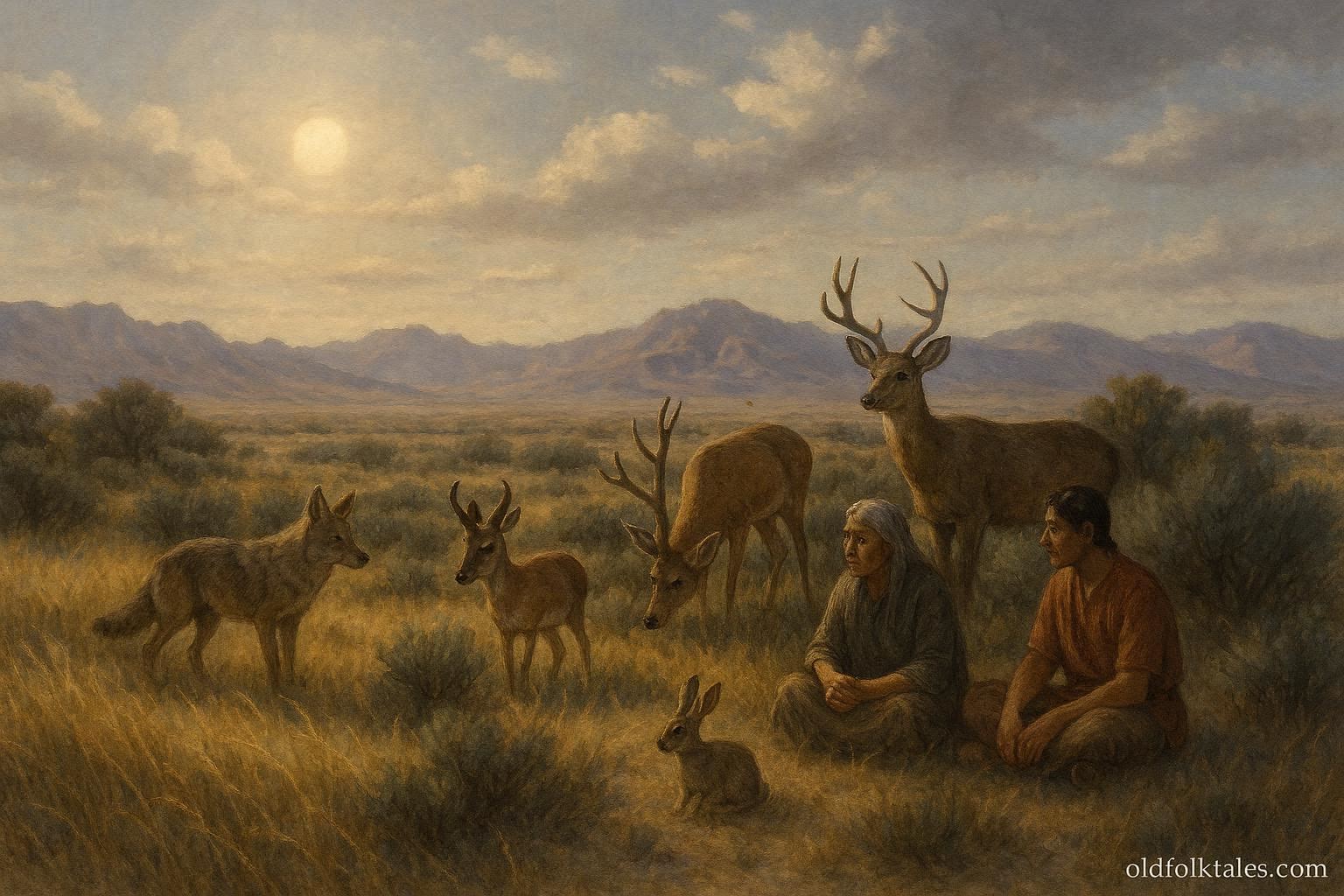
At sunrise, representatives of the living world gathered in a wide basin. Birds perched nearby. Animals emerged cautiously. The wind settled, and even the stones seemed attentive. Tahuvi spoke, not with authority, but with respect. She explained that the sun’s unchecked power was harming all life and that balance must be restored for the world to survive.
The wind was the first to respond. It agreed to rise and cool the land, but warned it could not act alone. Water followed, promising to reflect and soften the sun’s rays, but only if allowed to flow freely. Plants offered to grow taller and broader, creating shade, but they needed relief from constant heat to survive.
Together, the beings decided to confront the sun, not with force, but with cooperation. As the sun climbed into the sky, clouds were formed by the wind and water working together. They drifted across the sun’s path, dimming its intensity. The earth absorbed less heat, and the land exhaled for the first time in many seasons.
The sun was surprised. It had not realized the harm it caused. Accustomed to shining without limit, it mistook strength for purpose. Seeing the suffering below, the sun felt shame. It agreed to pull back, to rise higher in the sky, and to allow others to share responsibility for sustaining life.
From that day forward, the sun’s power was tempered. It still warmed the earth, but no longer scorched it. Clouds moved when needed. Winds cooled the land. Water flowed with renewed freedom. The balance between elements was restored through shared effort rather than dominance.
The people celebrated not the sun alone, but the cooperation that saved the world. Tahuvi’s role was honored quietly, as she preferred. She reminded the people that power without restraint destroys, but power shared wisely sustains life.
Generations passed, and the story was retold whenever the sun felt especially strong. Elders reminded children that even the mightiest force must listen. The sun still shines brightly, but its heat now arrives with care, shaped by the memory of a time when it burned too strongly.
Moral Lesson
True strength requires restraint, and balance is maintained when power is shared through cooperation rather than domination.
Knowledge Check
- Why was the sun dangerous in the beginning of the story?
It burned too fiercely and stayed too close to the earth. - What effects did the sun’s heat have on the land?
It cracked the soil, dried rivers, and weakened plants and animals. - Who suggested cooperation as the solution?
A woman named Tahuvi who observed the natural world. - Which forces worked together to temper the sun?
Wind, water, plants, animals, and spirits. - How did the sun respond to the intervention?
It realized its mistake and agreed to lessen its intensity. - What lasting lesson did the people learn?
That power must be balanced with restraint and shared responsibility.
Source
Adapted from Bureau of American Ethnology environmental myth records
Cultural Origin
Great Basin Indigenous nations