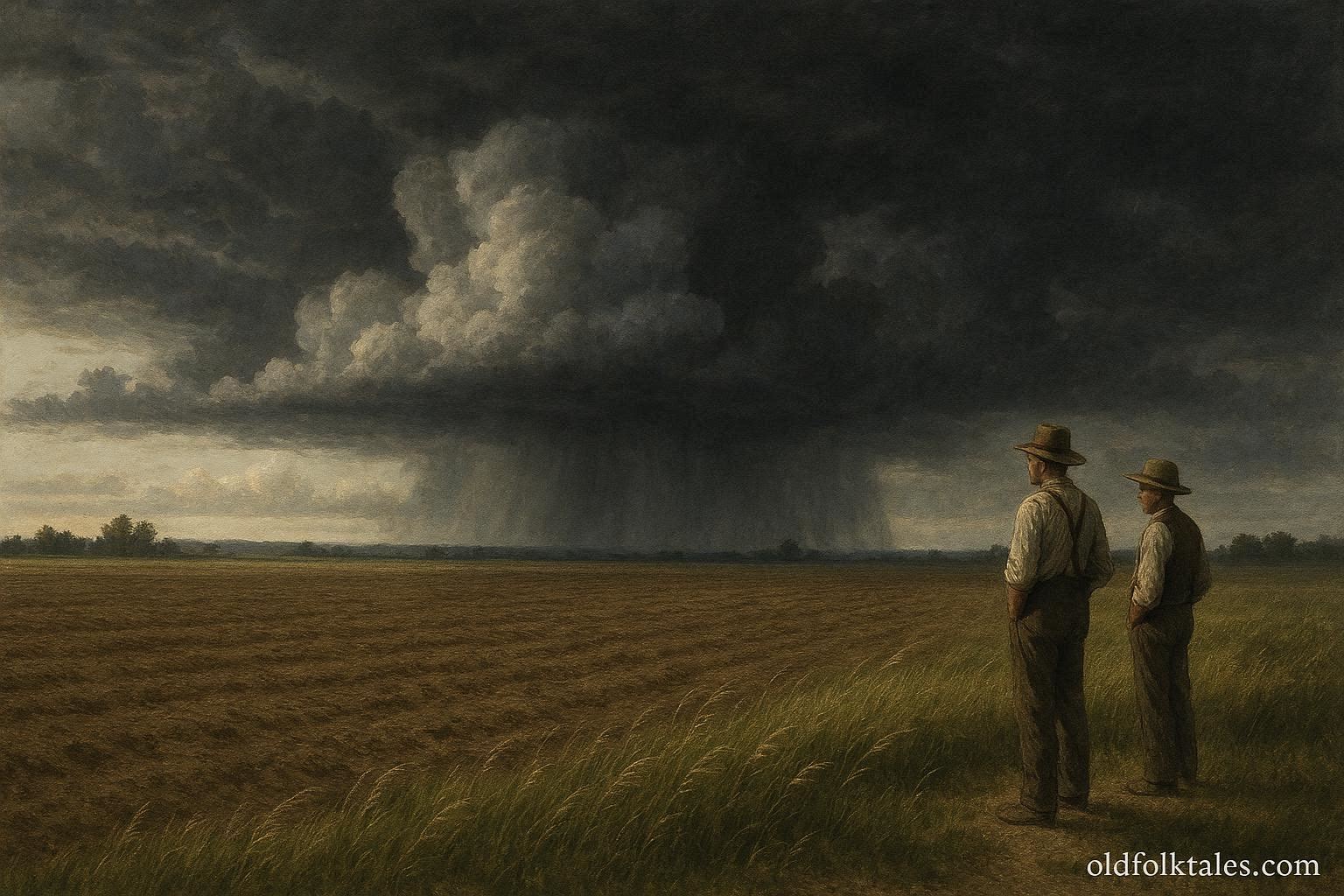
Early summer did not always mean progress in Midwestern farming communities. Fields that looked ready for planting could suddenly become places of danger and loss. Thunder rolled across open land without warning. Rain fell hard enough to drown seeds. Lightning struck barns, trees, and sometimes freshly worked soil. Through long observation, farmers learned that there were moments when action caused more harm than patience. From this understanding grew the Thunder Month Garden Pause.
This tradition emerged during the weeks when storms became frequent and unpredictable. Farmers noticed that seeds planted just before heavy storms often failed. Roots rotted in waterlogged soil. Young shoots were burned by lightning charged air or flattened by wind. Over time, the pause became a shared rule. When thunder arrived repeatedly and the sky refused to settle, planting stopped.
The pause was not idleness. Fields were watched closely. Soil was tested by hand. Elders studied cloud movement and the smell of rain in the air. The land was given time to recover. Farmers believed that forcing growth during violent weather offended the balance between earth and sky. Waiting was a form of respect.
Explore Native American beings, swamp creatures, and modern cryptid sightingsacross the country.
Lightning held special meaning. It was feared not only for its destructive power but for its unpredictability. Stories spread of gardens struck directly, leaving blackened paths through rows of crops. Some believed lightning followed freshly disturbed soil. Others believed it targeted places where impatience ruled. Whether literal or symbolic, lightning reinforced caution.
The Thunder Month Garden Pause was passed through instruction rather than ceremony. Parents told children when tools should remain stored. Neighbors reminded each other not to rush. A farmer who planted during thunder season and lost crops was not mocked. Loss itself was the lesson.
This pause also protected soil health. Heavy rain compacted earth and washed nutrients away. Working the ground too soon damaged its structure. Although the belief was framed through folklore, the results aligned with practical farming wisdom. Waiting allowed water to drain and soil life to stabilize.
Communal observation played a key role. Farmers compared notes across fields and counties. When storms lingered across the region, the pause became collective. When skies cleared consistently, planting resumed together. This synchronized approach reduced risk and reinforced trust among neighbors.
Respect for nature was central to the belief. Thunder was not viewed as an enemy but as a force with its own purpose. Storms refreshed the land, even when destructive. The pause acknowledged that human effort had limits. Crops could not be commanded into growth. They required cooperation with conditions beyond control.
Over generations, the Thunder Month Garden Pause became less about fear and more about restraint. It taught that knowing when not to act was as important as knowing when to work. Farmers learned to read subtle signs. The tone of thunder. The direction of wind. The behavior of animals before storms. These observations guided decisions better than rigid calendars.
As farming modernized, the pause faded from strict practice. Weather forecasts and machinery altered planting schedules. Yet many farmers still hesitate when storms persist. They may not name the tradition, but its wisdom remains. Waiting for the land to be ready continues to protect yields.
The Thunder Month Garden Pause endures as a lesson in humility. It reminds us that progress is not always forward motion. Sometimes survival depends on stillness. By pausing, farmers preserved both crops and respect for the forces that shape them.
Click to read all American Traditions & Beliefs — the living folklore of daily life, customs, and superstitions.
Moral Lesson
Patience and careful observation often protect what haste puts at risk.
Knowledge Check
1. Why did farmers stop planting during frequent early summer storms?
To prevent seed rot, soil damage, and storm related crop loss.
2. What role did lightning play in shaping the belief?
It symbolized unpredictable danger and reinforced caution.
3. How did the pause benefit soil health?
It allowed water to drain and soil structure to recover.
4. Why was the pause considered a form of respect for nature?
It acknowledged natural limits beyond human control.
5. How was the tradition passed down through generations?
Through observation, instruction, and shared experience.
6. Why does the belief still influence modern farming decisions?
Because waiting for stable conditions continues to protect crops.
Source
Adapted from American Folklore Society rural weather lore records
Cultural Origin
Midwestern farming communities