In the high mountains of the southern Appalachian region, Cherokee storytelling traditions preserved accounts of powerful beings who lived among the forests and ridges long before towns and roads appeared. These stories reflected a deep understanding of nature and the responsibilities that came with hunting and living from the land. Among the most respected figures in these traditions is Tsul Kalu, a giant supernatural hunter believed to watch over animals and enforce the rules of proper hunting.
The Appalachian Mountains are covered with thick forests, steep slopes, and winding valleys. For centuries these mountains supported deer, bear, turkey, and many other animals that provided food and resources for the Cherokee people. Hunting was an important part of daily life, but it was guided by traditions that emphasized balance and respect.
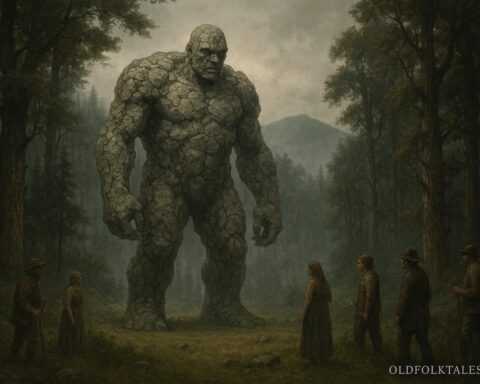
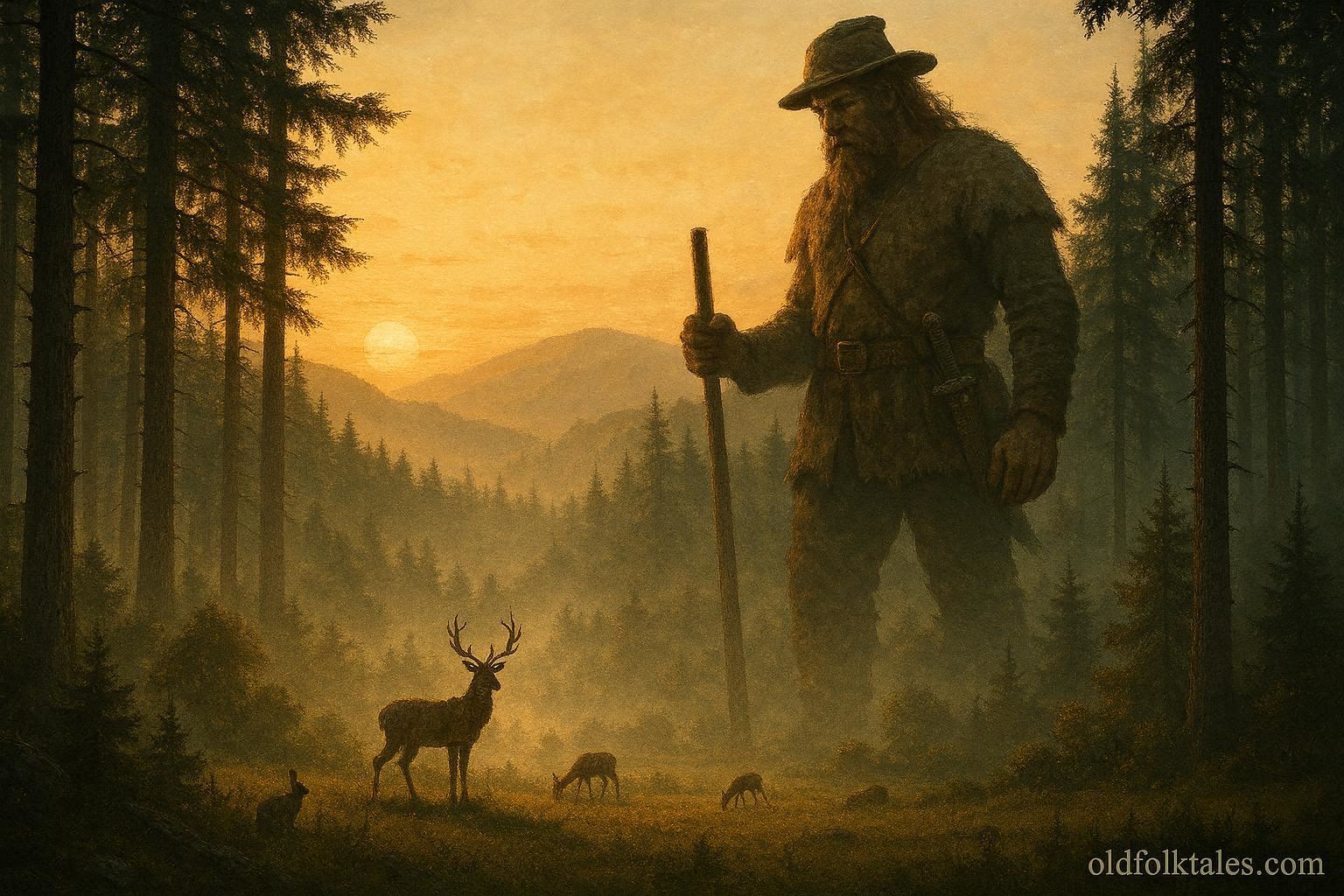
According to Cherokee stories, Tsul Kalu lived high in the mountains, far from the villages in remote areas where few people traveled. The giant was known as a master hunter whose strength and knowledge of the forest were greater than any ordinary person.
Explore the heart of America’s storytelling — from tall tales and tricksters to fireside family legends.
Stories describe Tsul Kalu as an enormous being with powerful limbs and keen eyesight. His footsteps were said to leave large impressions in the soil and rock along mountain ridges. In some locations people even pointed to unusual rock formations or deep marks on stone surfaces as evidence of the giant’s presence.
Despite his size and strength, Tsul Kalu was not known as a destructive creature. Instead he was believed to serve as a guardian of the animals that lived in the mountains. His role was to ensure that hunters respected the natural balance between humans and wildlife.
In Cherokee tradition hunting was never meant to be wasteful. Hunters were taught to take only what they needed and to treat animals with respect. Offering gratitude for the life of the animal was considered an important part of the process.
The legend of Tsul Kalu reinforced these principles. The giant hunter was said to observe human hunters from hidden places along mountain slopes or behind thick forests. If he saw someone hunting responsibly and showing gratitude for the animals they took, he would remain unseen and allow them to continue their journey safely.
However, if a hunter killed animals unnecessarily or behaved carelessly, Tsul Kalu might intervene. Stories describe hunters hearing heavy footsteps echoing through the forest or noticing enormous tracks appearing along their path.
One well known story tells of a group of hunters who traveled deep into the mountains in search of deer. At first they hunted carefully, but as their success grew they began taking more animals than they needed.
Instead of stopping once they had enough food, the hunters continued shooting deer simply to prove their skill. They left several animals behind without using them, believing that more game would always be available.
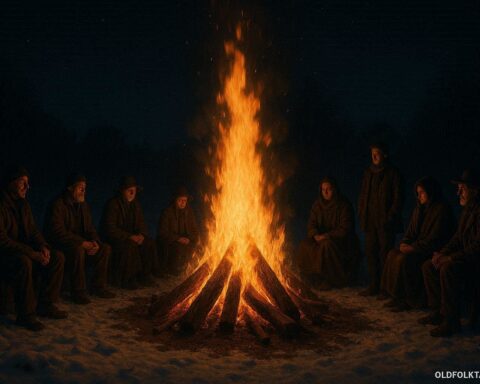
That evening the hunters built a fire and prepared to rest for the night. As the forest grew quiet, one of them heard a deep sound like a large branch snapping somewhere in the darkness.
Another hunter soon noticed enormous footprints near the edge of their camp. The prints were far larger than those of any human and appeared suddenly as though someone had walked silently through the forest.
As the night continued, the hunters heard slow heavy steps moving through the trees. The ground seemed to tremble slightly with each step.
Realizing that something powerful might be nearby, the hunters became uneasy. They remembered the stories told by elders about the great mountain hunter who watched over the animals.
At dawn they examined the area around their camp and discovered more giant footprints leading toward the mountain ridge above them. None of the hunters had seen the giant directly, but the message seemed clear.
The hunters returned to their village and told the elders about what had happened. The elders explained that Tsul Kalu may have visited them as a warning.
They reminded the hunters that the mountains provided animals only when people treated them with respect. Taking more than necessary could upset the balance of nature.
The hunters understood their mistake and promised to follow the traditional hunting rules more carefully in the future. According to the story, none of them ever heard the heavy footsteps of the giant again.
Another legend connected to Tsul Kalu involves unusual tracks found on a large rock surface in the mountains of western North Carolina. Some people believed these marks resembled giant footprints and were left by the supernatural hunter long ago.
These physical landmarks helped keep the story alive because travelers could visit the location and imagine the giant walking across the stone. Such places became part of the cultural landscape where stories and geography blended together.
Folklore scholars studying Cherokee traditions later recorded many stories about Tsul Kalu as examples of how legends helped guide behavior within the community. The giant hunter symbolized the idea that the natural world was watched over by powerful forces.
Through stories like these, elders taught younger generations that hunting was not simply about skill but also about responsibility. Respect for animals and the land ensured that resources would remain available for future generations.
The legend also reflects the Cherokee understanding that humans are part of a larger natural system. Animals, forests, and mountains were not merely resources but living elements of a balanced world.
Today the story of Tsul Kalu remains an important example of how folklore communicates environmental ethics through storytelling. The giant hunter represents the spirit of the mountains and the importance of maintaining harmony between humans and the natural world.
Although modern hunters use different tools and travel methods, the lesson behind the legend remains meaningful. Taking only what is needed and respecting the land helps preserve the balance that allows life to continue.
Through generations of storytelling, Tsul Kalu continues to stand watch over the mountains in the imagination of those who remember the legend.
Click to read all American Cryptids & Monsters — creatures of mystery and fear said to inhabit America’s wild landscapes.
Moral Lesson
Nature provides for those who respect it. Responsible hunting and care for the environment help maintain balance between humans and wildlife.
Knowledge Check
- Who is Tsul Kalu in Cherokee folklore?
A giant supernatural hunter who lives in the mountains. - What role does Tsul Kalu play in the forest?
He watches over animals and observes human hunters. - What happened to the hunters who took more animals than they needed?
They heard heavy footsteps and discovered giant tracks near their camp. - Why did elders believe Tsul Kalu appeared to the hunters?
To warn them about wasting animals. - Where was Tsul Kalu believed to live?
In the high mountains of the Appalachian region. - What lesson does the legend teach?
Hunters must respect animals and avoid wasteful hunting.
Source
Adapted from materials preserved in the Western Carolina University Cherokee Studies Archive
Cultural Origin
Cherokee traditions