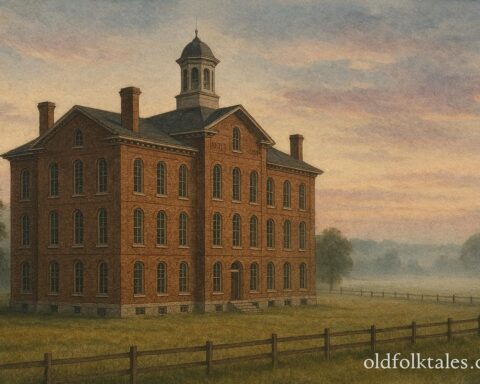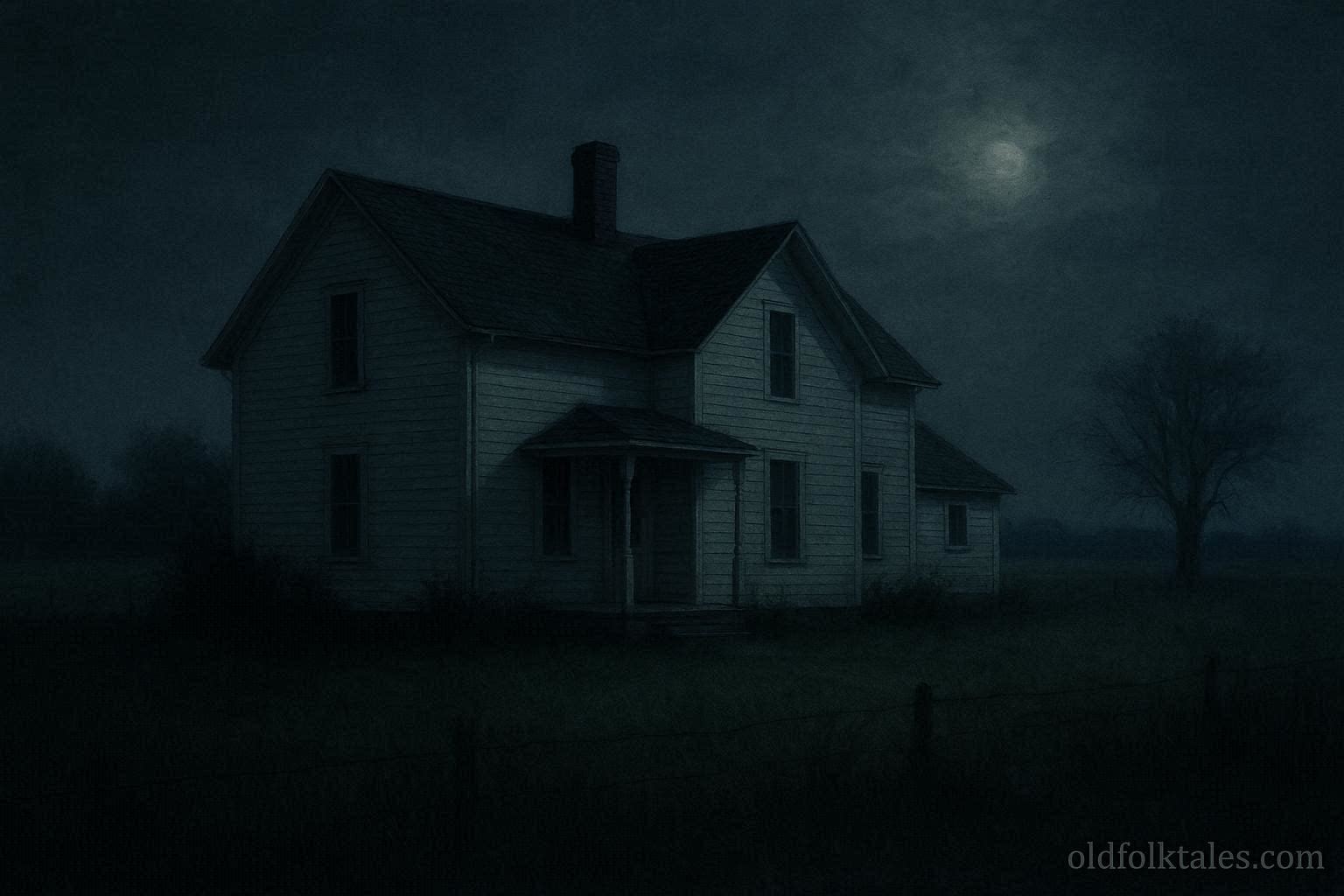
In the early 1900s, Villisca, Iowa was a peaceful railroad town shaped by routine, faith, and familiarity. Families knew one another by name, and evenings often ended with lanterns dimmed and doors closed against the prairie wind. On a modest residential street stood a simple white house, ordinary in design and unremarkable in appearance. It was the kind of place that blended into its surroundings, offering no hint that it would one day become one of America’s most disturbing haunted locations.
One summer night in 1912, that sense of safety was shattered.
By morning, neighbors noticed something wrong. The house remained silent well past sunrise. Curtains were still drawn. No movement came from inside. When concerned townspeople entered, they discovered a scene so brutal it stunned the entire nation. A family and two visiting children had been murdered in their sleep. An axe, taken from the home itself, had been used as the weapon.
Nothing appeared stolen. Doors were locked. Mirrors inside the house had been covered with cloth. The weapon had been wiped clean and returned near its original place. The crime seemed deliberate, controlled, and deeply unsettling.
Discover African American wisdom, Native American spirit stories, and the humor of early pioneers in American Folktales
Despite investigations, interrogations, and national attention, the case was never solved.
As weeks turned into years, justice remained unanswered. Suspects were named and dismissed. Confessions failed to hold up. The town slowly returned to daily life, but the house did not fade from memory. It stood as a physical reminder of violence without resolution.
When new occupants eventually moved in, strange occurrences were reported almost immediately.
Lights flickered without cause. Footsteps echoed upstairs when no one was there. Children refused to sleep in certain rooms, claiming they felt watched. Doors opened on their own. Whispers were heard late at night, too soft to understand but too clear to ignore.
Some residents left after only days. Others stayed longer, attempting to rationalize what they experienced. Yet even skeptics admitted the house felt heavy, as if the air itself resisted comfort.
Unlike traditional ghost stories, no single spirit was ever identified. There were no consistent apparitions or clear figures. Instead, the disturbances felt fragmented, as though the house replayed moments of confusion and fear rather than hosting a single presence.
Local folklore began to frame the house not as haunted by ghosts, but by unresolved trauma.
According to regional belief, places marked by extreme violence can retain emotional memory. The energy of fear, injustice, and sudden death embeds itself into the structure. The house does not remember faces, but it remembers events.
Visitors who came decades later described similar sensations. Some felt sudden pressure in their chest. Others experienced dizziness or headaches upon entering specific rooms. Cameras malfunctioned. Recording devices captured unexplained sounds. Even those who expected nothing often left unsettled.
The upstairs bedrooms, where most of the violence occurred, were reported as the most disturbing. People standing there described waves of sadness or panic without warning. Some felt compelled to leave immediately. Others said the rooms felt frozen in time.
Over the years, the house became both a historical landmark and a subject of paranormal interest. Investigators conducted overnight stays. Historians documented firsthand accounts. Skeptics offered explanations tied to structure, memory, and psychology. Believers pointed to the consistency of experiences across generations.
What remained undeniable was the house’s influence.
The Villisca Axe Murder House does not frighten through spectacle. It unsettles through silence. Through the absence of answers. Through the sense that something unfinished still lingers.
The violence that occurred there was never resolved, never explained, never laid to rest. In folklore, such wrongs demand acknowledgment. Until they are faced, they echo.
The house stands today not as entertainment, but as testimony. It reminds visitors that when justice is denied, peace becomes difficult to reclaim. Walls can be repaired. Floors can be scrubbed. But unanswered violence leaves marks deeper than wood or stone.
In Villisca, the past does not shout.
It waits.
Step into shadowy legends of restless spirits and ghostly travelers in American Ghost Stories.
Moral Lesson
When justice is left unresolved, its weight can linger far longer than the crime itself.
Knowledge Check
- Where is the Villisca Axe Murder House located?
Answer: Villisca, Iowa. - Why did the crime shock the nation?
Answer: An entire household was murdered with no clear suspect or motive. - What unusual actions were noted inside the house after the crime?
Answer: Mirrors were covered and the weapon was cleaned and returned. - What type of haunting is associated with the house?
Answer: Disturbances linked to unresolved violence rather than visible ghosts. - Which part of the house is considered most unsettling?
Answer: The upstairs bedrooms. - What does the house symbolize in American folklore?
Answer: The lasting presence of unresolved injustice.
Source
Adapted from American crime folklore preserved by the American Folklore Society
Cultural Origin
Early 20th-century Midwestern United States