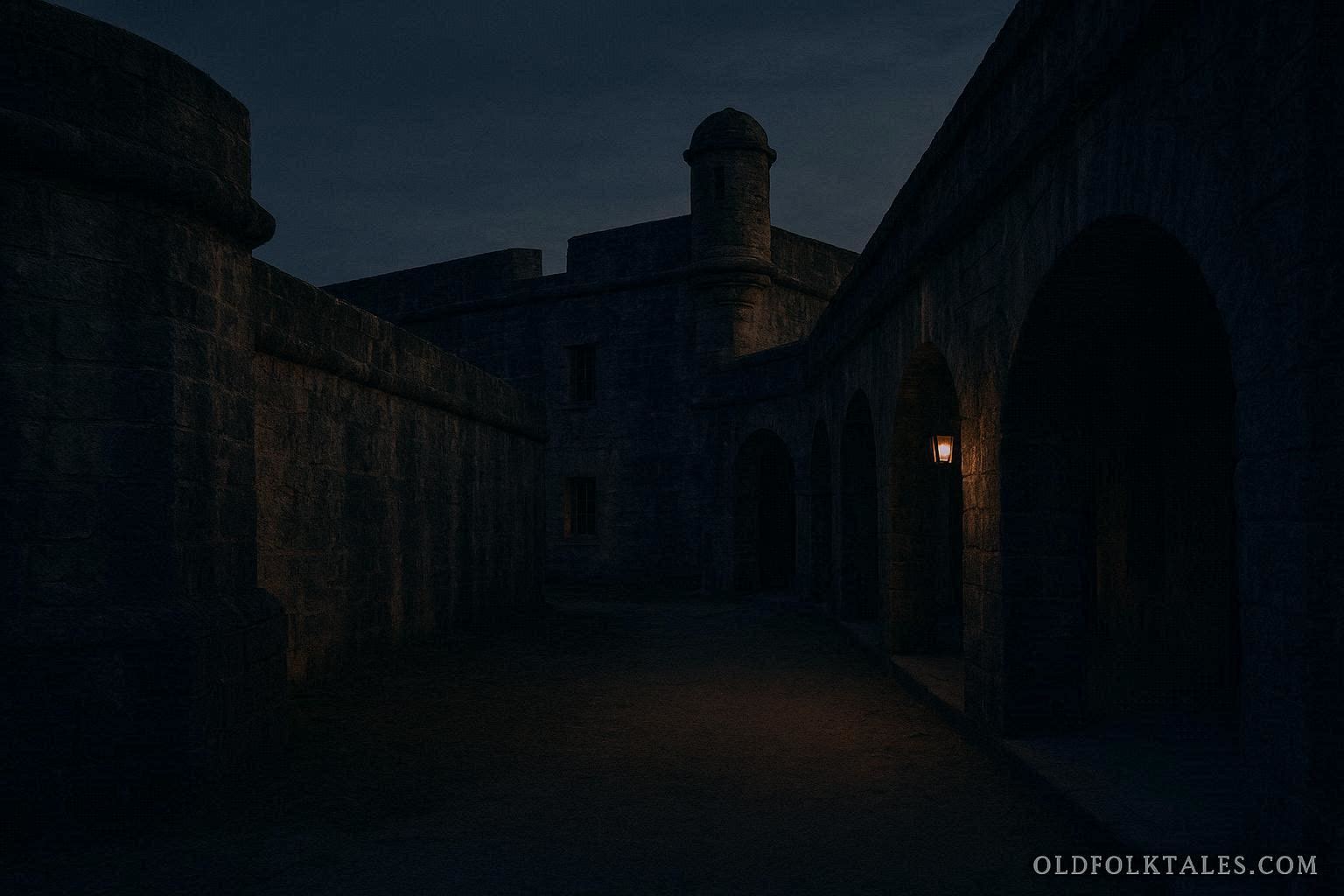
Along the quiet edge of the Delaware River, just beyond the steady movement of the city, stands Fort Mifflin, a place shaped by history and time. Its stone walls, weathered by years of wind and water, still stand as they once did, holding the memory of those who lived, worked, and fought within them.
During the day, the fort appears calm.
Visitors walk through its open grounds, reading signs, observing the structure, and imagining what life must have been like when it was active. The rooms, corridors, and defensive walls seem still, almost frozen in time.
But when the day ends and the light begins to fade, the atmosphere changes.
The air grows heavier.
The quiet deepens.
And within the walls, something begins to stir.
At first, it is only a faint sound.
A soft murmur, barely noticeable, like distant conversation carried through thick stone. Those who hear it often pause, unsure of what they have noticed. They listen carefully, trying to separate imagination from reality.
Explore ancient Native American creation myths and the symbolic tales that shaped America’s belief systems.
But the sound remains.
It does not come from outside.
It does not come from other visitors.
It comes from within the walls themselves.
People who stay longer, especially into the evening hours, report that the whispers become clearer. Not loud enough to understand, but distinct enough to recognize as voices. They seem layered, overlapping, as though many conversations are happening at once.
No single voice stands out.
No words can be clearly heard.
Yet the presence of sound is undeniable.
Over time, these experiences became widely known among those who studied or worked near the fort. Historians, caretakers, and visitors all shared similar accounts. The whispers were not constant, but they appeared often enough to form a pattern.
They came in moments of stillness.
They came when the space was quiet.
They came when attention was focused on listening.
The elders and historians who understood the deeper meaning of such places offered their perspective.
They explained that places like the fort were not empty.
They were filled with memory.
Every moment that had taken place within those walls, every voice that had spoken, every command given, every conversation shared, had left an impression. Over time, these impressions became part of the structure itself.
The stone had absorbed them.
The walls held them.
And under certain conditions, they returned.
Not as full voices, but as echoes.
One account told of a visitor who chose to remain inside one of the inner rooms as evening approached. He had come to learn about the history, but he stayed because he wanted to experience the place in silence.
As the last of the daylight faded, he noticed the change immediately.
The room felt different.
Still the same in appearance, yet filled with a quiet tension that had not been there before. He stood near the wall, listening to the natural silence, expecting nothing unusual.
Then the whispering began.
At first, it was so soft that he thought it might be the wind. But the air was still. There were no open spaces for the wind to pass through. The sound remained, steady and low.
He moved closer to the wall.
The sound became clearer.
It was not random.
It had rhythm.
Like speech.
Multiple voices, speaking at once, overlapping in a way that made it impossible to understand any single phrase. He placed his hand against the stone, and for a moment, he felt a slight vibration, as though the sound existed not just in the air, but within the wall itself.
He stepped back slowly.
Not out of fear, but out of recognition that what he was experiencing could not be explained in ordinary terms. He remained in the room for a while longer, listening without trying to interpret the sound.
When he finally left, the whispering faded behind him.
It did not follow.
It remained where it belonged.
Stories like this continued to spread.
Some visitors came hoping to hear the whispers for themselves. Others avoided certain areas of the fort entirely, choosing to remain in open spaces where the sound was less noticeable.
Those who worked at the fort developed their own understanding.
They did not deny what people experienced.
Instead, they accepted it as part of the place.
They spoke of the fort not just as a historical structure, but as a space where the past remained active in subtle ways. The whispers were not seen as something to fear, but something to acknowledge.
A reminder.
That the lives once lived within those walls had not simply disappeared.
They had left something behind.
Even today, the fort stands as it always has.
Visitors continue to walk its grounds, observe its structure, and learn about its history. But those who stay long enough, those who allow themselves to listen in the quiet moments, may notice something more.
A faint murmur.
A presence within the stone.
Not loud.
Not clear.
But real enough to be heard.
And in that sound, the past continues to exist, not as a distant memory, but as something still present, still connected to the place where it once lived.
Click to explore all American Ghost Stories — haunting legends of spirits, lost souls, and mysterious places across the U.S.
Moral Lesson
The past is never truly gone, and the places we leave behind can continue to hold the echoes of our presence.
Knowledge Check
- Where is Fort Mifflin located?
Along the Delaware River in Pennsylvania. - When are the whispers most often heard?
During quiet moments, especially in the evening. - Where do the voices seem to come from?
From within the walls of the fort. - Can the voices be clearly understood?
No, they sound like overlapping whispers. - What do historians believe about the whispers?
They are echoes of past events held within the walls. - What lesson does the story teach?
That places can carry the memory of those who came before.
Source
Adapted from materials preserved by Temple University
Cultural Origin
Pennsylvania folklore