The coal camps of eastern Kentucky lay tucked between steep Appalachian ridges, where narrow dirt trails twisted through dense forest and wooden houses clung stubbornly to the hillsides. By day, the mountains echoed with the clang of pickaxes and the rumble of coal carts rolling along iron tracks. By night, shadows deepened under thick tree cover, and the woods seemed to breathe with hidden life. It was in these quiet, uncertain hours that families whispered about the Yard Dog, a figure both man and myth, who guarded the old coal trails and kept danger at bay.
No one agreed on how he earned the name. Some claimed he had once been a yard boss in the mining camps, overseeing the coal yards with sharp eyes and sharper instincts. Others said he moved like a watchful dog along the ridges, patrolling boundaries no one else dared cross after sunset. What mattered most was not the origin of the name but what it represented: vigilance, loyalty, and fierce protection of community.
The legend took shape during a winter when supplies ran thin and the forests grew restless. Wolves had been sighted near the outer cabins, and rumors spread of thieves prowling the coal trails, hoping to take advantage of isolated families. One bitter evening, as snow dusted the narrow paths, a young mother heard scratching near her cabin door. Her husband was still in the mines, and fear tightened in her chest. Before she could bar the door, a loud whistle echoed from the ridge above, followed by the sharp crack of a rifle shot. The scratching ceased immediately. By morning, tracks in the snow revealed that a predator had circled the house but never crossed the yard’s edge.
Explore the heart of America’s storytelling — from tall tales and tricksters to fireside family legends.
On the ridge above, boot prints led toward a solitary path known only to experienced miners. The Yard Dog had been there.
Stories of his cleverness multiplied. He was said to know every bend of the coal trails, every hollow tree, every rock ledge where sound carried strangely across the valley. When predators stalked livestock, he set traps so carefully placed that not even the most cunning wolf escaped. When thieves attempted to raid supply sheds, they found themselves misled by false trail markers and confusing signals that sent them wandering in circles until dawn. Some swore he could mimic the calls of owls or coyotes to mask his movements, using the mountain’s own language to guard its people.
One spring, a series of food thefts troubled the camp. Flour sacks disappeared, tools went missing, and families feared that hunger would follow. Rather than confront the suspected thieves directly, the Yard Dog studied their patterns. He listened from the tree line as whispered plans drifted through the night air. He observed the faint indentations left by careful boots in damp soil. Instead of setting obvious traps, he rearranged the trails themselves, shifting markers and scattering misleading signs that guided the thieves toward an abandoned clearing miles away from camp.
When the thieves returned to strike again, they followed what they believed was the safest route, only to find themselves lost deep in the forest, far from any cabins or supplies. By the time they stumbled back toward civilization, hungry and humiliated, they abandoned their scheme entirely. The mining camp never saw them again.
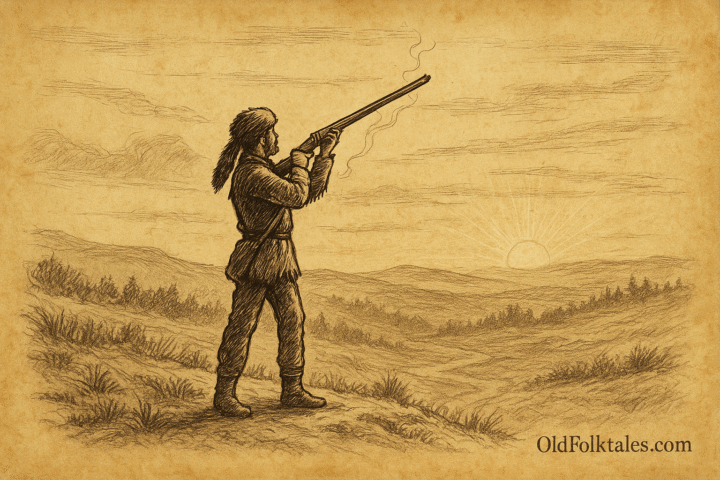
Yet the Yard Dog’s legend was not built solely on cunning against human threats. During a violent storm one summer, heavy rain caused a section of the old coal trail to collapse. A wagon carrying children from the schoolhouse was heading toward the weakened ground. From a distant ridge, the Yard Dog noticed the subtle shift in the soil, the way runoff water carved deeper channels into the earth. Without waiting for confirmation, he sprinted down the slope, waving his hat and firing a warning shot into the air. The wagon driver halted just yards from where the trail gave way, sending mud and rock sliding into the ravine below.
The children later claimed they saw him standing steady against the rain, coat plastered to his back, scanning the mountain as though listening for its next warning. By the time grateful parents reached him, he had already vanished along a side path known only to seasoned trail walkers.
Around kitchen tables and potbellied stoves, elders told the story with pride. The Yard Dog represented more than one man; he symbolized the resilience of Appalachian workers who relied on one another for survival. In a region where coal fueled distant cities but left mountain families struggling, the legend reminded communities that protection began at home. Strength was not measured only by muscle but by intelligence, loyalty, and the willingness to stand guard when others slept.
As decades passed, mechanization reduced the need for constant trail patrols, and the old coal paths slowly gave way to wider roads. Yet hikers and descendants of miners still speak of strange whistles carried by the wind at night. Some report hearing a distant rifle crack moments before a black bear wanders away from a campsite. Others tell of discovering fresh footprints circling their cabin after a suspicious stranger passed through town.
Whether the Yard Dog was a single heroic miner or a mantle worn by many over generations, the legend endures in Kentucky and Appalachian folklore. It speaks of a people who survived harsh labor, economic hardship, and natural dangers through solidarity and sharp thinking. The mountains may be rugged and unforgiving, but they are not without guardians at least in the stories passed from one family to the next.
Even now, when the wind moves through the hollows and the forest grows quiet, some say the Yard Dog still walks the ridges. Not for glory, not for recognition, but because someone must keep watch over the coal trails, just as someone always has.
Discover celestial myths of the sun, moon, and stars — and the heroes who bridged earth and sky.
Moral Lesson
True protection comes from loyalty, intelligence, and commitment to community. Strength is not only physical, it is the courage to guard and guide others wisely.
Knowledge Check
- Why was the hero called the Yard Dog?
Because he patrolled and guarded the mining camp boundaries with loyalty and vigilance - How did he protect families from predators?
By setting clever traps and responding quickly to danger - How did he outsmart thieves?
By studying their patterns and misleading them with altered trail markers - What natural signs helped him prevent the wagon accident?
He noticed soil shifts and water erosion along the coal trail - What larger value does the Yard Dog symbolize?
Worker resilience and community protection in Appalachian life - Why is he considered a mountain labor hero myth?
Because he embodies the strength, cunning, and solidarity of coal mining communities
Source
Adapted from Appalachian oral folklore archives
Cultural Origin
Kentucky and Appalachian folklore