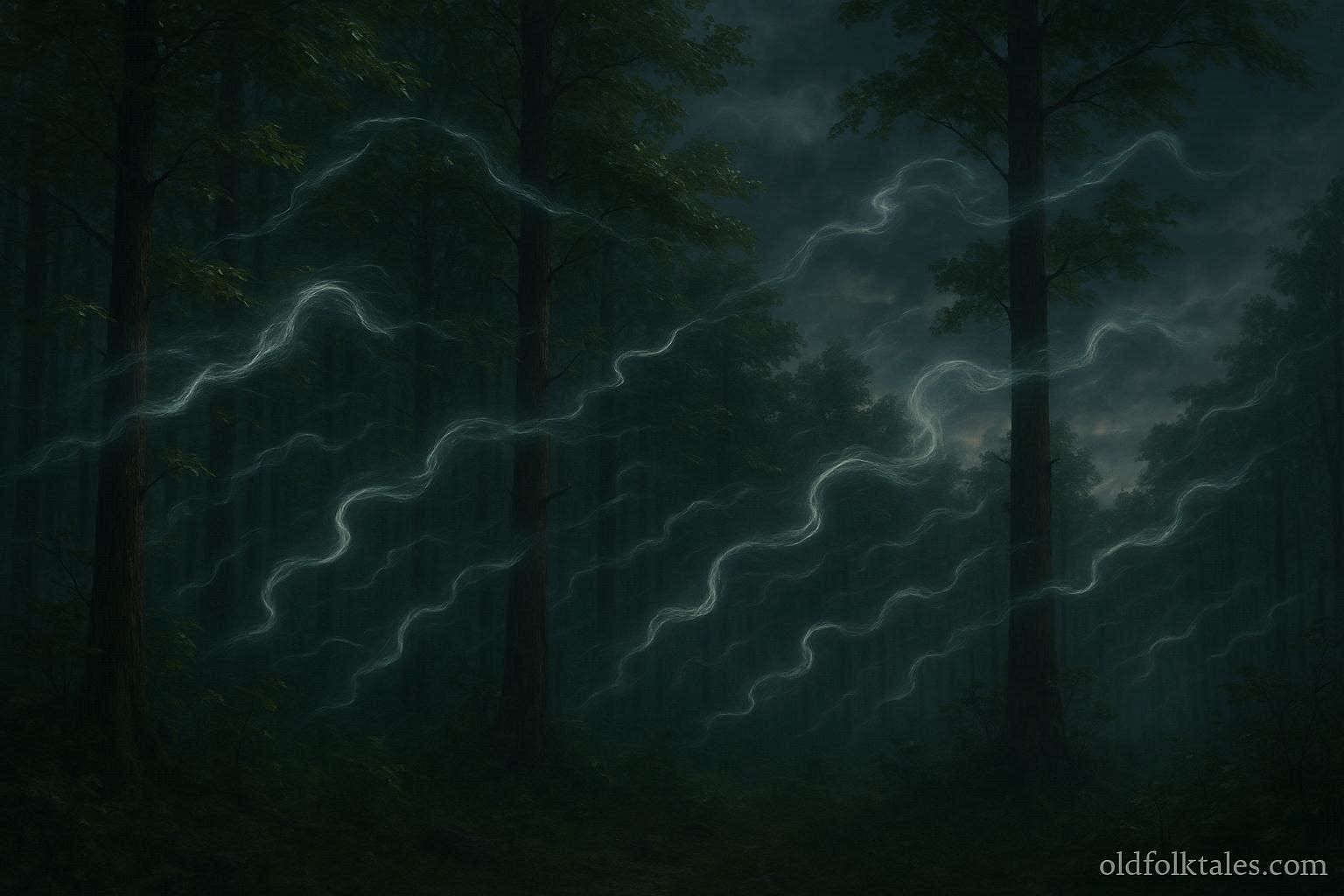
Across the forests and rivers of the Eastern Woodlands, people learned to listen long before they learned to speak. The land itself carried meaning. The movement of leaves, the direction of the wind, and the silence between sounds all held messages for those who paid attention.
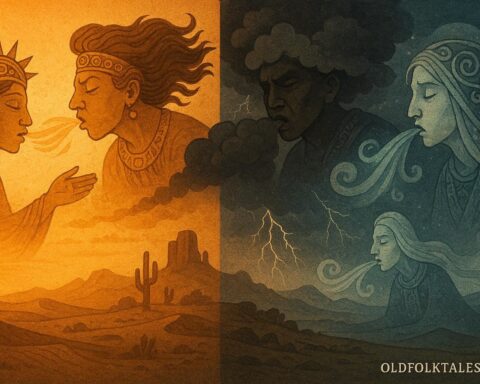
Among these signs, none was more mysterious than the voices said to travel within the wind.
They were not loud.
They were not clear.
But they were there.
Hunters moving quietly through the forest would sometimes stop suddenly, tilting their heads as if hearing something just beyond understanding. Women gathering herbs near the edge of the woods would pause when the breeze brushed past them, carrying faint whispers that seemed almost like words.
At first, many dismissed these moments.
The wind, after all, makes many sounds. It moves through branches, across leaves, and over the ground in ways that can easily trick the ear.
Discover chilling ghost tales and haunted places that echo through America’s towns and countryside.
But over time, patterns began to appear.
The whispers always came before something changed.
A sudden storm.
A heavy rain.
A violent wind.
Those who listened carefully realized that the wind was not just moving air. It was speaking.
One widely told story speaks of a young hunter who ignored the warning.
He had traveled far from his village, tracking deer deep into unfamiliar territory. The day was calm, and the sky showed no sign of danger. The air was still enough to make the forest feel peaceful.
Then the wind rose.
It came gently at first, weaving through the trees with a soft, steady rhythm. As it passed by him, the hunter felt a strange sensation, like someone calling his name from a distance.
He stopped.
He listened.
For a moment, he thought he heard words. Not clearly, but enough to feel their presence.
A warning.
He shook his head and continued walking.
The forest grew quieter.
The wind returned, stronger this time, circling him. The whispers came again, more urgent, brushing past his ears like voices trying to be heard.
Still, he ignored them.
He had his path. He had his goal.
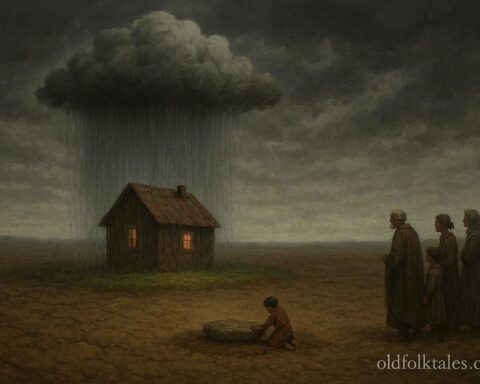
Moments later, the sky darkened without warning.
A powerful storm crashed through the forest with sudden force. Trees bent violently. Rain fell in heavy sheets. The hunter struggled to find shelter as the wind roared around him.
By the time he returned home, exhausted and shaken, he understood what had happened.
The wind had tried to warn him.
After that, he never ignored it again.
Elders in the community taught that the wind carried more than sound. It carried memory, spirit, and knowledge passed through the natural world. They believed that the voices were not human, but neither were they random.
Some said they were the voices of ancestors, guiding the living and protecting them from harm.
Others believed they were spirits of the land itself, speaking through the wind to maintain balance.
Children were taught from an early age to listen.
Not just to hear, but to understand.
When the wind passed through the trees in a certain way, it meant rain was coming.
When it circled suddenly and shifted direction, it could signal a storm.
When it carried a soft whisper that felt like a name, it was a warning that should never be ignored.
There were also stories of those who understood the wind more deeply.
Certain individuals, often elders or spiritual leaders, were said to interpret the voices clearly. They could stand in the open, close their eyes, and listen as the wind moved around them.
Afterward, they would speak.
A storm is coming.
Stay near your homes.
Do not travel today.
And more often than not, they were right.
The belief was not rooted in fear, but in respect.
The wind was not something to control. It was something to learn from.
Over time, these stories became part of daily life.
Before long journeys, people would pause and listen to the wind.
Before planting or harvesting, they would pay attention to its direction and sound.
Even in quiet moments, when the air seemed still, they remained aware, knowing that the wind could rise at any time, carrying its hidden voices.
In some tellings, it is said that ignoring the wind too often could lead to misfortune. Not as punishment, but as a natural consequence of refusing to listen to the world around you.
The wind does not repeat itself endlessly.
It speaks, and then it moves on.
Even today, in the forests of the Eastern Woodlands, there are moments when the wind shifts suddenly, brushing past with a sound that feels almost like speech.
A whisper.
A call.
A warning.
And those who know the old stories do not ignore it.
They pause.
They listen.
And sometimes, they act.
Because the wind, as the elders say, always speaks before the storm arrives.
Click to read all American Traditions & Beliefs — the living folklore of daily life, customs, and superstitions.
Moral Lesson
Wisdom comes from listening carefully to the world around us. Ignoring quiet warnings can lead to consequences, while awareness brings protection and understanding.
Knowledge Check
- What were the voices in the wind believed to be?
They were believed to be spiritual messages or warnings carried by the wind. - When did the whispers usually occur?
They often came before sudden weather changes like storms or heavy rain. - What mistake did the young hunter make?
He ignored the warnings in the wind and continued his journey. - What happened after he ignored the wind?
A powerful storm suddenly appeared and put him in danger. - Who were believed to understand the wind best?
Elders or spiritual leaders who could interpret its messages. - What lesson did the people learn from the wind?
To listen carefully and respect the signs given by nature.
Source
Adapted from materials preserved in the Smithsonian National Museum of the American Indian Cultural Resources Center
Cultural Origin
Eastern Woodlands traditions